
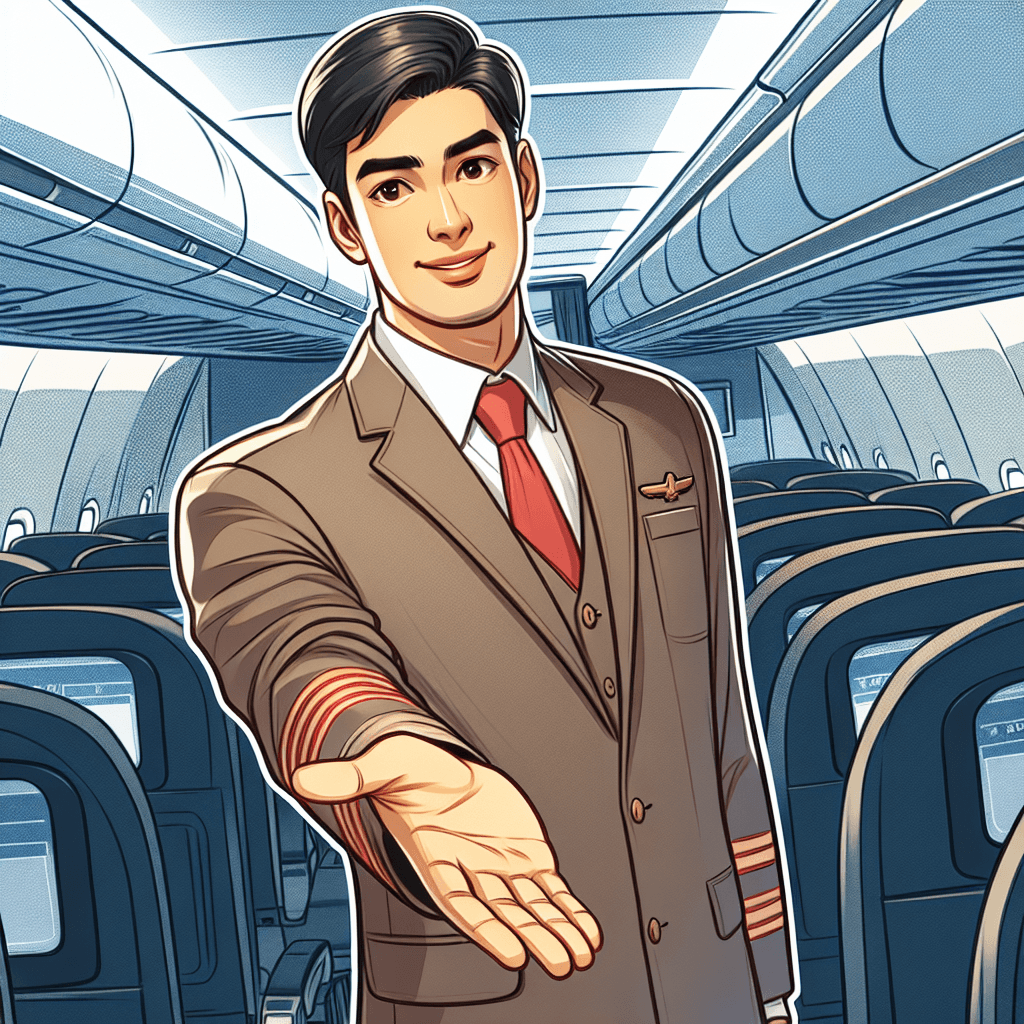
Why do flight attendants often keep one hand behind their back while greeting passengers as they board
Next time you board, look closely: that polite pose isn’t just about professional poise, but a "secret" task hidden right in plain sight. Discover the surprising security reason why flight attendants keep one hand tucked away until the cabin doors are finally locked.

Too Long; Didn't Read
Flight attendants keep one hand behind their back to discreetly use a manual tally counter. This allows them to accurately track the number of passengers boarding to ensure the count matches the manifest without being intrusive or making travelers feel self-conscious.
Why Do Flight Attendants Often Keep One Hand Behind Their Back While Greeting Passengers as They Board?
Have you ever noticed a subtle but consistent habit among cabin crew as you step onto an airplane? While they greet you with a warm smile and a "welcome aboard," many flight attendants keep one hand tucked discreetly behind their back. You might assume it is simply a formal posture or a way to maintain a professional stance, but there is actually a much more practical—and vital—reason for this behavior.
This common industry practice is not about etiquette or hidden snacks; it is a critical part of the pre-flight safety and administrative process. The primary reason flight attendants keep one hand behind their back is to operate a small, handheld device used to count every passenger entering the aircraft. This blog post explores the logistical, safety, and psychological reasons behind this "hidden" counting process.
The Tool of the Trade: The Tally Counter
The mystery of the hidden hand is solved by a small device known as a manual tally counter, or "clicker." While some modern airlines have moved toward digital systems integrated into tablets, many crew members still rely on these mechanical devices.
By holding the clicker behind their back, flight attendants can increment the count with a simple thumb press for every person who crosses the threshold. This allows them to maintain a running total of the passengers on board without interrupting the flow of boarding or making the process feel overly mechanical.
Why Accuracy Matters: Safety and Regulations
The passenger count is not just a formality; it is a legal and safety requirement mandated by aviation authorities such as the Federal Aviation Administration (FAA) in the United States and the European Union Aviation Safety Agency (EASA).
1. Manifest Verification
Before an aircraft can push back from the gate, the crew must ensure that the number of people physically on the plane matches the "paper" manifest provided by the gate agents. Discrepancies can occur due to last-minute cancellations, "no-shows," or passengers boarding the wrong flight. If the numbers do not match, the flight cannot legally depart until the error is identified and corrected.
2. Weight and Balance Calculations
Every aircraft has strict limits regarding its maximum takeoff weight and the distribution of that weight. Pilots use the passenger count to calculate the center of gravity and determine the necessary thrust for takeoff. According to aviation safety standards, even a slight miscalculation in weight distribution can affect the aircraft's performance during critical phases of flight.
3. Emergency Protocols
In the event of an emergency, first responders and the flight crew must know exactly how many souls are on board. Having an accurate, double-checked count ensures that every passenger is accounted for during an evacuation or search-and-rescue operation.
The Psychology of Discretion
If counting is so important, why hide the clicker? The decision to keep the hand behind the back is largely a matter of professional hospitality and psychological comfort.
- Maintaining a Welcoming Atmosphere: Airlines strive to make the boarding process feel personal and welcoming. Seeing a crew member hovering over a clicking device can make passengers feel like "just a number" or part of a herd. By keeping the device out of sight, flight attendants can maintain eye contact and offer a genuine greeting.
- Avoiding Distractions: Boarding is often a high-stress time for passengers. A visible counter might cause some travelers to pause, ask questions, or feel self-conscious, which slows down the boarding process.
- Focus and Accuracy: Keeping the hand behind the back helps the flight attendant focus on the task at hand. It minimizes the chance of a passenger accidentally bumping the device or the crew member being distracted by visual cues on the counter itself until the process is complete.
Conclusion
The next time you board a flight and see a crew member with one hand behind their back, you will know that they are performing a vital safety check. This simple gesture—the "hidden clicker"—ensures that the aircraft's weight is balanced, the manifest is accurate, and every passenger is accounted for before the cabin doors are sealed.
Understanding why flight attendants often keep one hand behind their back while greeting passengers as they board highlights the many layers of responsibility the cabin crew manages beyond serving refreshments. Their primary role is your safety, and the silent count is the first step in ensuring a secure journey. So, the next time you hear that faint "click" as you step onto the plane, you can rest assured that the crew is already working hard to keep your flight on track.


