
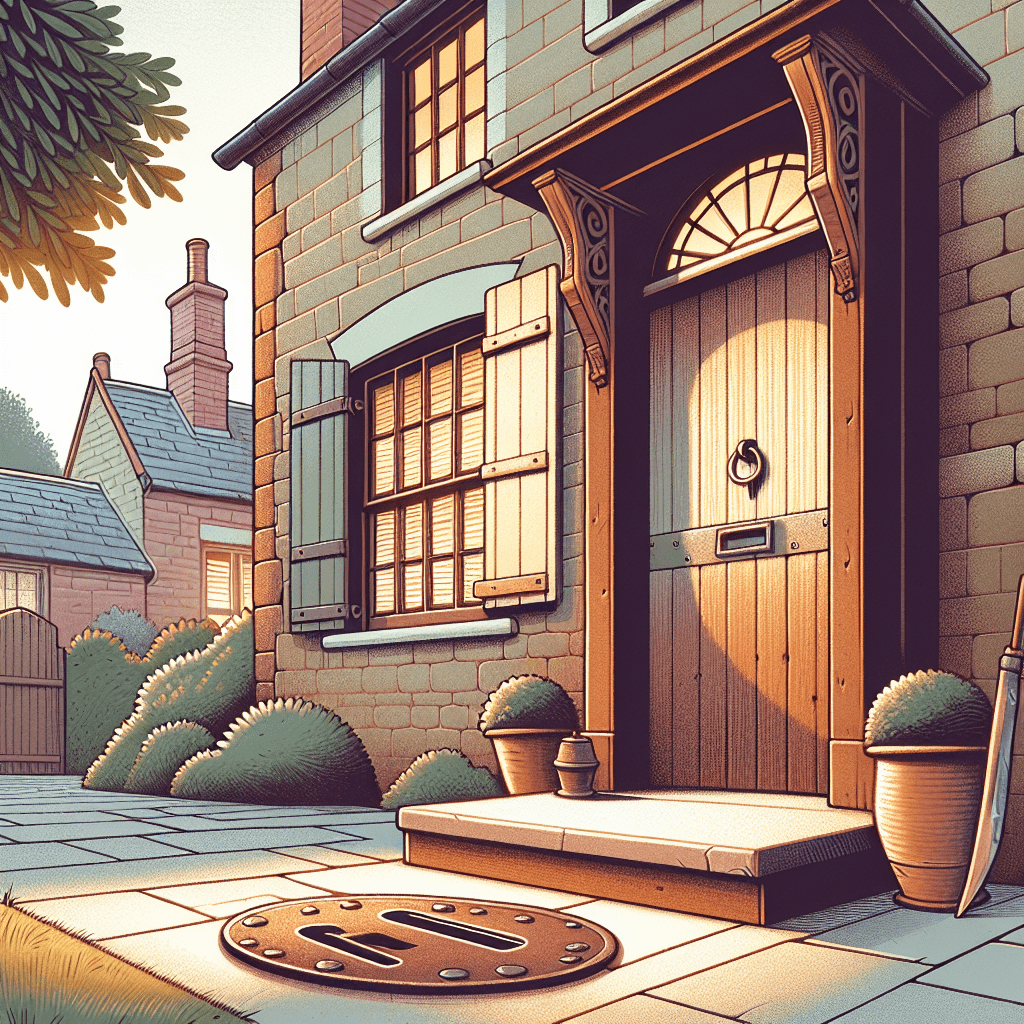
Why do many historic houses have a small iron blade bolted to the ground near the front door
It looks like a miniature guillotine for your shoes, but this small iron blade was once the only thing standing between a clean parlor and the filthy streets of the past. Discover the secret history of the boot scraper and why these curious fixtures still guard the entrances of historic homes today.

Too Long; Didn't Read
These iron blades are boot scrapers, designed in the era before paved streets to help visitors remove mud and horse manure from their shoes before entering a home. They were essential tools for keeping interior floors and expensive rugs clean during the 18th and 19th centuries.
Step Back in Time: Why do many historic houses have a small iron blade bolted to the ground near the front door?
If you have ever strolled through a historic neighborhood in cities like Charleston, London, or Boston, you may have noticed a curious architectural detail near the entrance of older homes. Often bolted to the stone steps or the sidewalk near the front door, a small, horizontal iron blade sits waiting for a purpose that modern visitors might not immediately recognize. While it may look like a primitive security device or a leftover piece of construction, this object is a functional relic from a much grittier era of urban living.
The object is known as a boot scraper, or a décrottoir in French. Its presence offers a fascinating glimpse into the daily challenges of 18th- and 19th-century life. This blog post explores the history, design, and eventual obsolescence of the boot scraper, explaining why these small iron blades were once an essential feature of any respectable home.
The Practical Need: Battling the "Age of Mud"
To understand why a homeowner would bolt an iron blade to their doorstep, one must first visualize the condition of city streets before the 20th century. In the 1800s, most urban roads were not the smooth, paved surfaces we enjoy today. Instead, they were often composed of dirt, gravel, or cobblestones.
According to architectural historians, these streets were perpetually plagued by several factors:
- Deep Mud: Rain turned unpaved streets into quagmires of thick, sticky mud.
- Animal Waste: In an era before the automobile, horses were the primary mode of transportation. This meant streets were constantly littered with manure.
- Coal Soot: As cities grew during the Industrial Revolution, coal smoke from chimneys and factories settled as a greasy layer of soot on every surface.
Walking even a short distance resulted in footwear being caked in a cocktail of filth. Without a way to remove this debris, a person would track significant amounts of bacteria and grime onto expensive rugs and hardwood floors. The boot scraper served as the first line of defense in home sanitation.
A Brief History of the Décrottoir
The boot scraper rose to prominence in the late 1700s and reached its peak popularity throughout the 1800s. The term décrottoir—literally meaning "to remove filth"—became common in Europe as urban centers became more crowded. By the mid-19th century, these devices were standard features in architectural catalogs.
While simple scrapers were utilitarian, they also served as a subtle indicator of social class. For the wealthy, a boot scraper was a sign of a well-maintained, orderly household. If a home had a scraper, it implied that the interior was worth protecting—filled with fine carpets and polished floors that required the labor of servants to maintain.
Design and Architectural Integration
Boot scrapers were not "one size fits all." They evolved from simple metal bars into decorative pieces of ironwork that matched the aesthetic of the home. You will generally find three types of scrapers on historic properties:
- The Floor-Mounted Scraper: This is the most common variety, consisting of a simple iron blade bolted directly into the stone or wood of the porch or sidewalk.
- The Built-In Scraper: In many Georgian and Victorian townhouses, the scraper was built directly into the masonry of the house or the wrought-iron railings. These often featured a recess in the wall to allow the mud to fall into a small collection area.
- The Ornate Scraper: During the Victorian era, scrapers became decorative. Many were cast in the shapes of scrolls, lyres, or even animals like dachshunds or lions, where the animal’s back served as the scraping blade.
Why Did They Disappear?
By the early 20th century, the installation of boot scrapers began to decline. This shift was driven by significant advancements in urban infrastructure and transportation. As municipalities began paving streets with asphalt and concrete, the sheer volume of mud decreased. Furthermore, the transition from horse-drawn carriages to automobiles drastically reduced the amount of manure on city streets.
Modern sanitation and the invention of the rubber door mat eventually rendered the iron blade obsolete. While new homes are no longer built with these features, they remain protected in many historic districts as a "character-defining feature" of the local architecture.
Conclusion
The small iron blade bolted to the ground near the front door of a historic house is far more than a tripping hazard; it is a tangible link to a time when urban cleanliness was a constant struggle. These boot scrapers remind us that the paved, sanitary world we live in today is a relatively recent development in human history.
Understanding why many historic houses have these scrapers allows us to appreciate the practical ingenuity of our ancestors. The next time you spot one of these relics, you aren't just looking at a piece of scrap metal—you are looking at a 19th-century solution to a very messy problem. If you live in or own a historic home with a scraper, preserving it is a wonderful way to honor the functional history of the building's past.


