
Why must every Major League baseball be rubbed with mud from a secret New Jersey location before use
It’s the dirtiest secret in professional sports: a mysterious New Jersey mud that every single MLB baseball must touch before it hits the mound. Discover the high-stakes reason why the multi-billion dollar league refuses to play without this "magic" dirt.

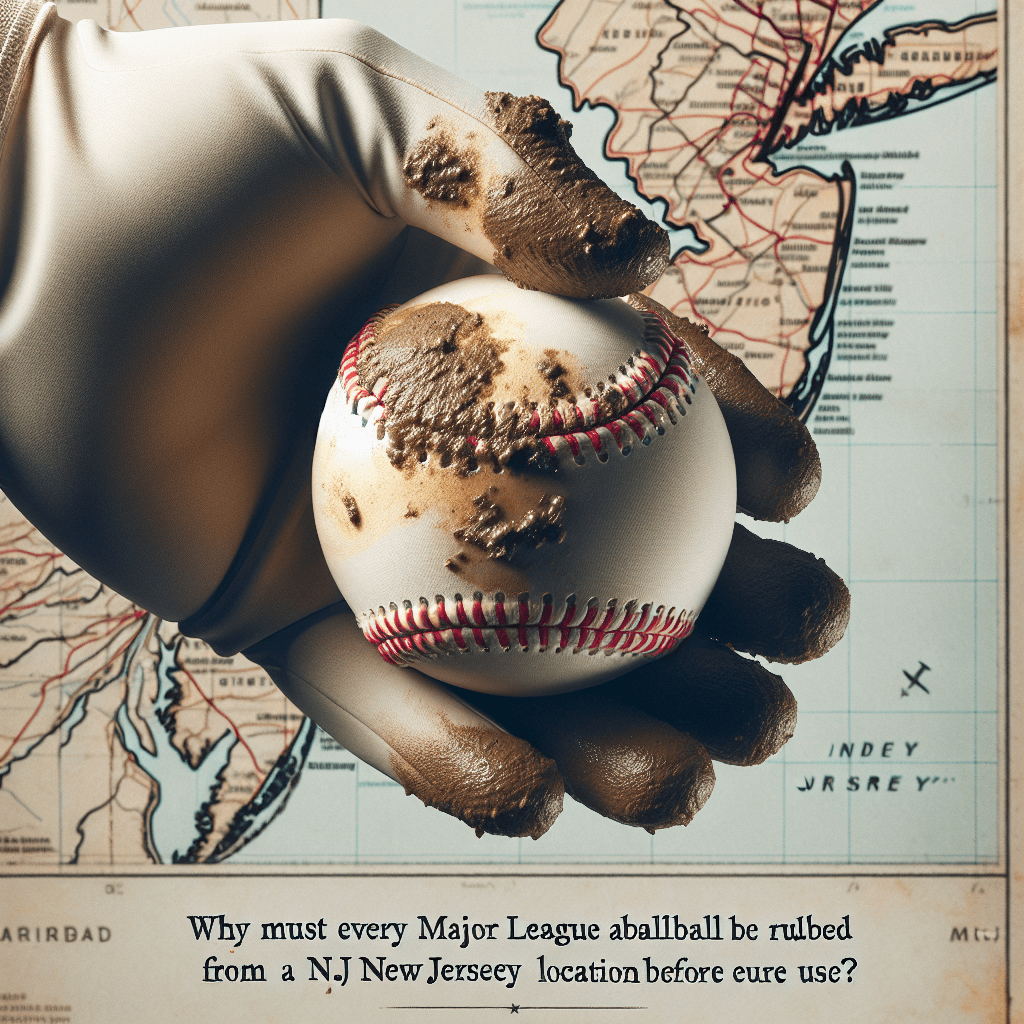
Too Long; Didn't Read
New baseballs are naturally too slick and glossy for pitchers to grip effectively. To fix this, every ball is rubbed with a specific, silt-like mud harvested from a secret spot in New Jersey, which provides the perfect texture for control without damaging the leather.
Dirtier to Play Better: Why Must Every Major League Baseball be Rubbed with Mud from a Secret New Jersey Location Before Use?
Before a single pitch is thrown in a Major League Baseball (MLB) game, every ball goes through a ritual that seems more like ancient alchemy than modern professional sports. Despite the multi-billion dollar technology used to track exit velocity and spin rates, the most critical piece of equipment—the ball itself—is intentionally "ruined" with mud before it ever touches a pitcher's hand. This mud isn't just common backyard dirt; it is a specific, silt-like substance harvested from a secret tributary of the Delaware River in New Jersey.
But why must every Major League baseball be rubbed with mud from a secret New Jersey location before use? The answer lies in a delicate balance between player safety, grip, and the physical integrity of the ball. This post explores the history, the science, and the tradition behind baseball’s "magic mud."
The Problem with Perfection: Why New Balls are Dangerous
When a baseball arrives from the Rawlings factory in Costa Rica, it is a pristine, pearly white sphere. While beautiful to look at, these new balls are notoriously difficult to handle. The leather is finished with a high-gloss sheen that makes the surface incredibly slick.
For a pitcher throwing at 100 miles per hour, a lack of grip is more than a mechanical inconvenience—it is a safety hazard. Without a proper "tack," the ball can easily slip, leading to wild pitches that endanger batters. Historically, players tried to solve this by using shoe polish, tobacco juice, or rough dirt, but these substances often discolored the ball too much or damaged the leather.
The Discovery of "Magic Mud"
The solution to this slippery problem arrived in the 1930s thanks to Lena Blackburne, a coach for the Philadelphia Athletics. After complaining about the inconsistent methods used to "de-gloss" balls, Blackburne discovered a unique muck in a creek near his home in Burlington County, New Jersey.
He found that this specific mud had a texture unlike any other. According to historical records from the Lena Blackburne Rubbing Mud company, the substance was smooth enough not to scratch the leather but gritty enough to remove the factory shine. By 1938, the American League adopted its use, and by the 1950s, the National League followed suit.
What Makes the New Jersey Mud Unique?
While the exact location of the mud remains a family secret, its physical properties are well-documented. Scientists who have studied the "magic mud" note that its composition is a perfect "Goldilocks" substance for the sport:
- Consistency: It has the texture of a fine pudding or thick cold cream.
- Abrasiveness: It is fine-grained, meaning it provides grip without acting like sandpaper, which would tear the delicate hide of the ball.
- Coloration: It turns the ball an off-white or "eggshell" color without making it so dark that the hitter cannot see it against the pitcher's hand.
- Seam Integrity: Unlike thicker muds, it does not cake into the red cotton stitching, which would alter the ball's aerodynamics.
The Pre-Game Ritual
Preparing the balls is a labor-intensive process handled by clubhouse attendants. According to MLB regulations, at least eight dozen balls must be prepared for every game. The process involves:
- Applying a small dab of the mud to the palms.
- Adding a few drops of water or saliva to reach the desired consistency.
- Vigorously rubbing the ball for approximately 30 to 40 seconds.
- Allowing the balls to dry to a uniform, dull finish.
Despite the rise of synthetic alternatives, MLB continues to mandate this specific mud. In recent years, the league experimented with a "pre-tacked" ball created in a lab, but pitchers found the feel inconsistent compared to the natural New Jersey silt.
Conclusion
The tradition of using Lena Blackburne’s rubbing mud is a fascinating bridge between baseball’s gritty past and its high-tech present. Why must every Major League baseball be rubbed with mud from a secret New Jersey location before use? Because nature has provided a solution that human engineering has yet to replicate: a substance that ensures safety through grip while maintaining the ball’s physical standards.
As long as pitchers strive for the perfect curveball and hitters look for a visible target, the secret banks of a New Jersey creek will remain the most important "supplier" in professional sports. This low-tech ritual remains a testament to the fact that sometimes, the best way to move the game forward is to stay rooted in the earth.


