
Why was a shocking shade of pink once considered the perfect camouflage for warships
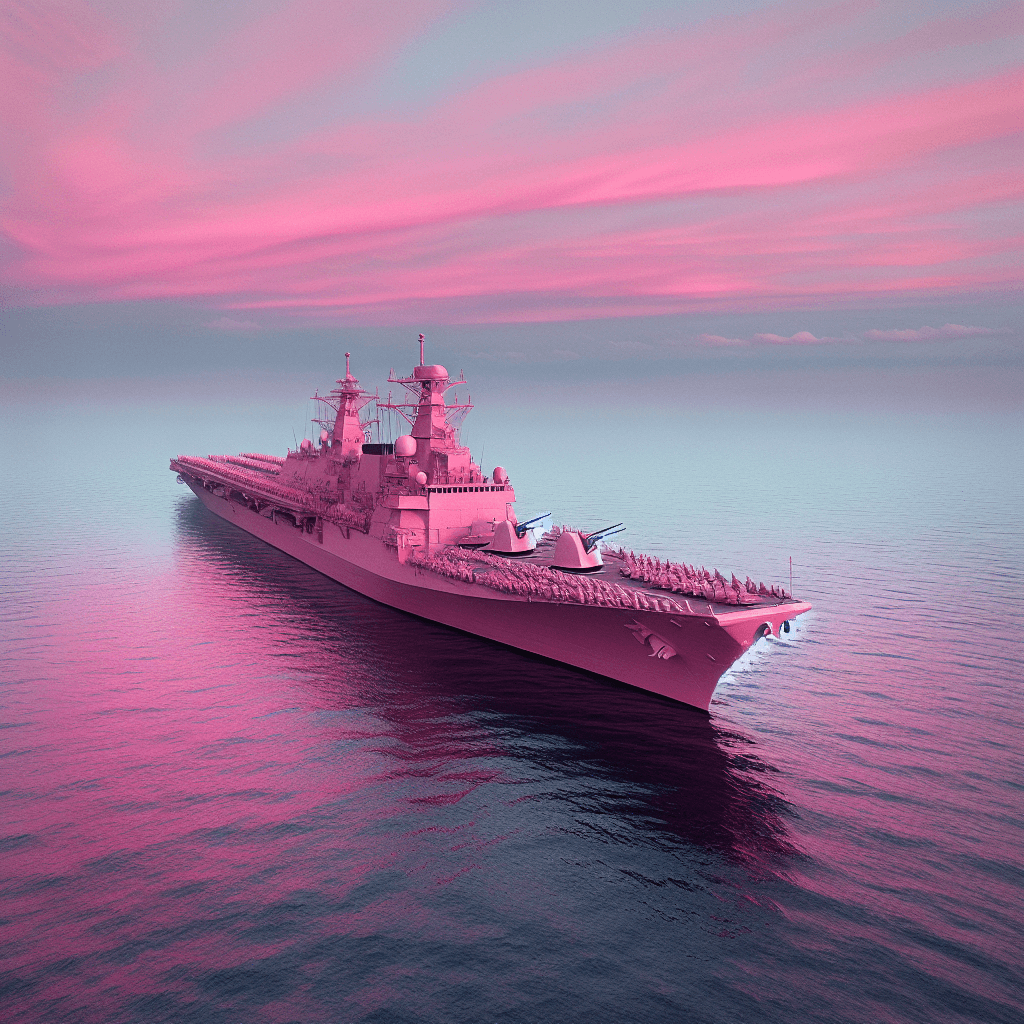
It sounds like military madness, but to make a battleship vanish at the most critical moments of dawn and dusk, naval commanders turned to a secret weapon: a bizarre and brilliant shade of pink.

Too Long; Didn't Read
TLDR: During WWII, a pinkish-grey color called Mountbatten Pink was used on warships because it blended with the sky at dawn and dusk. This made the ship's silhouette harder for enemy submarines to spot against the horizon during those specific low-light conditions.
The Unlikely Disguise: Why Was a Shocking Shade of Pink Once Considered the Perfect Camouflage for Warships?
When you picture a warship, your mind likely conjures images of steel-grey behemoths cutting through a dark blue sea. The colors are practical, intimidating, and meant to blend in. But what if the most effective camouflage wasn't grey at all? What if, for a brief, crucial period in naval history, the perfect color to make a warship vanish was a dusty, surprising shade of pink? This isn't a flight of fancy; it's the fascinating story of Mountbatten Pink, a color born from keen observation and a desperate need for an edge during the darkest days of World War II. This blog post will explore the science and strategy behind why this rosy hue was once the pinnacle of naval concealment.
The Man and the Mission: The Birth of a Bizarre Tactic
The story of pink warships begins with one of a kind naval officer: Lord Louis Mountbatten. During the Battle of the Atlantic in World War II, Allied convoys were locked in a deadly struggle with German U-boats. Every advantage, no matter how small, could mean the difference between life and death.
As commander of the 5th Destroyer Flotilla, Mountbatten was constantly seeking innovative ways to protect his ships. The legend goes that while escorting a convoy, he noticed a vessel from the Union-Castle Line, painted in a unique grayish-lavender color, seem to disappear during a hazy sunset. While other ships remained stark silhouettes against the fading light, this one blended almost perfectly with the sky and sea. An idea sparked. Mountbatten realized that conventional grey camouflage was excellent for overcast days or the open ocean, but it failed dramatically during the most dangerous times for a convoy: dawn and dusk, when U-boats often attacked.
The Science of Invisibility: How Pink Becomes Grey
Mountbatten's observation was rooted in the science of light and human perception. The color he developed, officially known as Mountbatten Pink, was not a bright, garish fuchsia. It was a complex, dusty shade created by mixing a light grey paint with a small amount of Venetian red. The result was a dull, grayish-mauve that had a remarkable property under specific lighting.
Here’s how it worked:
- Color Matching the Sky: At sunrise and sunset, the sky is often filled with red and pink light as the sun's rays travel through more of the Earth's atmosphere.
- Neutralizing the Silhouette: A standard grey ship, when viewed against this pinkish sky, would appear dark and sharply defined—an easy target.
- The Blend: The reddish tones in Mountbatten Pink absorbed the ambient red light of dawn and dusk. To the human eye, especially from a distance through a periscope, the pink hue was neutralized, causing the ship to appear the same color as the sky behind it. It effectively became a light, non-descript grey, rendering it almost invisible.
This principle was a form of counter-illumination, designed not for broad daylight but for those critical, low-light moments when a ship was most vulnerable.
The Pink Lady: A Tactic's Rise and Fall
Convinced of his theory, Mountbatten had his own ships and others in his command painted in this unconventional color. The most famous vessel to wear the shade was the cruiser HMS Kenya, which earned the nickname "The Pink Lady." Anecdotal evidence from crews suggested the camouflage was remarkably effective. They reported being able to approach enemy vessels without being spotted until it was too late.
However, the reign of Mountbatten Pink was short-lived. The camouflage had two significant drawbacks that ultimately led to its discontinuation:
- Limited Effectiveness: Its magic only worked during the brief windows of dawn and dusk. In the full light of midday, a pinkish ship stood out dramatically against a blue sea, making it a more conspicuous target.
- Technological Advancement: The primary threat was increasingly detectable by a new technology: radar. As radar became more sophisticated and widespread on U-boats and aircraft, a ship's color became irrelevant. You can't hide from radio waves with a coat of paint.
The Royal Navy eventually opted for standardized grey schemes that offered more consistent, if less spectacular, camouflage throughout the day.
A Lesson in Pink
Though no longer in use, the story of Mountbatten Pink is a powerful lesson in creative, context-specific problem-solving. It demonstrates a deep understanding of the interplay between light, perception, and the specific environment of naval warfare. While modern warships rely on stealth technology and advanced electronics rather than clever paint jobs, the "pink panther" fleet, as it was sometimes called, remains a fascinating chapter in military history. It’s a reminder that sometimes, the most brilliant solutions are found not in brute force, but in seeing the world—and the colors within it—just a little bit differently.


