
Why was it once legal for parents to mail their babies through the postal service
Believe it or not, there was a brief period in American history when you could legally slap a few stamps on your toddler and ship them across the country for less than the price of a train ticket. Discover the bizarre legal loophole that briefly turned U.S. mail carriers into temporary babysitters.

Too Long; Didn't Read
In the early 20th century, the newly created U.S. Parcel Post service lacked specific regulations against mailing people. Parents found that paying for stamps was significantly cheaper than buying train tickets, so they occasionally sent their children to nearby relatives via trusted postal carriers. The practice was short-lived, as the Postmaster General officially banned mailing humans in 1915.
Special Delivery: Why Was It Once Legal for Parents to Mail Their Babies Through the Postal Service?
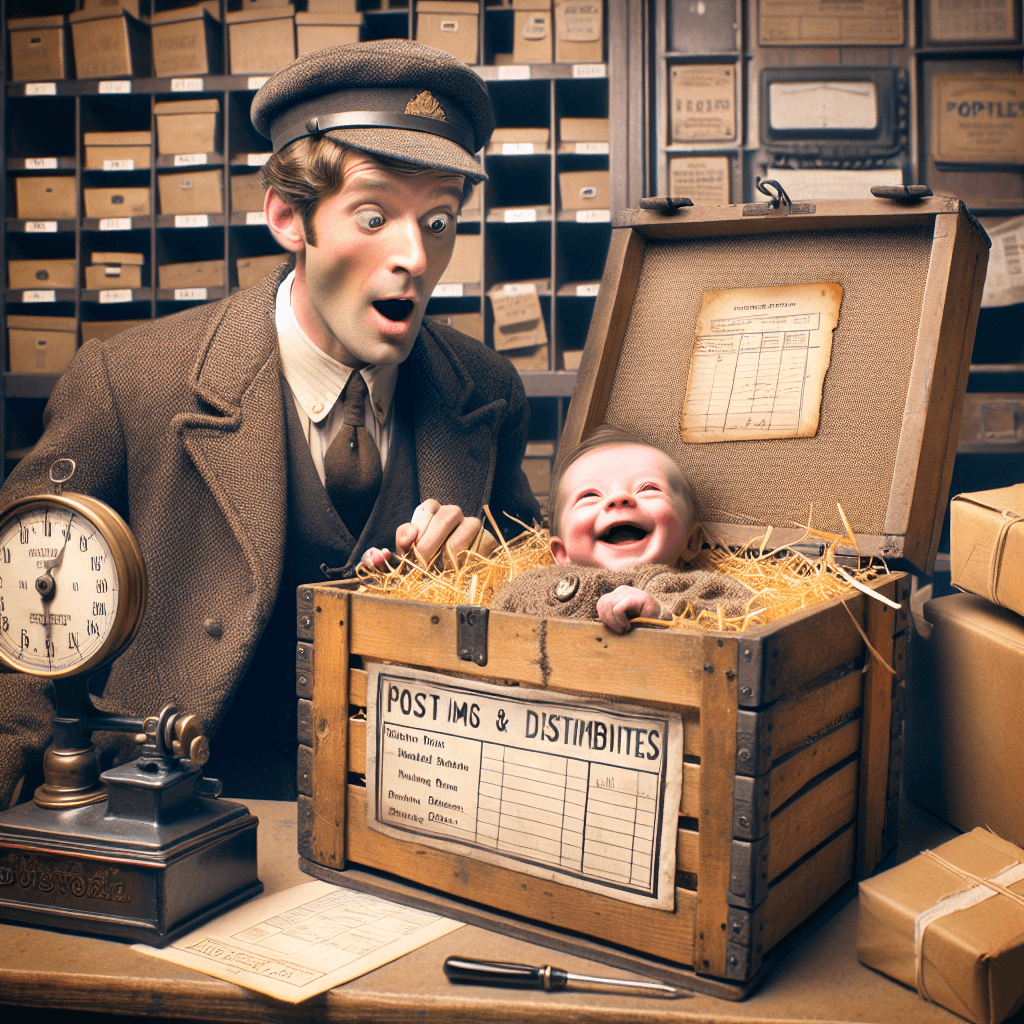
Imagine a mail carrier walking up to a front porch, not with a letter or a package, but with a living, breathing toddler. While this sounds like the plot of a surreal comedy, it was a brief and very real chapter in American history. In the early 20th century, a quirk in federal regulations allowed for a handful of instances where children were effectively "shipped" to their destinations. But why was it once legal for parents to mail their babies through the postal service, and how did such a bizarre practice even begin?
The answer lies in a combination of new technology, a lack of specific oversight, and the unique trust placed in local postal workers. This post explores the short-lived era of the "mailed baby," examining the legal loopholes and social conditions that made it possible.
The Parcel Post Loophole of 1913
Before 1913, the United States Post Office Department only handled letters and small packages. Anything heavier had to be sent via private express companies, which were often expensive. On January 1, 1913, the Post Office officially launched Parcel Post, allowing citizens to ship larger items across the country.
This new service was an immediate hit, but the initial regulations were remarkably simple. The primary restrictions involved the weight of the package—initially capped at 11 pounds—and a prohibition on "poisonous or explosive" materials. Because the Post Office had not yet seen the need to explicitly forbid the transport of humans, a few enterprising parents saw a loophole. If a child weighed less than the limit, they were technically eligible for shipment if the correct postage was applied.
Noteworthy Cases of "Human Mail"
The practice was never widespread, but the few recorded cases have become legendary in postal history. According to records from the Smithsonian National Postal Museum, the first known instance occurred just weeks after Parcel Post began.
- The Beagle Family (1913): Jesse and Mathilda Beagle of Glen Este, Ohio, "mailed" their 10-pound son, James, to his grandmother’s house about a mile away. They paid 15 cents in postage and even insured their son for $50.
- Charlotte May Pierstorff (1914): Perhaps the most famous case involved five-year-old Charlotte May Pierstorff. Her parents wanted to send her to her grandparents' home 73 miles away in Idaho. Finding the train ticket too expensive, they attached 53 cents in stamps to her coat. She traveled in the mail car of the train and was delivered safely by a postal clerk who happened to be a relative.
- The Longest Journey (1915): A six-year-old girl was reportedly mailed from her mother’s home in Florida to her father’s home in Virginia. At nearly 720 miles, this remains the longest recorded distance for a "mailed" child.
Why Did Parents Trust the Post Office?
To a modern reader, mailing a child seems incredibly dangerous. However, the historical context reveals several reasons why parents felt comfortable with this method:
- Trust in Carriers: Especially in rural areas, mail carriers were highly respected members of the community. Parents often knew their carriers personally and trusted them more than a faceless train conductor or a stranger.
- Cost Efficiency: Shipping a child via Parcel Post was significantly cheaper than purchasing a full-priced ticket on a passenger train.
- Safety Standards: Children were not actually wrapped in brown paper or placed in boxes. They typically walked with the carrier or sat in the mail car under the direct supervision of postal employees.
The End of the Era: Formal Prohibitions
The novelty of mailing children quickly wore off for postal officials. As stories of "human parcels" hit the newspapers, the Post Office Department realized the massive liability and safety risks involved.
In 1914, Postmaster General Albert S. Burleson issued an official directive stating that human beings were no longer to be accepted for mailing. While a few cases slipped through the cracks over the next year or two—usually in remote areas where regulations were slow to reach—the practice was effectively dead by 1915. By 1920, the Post Office had tightened its regulations so strictly that even the most creative parents could no longer find a loophole.
Conclusion
The era of mailing babies was a short, strange blip in the history of American infrastructure. It occurred at a unique intersection where a new national service was still finding its footing and rural families were looking for the most efficient ways to stay connected.
Ultimately, the question of why it was once legal for parents to mail their babies through the postal service boils down to a lack of precedent. The Post Office simply didn't imagine that people would try it. While we now view this practice as a historical oddity, it serves as a fascinating reminder of how much the world—and our safety standards—has changed over the last century. Today, we may complain about the cost of shipping a cardboard box, but we can all agree that some "packages" are better left to the car seat and the passenger cabin.


