
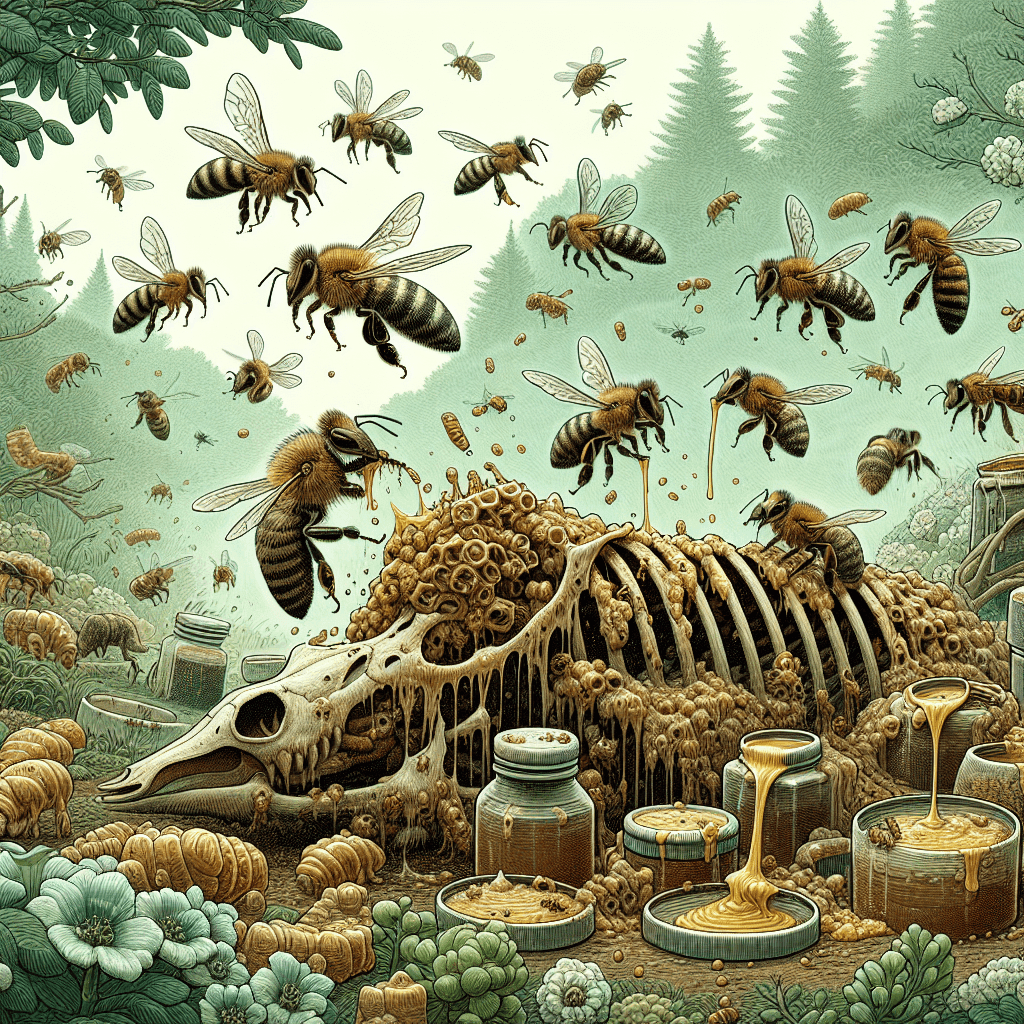
How can some bees create honey entirely out of rotting flesh instead of nectar
They have no use for flowers or nectar. Discover the bizarre bees that have evolved to brew a sweet, edible honey by feasting on rotting flesh.

Too Long; Didn't Read
TLDR: Vulture bees have a specialized gut microbiome, similar to hyenas, that allows them to safely eat and digest rotting flesh. They then process these meat secretions into a sweet, honey-like substance which they store in their hive instead of using nectar from flowers.
Vulture Bees: How Can Some Bees Create Honey Entirely Out of Rotting Flesh Instead of Nectar?
When you picture a bee, you likely imagine a fuzzy creature buzzing from flower to flower, diligently collecting sweet nectar to create golden honey. This idyllic image holds true for most of the world's 20,000 bee species. But deep in the tropical rainforests, a small group of bees has turned this narrative on its head, swapping a vegetarian diet for a carnivorous one. These are the "vulture bees," and they possess the astonishing ability to create a honey-like substance from rotting flesh. This post will explore the fascinating biological mechanisms that allow these unique insects to transform carrion into a sweet, edible treasure.
Meet the Vulture Bees: Nature's Unconventional Confectioners
Vulture bees belong to the genus Trigona, a group of stingless bees native to the tropical rainforests of Central and South America. While most of their stingless relatives feed on nectar and pollen, three specific species have evolved to use animal carcasses as their primary source of protein and sugar.
Unlike honeybees, which have hairy legs for collecting pollen, vulture bees have evolved sharper, tooth-like mandibles for slicing off bits of meat. They also lack the "pollen baskets" on their legs, as they have no need to transport pollen back to the hive. This radical dietary shift allows them to thrive in environments where flowers might be scarce, tapping into a food source that is completely uncontested by other bees.
The Carnivorous Conversion: From Flesh to Honey
The process of creating honey from flesh is a marvel of biological engineering, involving external digestion and specialized internal chemistry. It's a stark contrast to the simple collection of nectar.
- The "External Stomach": Vulture bees don't simply eat raw meat. When they locate a carcass, they use their powerful mandibles to gather flesh. More importantly, they secrete potent digestive fluids from their salivary glands directly onto the meat. These fluids, rich in enzymes, begin breaking down the tissue into a nutrient-rich, pre-digested slurry.
- Transportation: The bees carry this liquid protein back to the nest in their crop, or "honey stomach," the same organ nectar-feeding bees use.
- Hive Processing: Back in the nest, this substance is passed from bee to bee. During this exchange, more enzymes are added, and the mixture is gradually dehydrated. It is then stored in wax pots—not the hexagonal cells of honeybees—where it matures and ripens over time.
The final product is a substance analogous to honey, rich in sugars and proteins, but originating from a source most would find unsettling.
The Secret is in the Gut Microbiome
So, how do these bees consume rotting flesh teeming with deadly pathogens like salmonella and botulism-causing bacteria without getting sick? The answer lies within their guts.
Groundbreaking research from scientists at the University of California, Riverside, revealed that the gut microbiome of vulture bees is dramatically different from that of their vegetarian cousins. Their guts are enriched with acid-loving bacteria that are common in the digestive systems of other carrion-eaters, such as actual vultures and hyenas.
Key bacteria found in their systems include:
- Lactobacillus: A bacterium that ferments sugars and produces lactic acid, creating an acidic gut environment hostile to many pathogens.
- Carnobacterium: As its name suggests, this microbe is associated with meat digestion and helps break down complex proteins.
This unique, highly acidic gut biome acts as a biological filter, neutralizing toxins and killing harmful bacteria from their food source. This adaptation is the critical evolutionary leap that allows them to safely exploit a food source that would be lethal to almost any other bee.
A Taste of the Macabre: What Does Meat Honey Taste Like?
The inevitable question is: what does this "meat honey" taste like? While it's not commercially available, it has been harvested and consumed by indigenous peoples for generations. Those who have tried it report that it is intensely sweet, but with a unique, smoky, and sometimes meaty or salty aftertaste. It is described as a complex and potent flavor, unlike anything derived from flowers. Thanks to the bees' incredible internal filtering system, the final product is perfectly safe for human consumption.
Conclusion
The existence of vulture bees challenges our fundamental understanding of what it means to be a bee. Their ability to create honey from rotting flesh is a powerful testament to the incredible adaptability of life. By evolving a carnivorous diet, unique flesh-processing methods, and a specialized gut microbiome, these insects have carved out a remarkable niche in the ecosystem. They remind us that the natural world is full of surprises, and even in the most familiar of creatures, there are extraordinary stories of survival and innovation waiting to be discovered.


