
The Origins of the Middle Ages: Why History Labeled This Era Medieval
Discover why the term 'Medieval' was actually a retrospective insult coined by Renaissance scholars to describe a thousand years of history.

Too Long; Didn't Read
The term Medieval or Middle Ages was created by Renaissance humanists who viewed the era as a dark period of decline between the fall of Rome and their own cultural rebirth.
The Origins of the Middle Ages: Why History Labeled This Era Medieval
If you could travel back to the year 1000 AD and ask a peasant or a knight how they enjoyed living in the "Middle Ages," they would likely meet your question with blank stares. The people who lived through the fall of Rome, the Crusades, and the signing of the Magna Carta never knew they were "medieval." This designation is a retrospective label, applied centuries later by scholars who viewed this thousand-year span as a mere intermission between the glory of the ancient world and the intellectual "rebirth" of their own time. Understanding why history labeled this era "medieval" reveals more about the biases of later historians than it does about the period itself. This post explores the linguistic origins, historical context, and evolving perceptions of the Middle Ages.
The Etymology of the "Middle" Age
The term "medieval" is derived from the Latin words medium (middle) and aevum (age). Combined, they form medium aevum, or the "Middle Age." This terminology first began to surface in the 14th and 15th centuries, primarily through the writings of Italian Renaissance humanists like Petrarch.
Petrarch and his contemporaries were deeply enamored with the classical literature, philosophy, and art of Ancient Greece and Rome. They viewed the era following the collapse of the Western Roman Empire in 476 AD as a period of cultural stagnation and linguistic decay. To them, the "Middle Age" was simply a dark, cluttered hallway connecting the light of Antiquity to the newly dawning light of the Renaissance.
Why the Label Stuck: The Humanist Perspective
The Renaissance humanists were on a mission to restore the purity of Latin and the rigor of classical thought. By labeling the intervening millennium as "medieval," they effectively marginalized it. Their reasoning was based on several key observations:
- Linguistic Decline: Humanists believed that "Classical Latin" had been corrupted into "Vulgar Latin" or "Medieval Latin," which they considered barbaric.
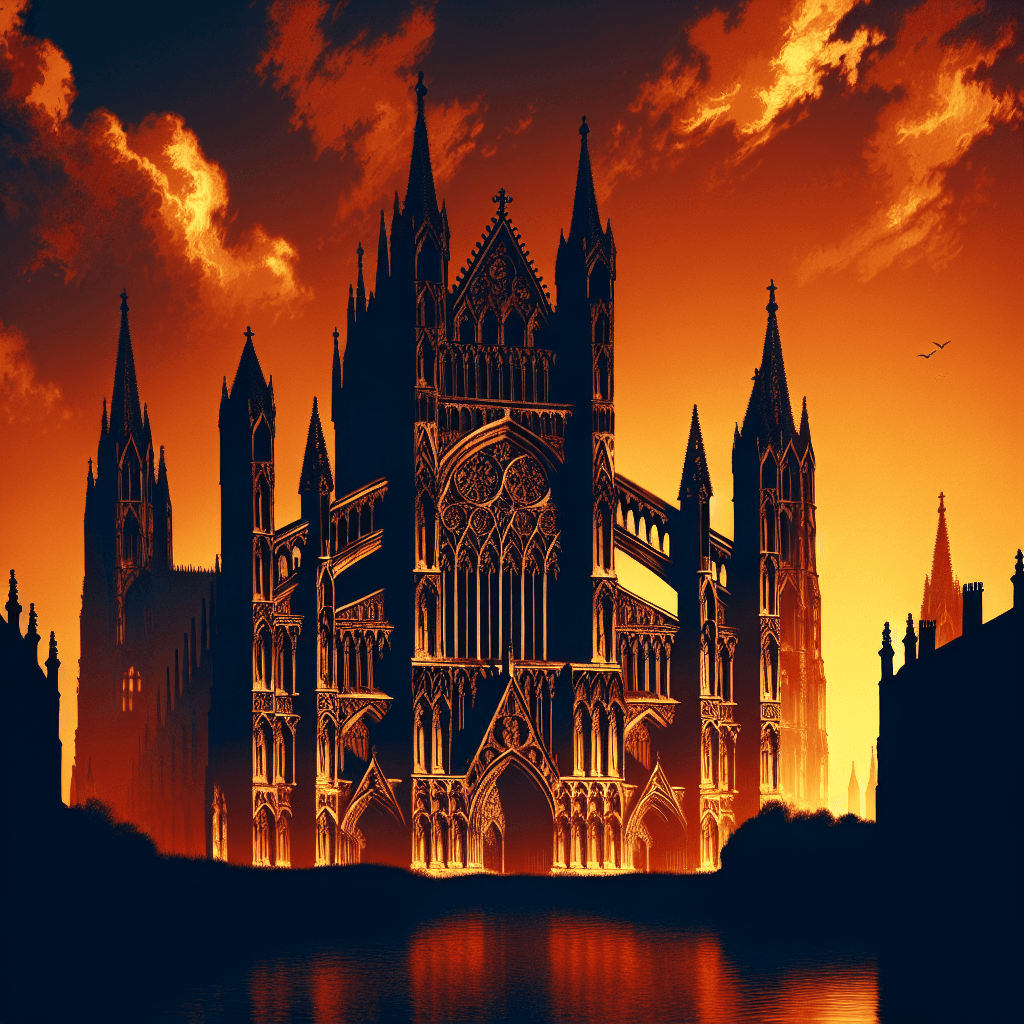
- Architectural Shifts: The transition from classical columns to "Gothic" arches was seen by later critics as a departure from refined taste (the word "Gothic" was originally a slur, implying the style was fit only for Goths or barbarians).
- Religious Centrality: For many Enlightenment thinkers who followed the Renaissance, the era’s heavy focus on faith and the Roman Catholic Church was seen as a hindrance to scientific and rational progress.
Beyond the "Dark Ages" Misnomer
For a long time, the Middle Ages were also referred to as the "Dark Ages." This term suggested that the era was devoid of scientific advancement or cultural achievement. However, modern historians have largely rejected this characterization. While the early medieval period (approx. 500–1000 AD) saw significant social upheaval following Rome's collapse, it was also a time of vital innovation.
Key Innovations of the Medieval Era:
- The University System: The first universities, such as those in Bologna and Paris, were founded in the 11th and 12th centuries.
- Legal Foundations: Developments in English Common Law and the signing of the Magna Carta (1215) laid the groundwork for modern constitutionalism.
- Agricultural Technology: The invention of the heavy plow and the three-field crop rotation system revolutionized food production and led to significant population growth.
- Architectural Mastery: The construction of massive cathedrals demonstrated sophisticated engineering and mathematical knowledge.
Conclusion
The label "Medieval" was born out of a desire by later scholars to distance themselves from their immediate past. By framing a thousand years of history as a "middle" period, they prioritized the values of the classical world over the unique contributions of the medieval one. Today, we recognize that the Middle Ages were not a stagnant void, but a foundational era of transformation that shaped the modern Western world. From the birth of modern languages to the establishment of parliamentary systems, the "Middle Age" was far more than a bridge; it was the crucible in which our current civilization was forged. Understanding this history allows us to move past outdated labels and appreciate the complexity of the human story.


