
What causes the demonic-looking red-eye effect in flash photography
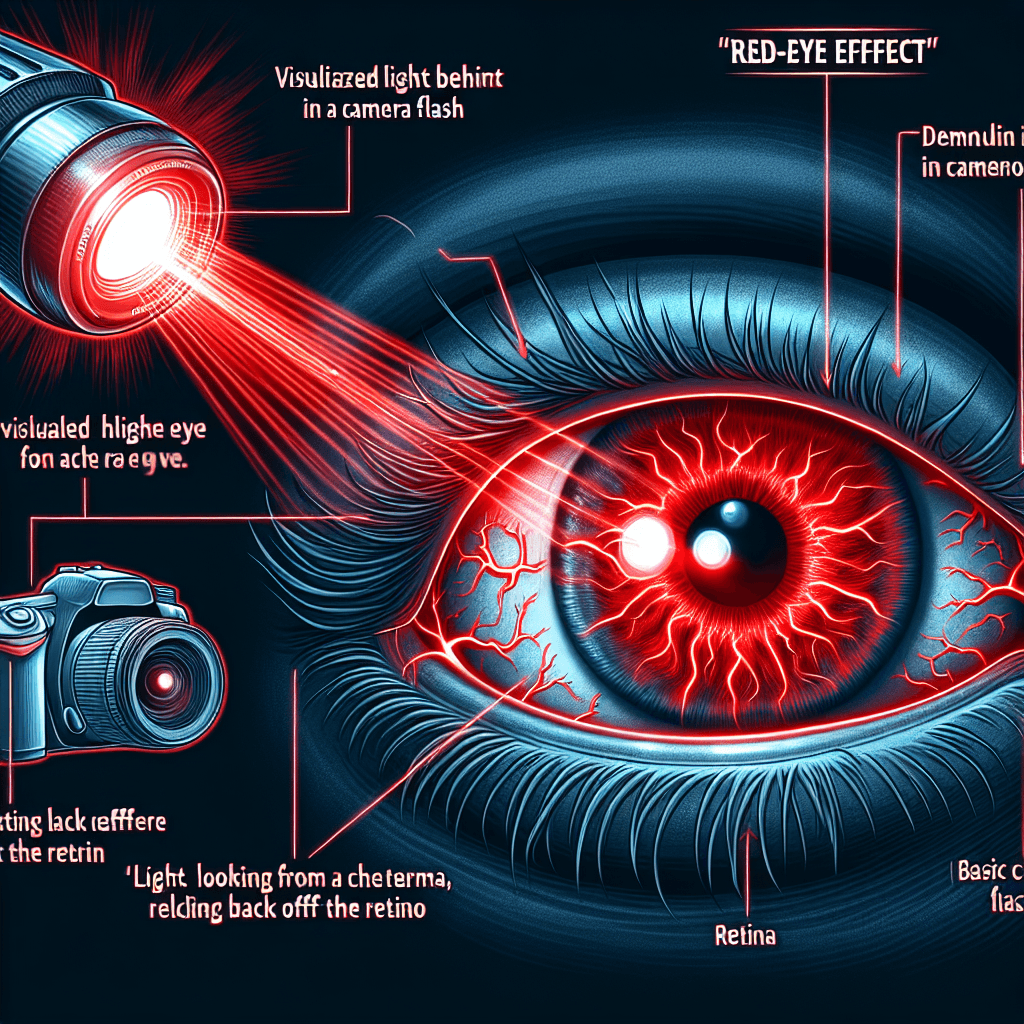
Ever wonder why a camera flash can make your loved ones look like they're possessed? The eerie red-eye effect isn't supernatural—it's a direct, illuminated glimpse into the anatomy of the human eye itself.

Too Long; Didn't Read
TLDR: In low light, your pupils are wide open. The camera flash is too fast for them to close, so the light reflects off the blood vessels in the back of your eye, creating the red glow.
From Spooky to Science: What Causes the Demonic-Looking Red-Eye Effect in Flash Photography?
We’ve all been there. You capture a perfect moment at a party or family gathering, a photo filled with smiles and laughter. But when you look back at the picture, your friends and family are staring back with glowing, demonic red eyes. This common photographic glitch, known as the red-eye effect, has turned countless cherished memories into something straight out of a horror film. But what’s really going on? Is it a flaw in the camera or something stranger? The truth is far more fascinating, lying at the intersection of human anatomy and the physics of light. This post will demystify the science behind what causes the demonic-looking red-eye effect in flash photography.
It's Not a Demon, It's Biology
The culprit behind those spooky red eyes isn't supernatural—it's your own anatomy. The effect is essentially a reflection of light from the interior of the human eye. To understand this, we need a quick lesson in eye biology.
-
The Pupil and Iris: The pupil is the black opening in the center of your eye that allows light to enter. It's controlled by the iris, the colored part of your eye, which acts like a camera's aperture. In bright conditions, the iris constricts the pupil to limit the amount of light entering. In dim or dark environments, the iris dilates (widens) the pupil to let in as much light as possible to improve your vision.
-
The Retina and the Choroid: After passing through the pupil and lens, light hits the retina at the very back of the eye. The retina is the light-sensitive tissue that converts light into neural signals for the brain. Lying directly behind the retina is a layer of connective tissue called the choroid. The choroid is packed with blood vessels, which give it a deep red color. Its primary job is to nourish the outer layers of the retina.
The "Perfect Storm" for Red-Eye
The red-eye effect occurs when a specific set of conditions align, creating a "perfect storm" for that eerie reflection.
The primary setting is a low-light environment. As mentioned, when it's dark, our irises open our pupils wide to see better. When you take a photo in these conditions using an on-camera flash, the flash fires a burst of intense light that is extremely close to the camera's lens.
Because this flash is so bright and fast, your pupils don't have enough time to react and constrict. The intense light floods through your wide-open pupils, travels to the back of your eye, and illuminates the blood-red surface of the choroid. This light then reflects off the choroid and travels straight back out of the pupil, directly into the camera lens, which captures the bright red reflection. In essence, the camera is taking a picture of the blood-rich tissue inside your eye.
Key Factors That Influence the Red-Eye Effect
Why do some people get red-eye while others in the same photo don't? Several factors can increase or decrease the chances of it appearing.
- Angle of the Flash: The effect is most prominent when the flash is positioned very close to the lens, as is the case on most smartphones and compact cameras. This creates a direct line of sight for the reflection. Professional photographers often use external flashes mounted away from the lens, which changes the angle of the light and prevents the direct reflection.
- Ambient Light: The darker the room, the wider the pupil, and the more likely you are to see red-eye. Taking photos in a well-lit space, even with a flash, can significantly reduce the effect.
- Eye Color: People with lighter eye colors, such as blue or green, tend to have less melanin in the layers of their eyes. This lack of pigment can result in a more intense and visible red reflection from the choroid.
- Gaze Direction: A person looking directly at the camera lens is most susceptible. If their gaze is slightly off-angle, the light will reflect in a different direction and won't be captured by the lens.
Why Do Animals' Eyes Glow Green or Yellow?
You may have noticed that pets, like cats and dogs, often have a different-colored eye-shine in photos—typically green, yellow, or even blue. This is because many nocturnal animals have a special reflective layer behind their retina called the tapetum lucidum. This "biological mirror" reflects light back through the retina a second time, significantly enhancing their night vision. The color we see in a photograph is the reflection from this unique layer, not from their blood vessels.
Conclusion
So, the next time you see a photo plagued by the demonic red-eye effect, you can rest easy knowing it’s not a sign of the supernatural. It’s simply a fascinating display of biology in action—a direct reflection of the blood-rich choroid at the back of the eye, captured when a bright, fast flash meets a dilated pupil. Understanding the science behind this phenomenon not only solves a common photographic mystery but also helps explain why modern cameras use a "red-eye reduction" mode, which uses a series of pre-flashes to trick the iris into shrinking the pupil just before the main photo is taken. It’s a clever technological fix for a purely biological quirk.


