
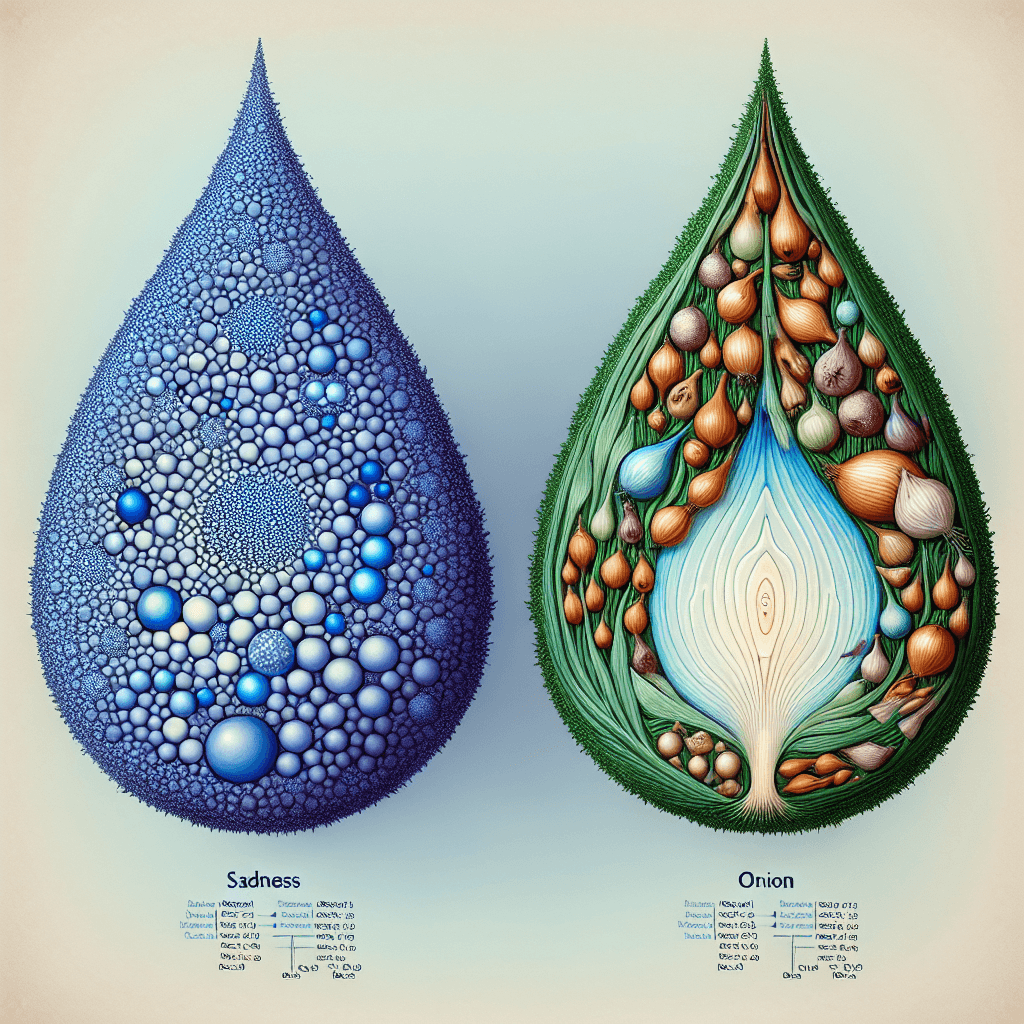
Why are your tears from sadness chemically different from your tears from an onion
Not all tears are created equal—the ones you cry from sadness contain unique stress hormones and natural painkillers that are completely absent when your eyes water from chopping an onion.

Too Long; Didn't Read
TLDR: Sad tears contain stress hormones and a natural painkiller to help you self-soothe. Onion tears are mostly water, designed simply to flush the irritant out of your eye.
The Science of Crying: Why Are Your Tears from Sadness Chemically Different from Your Tears from an Onion?
We’ve all been there. One moment you're sobbing through the end of a heart-wrenching film, the next you're wincing as your eyes stream while dicing an onion for dinner. In both cases, tears are flowing, but the experience feels entirely different. This begs the question: is a tear just a tear, or is there more going on beneath the surface? The fascinating answer is that the tears you shed from sadness are, in fact, chemically distinct from the ones an onion provokes. This blog post will explore the remarkable science behind our tears, revealing how their unique chemical compositions reflect their very different purposes.
Not All Tears Are Created Equal: The Three Main Types
Before diving into the onion-versus-emotion debate, it’s crucial to understand that scientists classify tears into three distinct categories, each with a specific function and a unique molecular makeup.
- Basal Tears: These are the workhorses of your eyes. Your lachrymal glands produce them constantly to lubricate, nourish, and protect your corneas. They form a thin, three-layered film over your eye that is essential for clear vision and comfort. A key ingredient is lysozyme, a powerful antibacterial enzyme that helps keep your eyes free from infection.
- Reflex Tears: These are your eyes’ emergency response team. Triggered by external irritants like smoke, dust, wind, or the chemical vapors from an onion, reflex tears are designed to flush out harmful substances and debris. They are produced in much larger quantities than basal tears to quickly wash away the threat.
- Psychic (or Emotional) Tears: These are the tears tied to our deepest feelings, from intense sadness and grief to overwhelming joy and relief. Unlike the other two types, emotional tears are a uniquely complex response to our internal state, regulated by the brain's limbic system—the center of emotion.
The Chemistry of an Onion Cry
When you cut an onion, you rupture its cells, releasing enzymes that mix with sulfur-rich compounds. This chemical reaction creates an irritating gas called syn-propanethial-S-oxide. When this gas reaches your eyes, it dissolves in the surface moisture and forms sulfuric acid, a mild irritant. Your corneal nerves instantly send a distress signal to your brainstem, which in turn commands your lachrymal glands to open the floodgates.
The resulting reflex tears are a rapid and powerful defense mechanism. Chemically, they are composed of over 98% water, along with electrolytes like sodium, to dilute the acid and wash it away as quickly as possible. While they contain some of the same antibodies and enzymes as basal tears, their primary composition is a simple, watery solution designed for flushing, not complex signaling.
The Complex Cocktail of Emotional Tears
This is where the science gets truly fascinating. Emotional tears are far more than just salty water. Pioneering research led by biochemist Dr. William Frey in the 1980s discovered that emotional tears have a distinctly different chemical profile from reflex tears. In addition to the base components of water and salt, psychic tears contain significantly higher concentrations of protein-based substances, including:
- Stress Hormones: Emotional tears have been found to contain hormones like prolactin and adrenocorticotropic hormone (ACTH), which are linked to stress. This has led to the widely accepted theory that crying may be a literal way for the body to purge these stress-related chemicals, helping to restore its chemical balance after an emotional event.
- Leucine Enkephalin: This is one of the most remarkable discoveries. Emotional tears contain leucine enkephalin, an endorphin that acts as a natural painkiller. Its presence suggests that the act of crying has a self-soothing, pain-relieving effect, which helps explain the feeling of relief or catharsis many people experience after a "good cry."
The presence of these unique substances indicates that emotional crying is not just a symptom of our feelings but an active biological process designed to help us cope with and recover from them.
A Tear is More Than Just Water
In conclusion, while all tears may look the same, they are sophisticated fluids tailored to specific tasks. Basal tears protect and lubricate, reflex tears act as a simple but effective eyewash for external threats, and emotional tears serve as a complex release valve for our internal world. The chemical difference between the tear from an onion and the tear from a broken heart is a testament to the intricate connection between our bodies and our emotions. So, the next time you find yourself crying, whether from a poignant story or a pungent vegetable, remember that your body is performing a sophisticated and meaningful act, perfectly designed for the situation at hand.


