
Why did a single stray pig almost start a war between America and Britain
In 1859, the fate of North America didn't hang on a treaty or a tyrant, but on one hungry pig who wandered into the wrong potato patch.

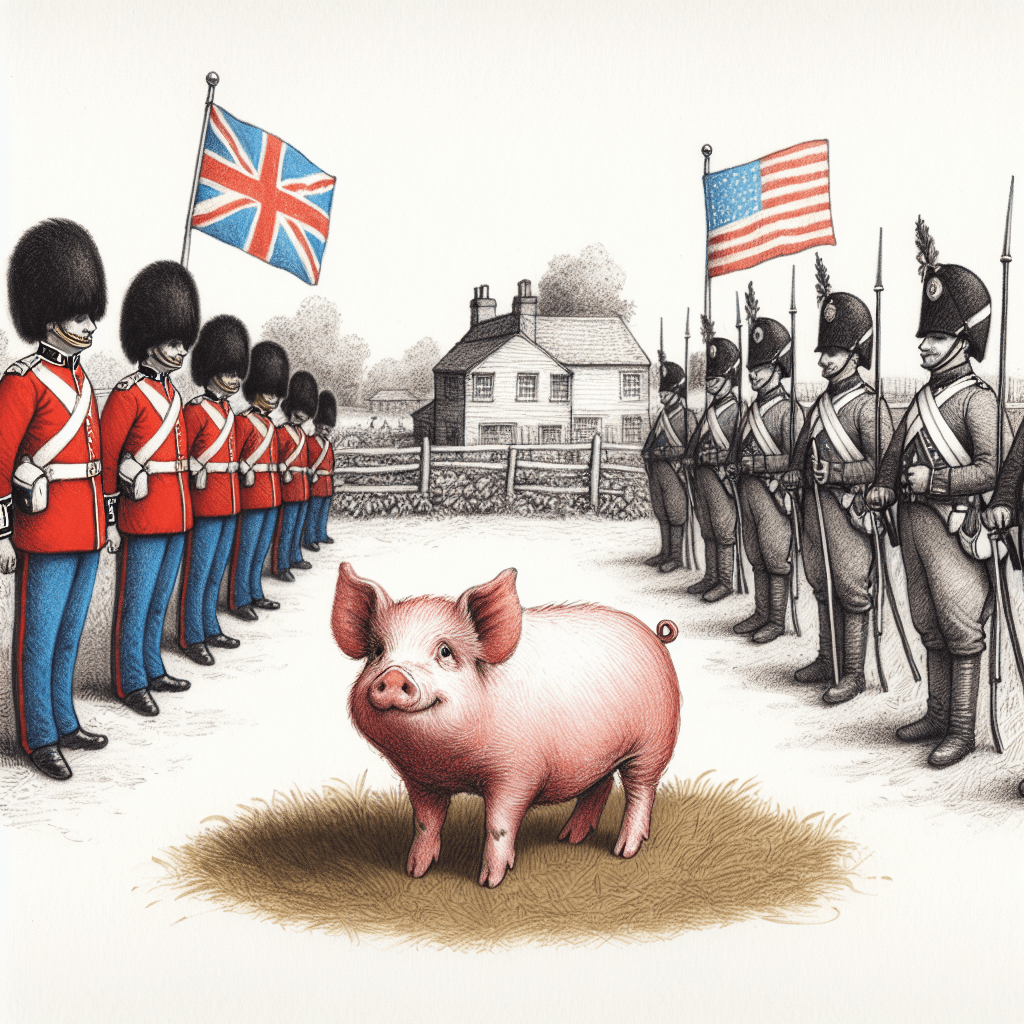
Too Long; Didn't Read
TLDR: An American farmer on an island claimed by both the US and Britain shot a British-owned pig for eating his potatoes. The argument escalated until both nations sent warships and troops, creating a tense standoff that almost started a war over a vague border treaty.
The Pig War: Why Did a Single Stray Pig Almost Start a War Between America and Britain?
History is filled with grand conflicts sparked by political ambition, religious fervor, and fights for freedom. But what if one of the most tense international standoffs between two global superpowers was triggered by something far more mundane? Imagine a scenario where hundreds of soldiers and multiple warships are poised for battle, all because a pig wandered into the wrong garden. This isn't fiction; it's the bizarre, true story of the 1859 Pig War. This post will explore how an ambiguous treaty and a farmer's frustration over a pig in his potato patch brought the United States and Great Britain to the very brink of war.
The Root of the Conflict: A Treaty's Ambiguity
The Pig War's origins lie not in animosity over livestock, but in the confusing language of a treaty. The Oregon Treaty of 1846 was meant to finally settle the border dispute between the United States and British North America (modern-day Canada). The treaty established the border along the 49th parallel, but it became vague when it reached the Pacific coast.
The text specified the boundary should continue "down the middle of the channel which separates the continent from Vancouver's Island." The problem? There isn't just one channel.
- The United States argued the border ran through the Haro Strait, west of the San Juan Islands, placing the strategically valuable island chain in American territory.
- Great Britain insisted the border followed the Rosario Strait, to the east of the islands, which would make them British.
Because of this cartographical confusion, both nations laid claim to the San Juan Islands. For over a decade, a tense but mostly peaceful joint occupation existed, with American settlers living alongside employees of Britain's Hudson's Bay Company.
The Spark: A Pig, a Farmer, and a Potato Patch
This fragile peace was shattered on June 15, 1859. Lyman Cutlar, an American farmer, woke up to find a large black pig, owned by a British Hudson's Bay Company employee named Charles Griffin, rooting through his potato patch for the umpteenth time. Fed up, Cutlar shot and killed the pig.
What followed was a classic neighborhood dispute that spiraled out of control. Cutlar went to Griffin to offer compensation. Accounts vary, but Cutlar offered $10 (a fair price) while Griffin, insulted, demanded an absurd $100. The argument escalated, with Griffin threatening to have the British authorities arrest Cutlar. Fearing imprisonment, the American settlers on the island called on the U.S. military for protection, transforming a personal squabble into an international incident.
From Farce to Brinkmanship: The Military Standoff
The American military commander for the region, Brigadier General William S. Harney, was known for his aggressive, anti-British stance. Without consulting Washington, he dispatched a company of 66 soldiers under the command of Captain George Pickett (who would later gain fame at the Battle of Gettysburg) to the island.
The British saw this as an invasion of their sovereign territory. In response, they sent three powerful warships to the island, carrying hundreds of Royal Marines. Over the next two months, the situation intensified dramatically. The American force grew to over 460 soldiers with 14 cannons, while the British presence swelled to five warships armed with over 160 guns and carrying more than 2,000 men. The two sides were locked in a tense standoff, with a single misstep threatening to ignite a full-blown war.
Cooler heads, however, ultimately prevailed. When the governor of British Columbia, James Douglas, ordered Rear Admiral Robert L. Baynes to land his marines and engage the Americans, Baynes refused. He famously declared that he would not "involve two great nations in a war over a squabble about a pig." His refusal to escalate bought diplomats in London and Washington time to intervene.
Conclusion
The Pig War is a fascinating historical lesson on how simmering geopolitical tensions can erupt over the most trivial of sparks. A dispute over a pig didn't create the conflict, but it exposed the deep-seated issues bubbling beneath the surface of an ill-defined border. The standoff eventually led to peaceful negotiations, and in 1872, an international arbitration committee led by Germany's Kaiser Wilhelm I ruled in favor of the American claim, officially granting the San Juan Islands to the United States. In the end, the only casualty of this tense, months-long military confrontation remained the pig itself, a porcine footnote in the history of Anglo-American relations.


