
Why did ancient Romans use human urine as a key ingredient in their mouthwash and toothpaste
While we reach for minty-fresh rinses, ancient Romans swore by a much more pungent secret for a sparkling smile: human urine. Discover the shocking—and surprisingly scientific—reason why this "liquid gold" was once considered the ultimate luxury in dental hygiene.

Too Long; Didn't Read
Ancient Romans used human urine in their oral care because it contains ammonia, a natural cleaning agent that effectively whitened teeth and dissolved stains.
The Liquid Gold of Rome: Why Did Ancient Romans Use Human Urine as a Key Ingredient in Their Mouthwash and Toothpaste?
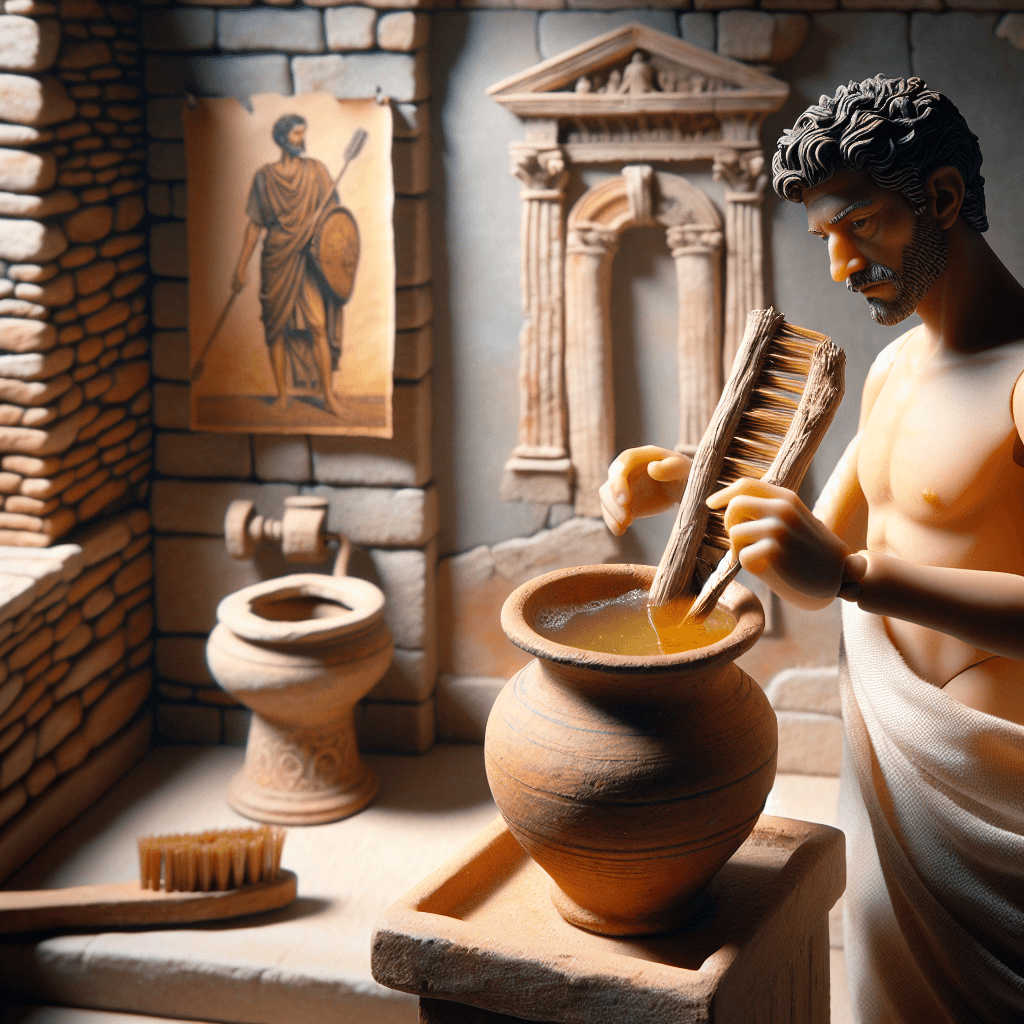
Imagine beginning your morning ritual by reaching for a bottle of aged, fermented human urine to gargle and brush your teeth. While the thought is enough to turn a modern stomach, for the citizens of ancient Rome, this was a standard and highly effective approach to dental hygiene. This practice was so common that the Roman government eventually turned it into a profitable industry.
But this was not a ritual born of superstition or lack of resources. Instead, it was a decision based on a practical, albeit pungent, understanding of chemistry. This blog post explores the scientific and social reasons why ancient Romans used human urine as a key ingredient in their mouthwash and toothpaste, revealing how a waste product became one of the most valued cleaning agents in the ancient world.
The Chemistry of Clean: The Role of Ammonia
The primary reason Romans used urine for dental care lies in its chemical composition. Human urine is rich in urea, a nitrogenous organic compound. When urine is left to sit or "age," bacteria convert the urea into ammonia.
Ammonia is a weak base and a highly effective cleaning agent. In the modern world, ammonia is a staple in glass cleaners and floor scrubs because of its ability to break down organic matter and neutralize acids. For a Roman citizen, the ammonia in aged urine served two main functions:
- Bleaching Agent: Ammonia acted as a natural whitener, stripping away stains from the tooth enamel.
- Antibacterial Properties: By creating an alkaline environment, the ammonia helped neutralize the acids produced by oral bacteria, which are the primary cause of tooth decay.
Urine as a Multi-Purpose Cleaning Product
To understand why it was used for teeth, one must understand that urine was the "all-purpose cleaner" of the Roman Empire. Its use extended far beyond the bathroom.
The Laundry Industry
The most significant users of urine were the fullones, or Roman launderers. In a world without synthetic soaps, clothes were soaked in vats of aged urine and trampled by workers. The ammonia acted as a degreaser, removing sweat and oils from wool togas and whitening the fabric.
The Trade of "Liquid Gold"
Urine was so essential to daily life that public urinals were placed on street corners to collect it. This collection was so lucrative that Emperor Vespasian famously imposed a "urine tax" (vectigal urinae) in the 1st century AD. When his son Titus complained about the "disgusting" nature of the tax, Vespasian reportedly held up a gold coin and uttered the famous phrase, Pecunia non olet—"Money does not smell."
Dental Hygiene and Social Status
While the idea of urine-based toothpaste may seem primitive, the Romans were actually quite advanced in their pursuit of a bright smile. They often mixed urine with other abrasives to create a paste. Common additives included:
- Crushed eggshells
- Pumice stone
- Burnt oyster shells
- Charcoal
Interestingly, not all urine was considered equal. According to historical accounts and the writings of the poet Catullus, the Romans believed that certain types of urine were more potent than others. For example, urine imported from the Iberian Peninsula (modern-day Spain) was highly prized and considered the "best" for whitening teeth, likely because the specific diet or dehydration levels of people in that region resulted in a higher concentration of urea.
Catullus even used this habit to mock his rivals. In one poem, he teased a man named Egnatius for having such white teeth, noting that the whiter his teeth shone, the more "Spanish urine" he must have consumed. This indicates that while the practice was common, the resulting "blindingly white" smile was a recognizable social marker.
Conclusion
The Roman reliance on human urine for dental hygiene highlights a fascinating intersection between ancient necessity and basic chemistry. By utilizing the ammonia found in aged urine, Romans were able to maintain white teeth and combat oral bacteria long before the invention of modern fluoridated toothpaste.
While we may be grateful for the minty-fresh alternatives available today, we cannot deny the ingenuity of a civilization that recognized the chemical potential in what others discarded as waste. Understanding why ancient Romans used human urine as a key ingredient in their mouthwash and toothpaste offers a unique perspective on the evolution of hygiene and the timeless human desire for a perfect smile. For those interested in the history of medicine and daily life, the Roman "liquid gold" remains one of history’s most striking examples of resourcefulness.


