Why do many public restrooms use U-shaped toilet seats with an open gap in the front
Ever wondered why public toilet seats are missing their front half? It’s not a design flaw—there’s a fascinating, hygiene-driven reason (and a strict plumbing code) behind that mysterious U-shaped gap.

Too Long; Didn't Read
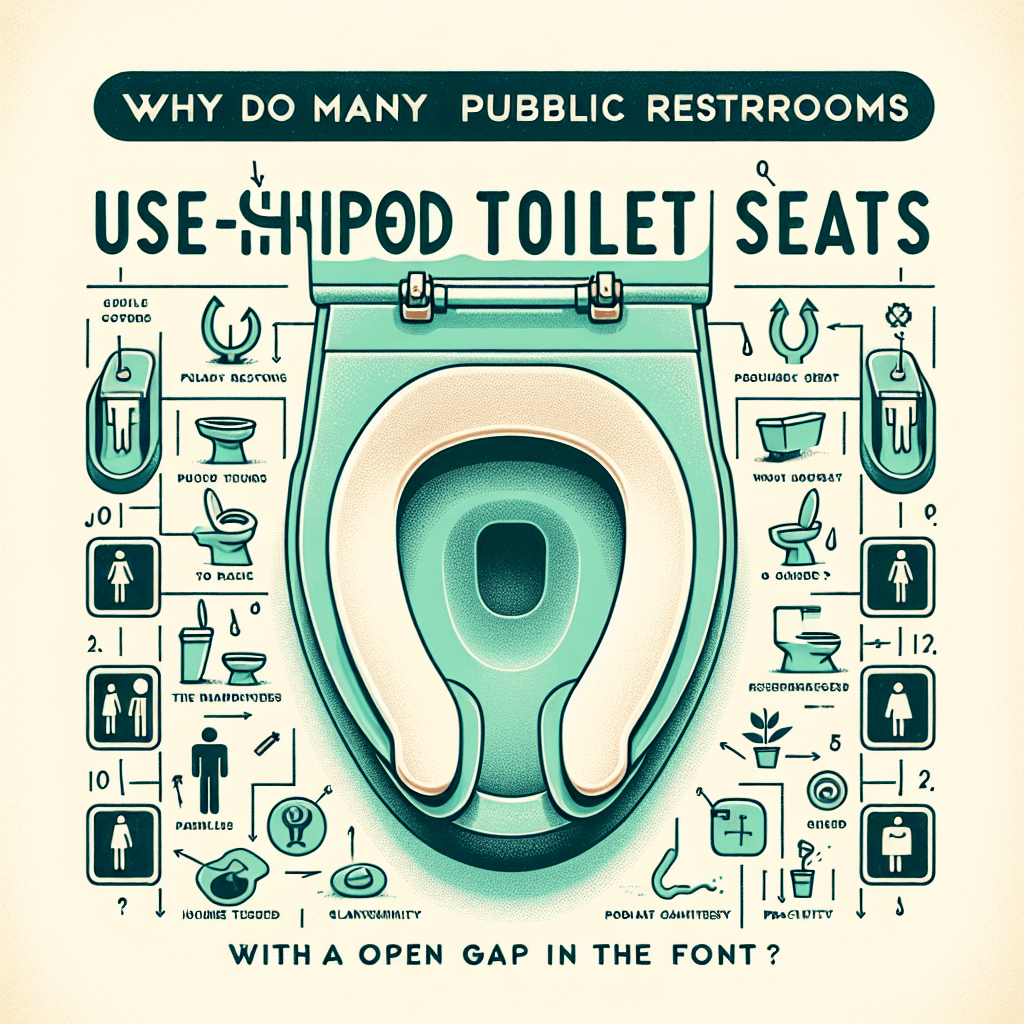
Public restrooms use U-shaped seats primarily for hygiene and compliance with plumbing codes. The open front reduces contact between the seat and genitals, provides more space for wiping, and helps prevent urine from splashing onto the surface.
The Mystery of the Gap: Why Do Many Public Restrooms Use U-Shaped Toilet Seats with an Open Gap in the Front?
Have you ever noticed that the toilet seats in airports, malls, and office buildings look fundamentally different from the one in your own bathroom? While residential toilets almost exclusively feature a solid, circular, or oval "O-shaped" seat, public facilities favor a "U-shaped" design with a prominent open gap at the front. It is a detail most people overlook until they are forced to consider the mechanics of public hygiene. Far from being a random design quirk or a cost-cutting measure to save on plastic, this specific shape is a calculated engineering choice. Understanding why do many public restrooms use U-shaped toilet seats with an open gap in the front reveals a fascinating intersection of law, biology, and sanitation.
The Legal Requirement: The Uniform Plumbing Code
The primary reason you see these seats in public spaces is not a matter of style, but a matter of law. Most public restrooms in the United States must adhere to the Uniform Plumbing Code (UPC), a set of standards developed by the International Association of Plumbing and Mechanical Officials (IAPMO).
Since 1955, the UPC has mandated that "water closet seats shall be of smooth, non-absorbent material and shall be of the open-front type." This regulation applies specifically to public-use toilets. By standardizing the design, the code ensures that commercial property owners provide a baseline of hygiene and accessibility for all users. While residential homes are exempt from this specific requirement—allowing for the more aesthetic "closed" seats—commercial entities must comply to pass building inspections and meet health safety standards.
Prioritizing Hygiene and Physical Health
The most significant functional reason for the gap is hygiene, particularly for female users. The design is intended to provide "breathing room" during the wiping process.
- Minimizing Contact: The gap allows users to wipe the perineal area after using the toilet without their hands or toilet paper coming into direct contact with the seat. By removing the front section of the plastic, the design reduces the risk of transferring bacteria from the seat to the body or vice versa.
- Preventing Contamination: According to health experts, the open front helps women follow the "front-to-back" wiping technique more easily. This is a critical practice for preventing the spread of E. coli and other bacteria to the urinary tract, thereby reducing the likelihood of infections.
Practicality and Maintenance
Beyond personal hygiene, the U-shaped seat offers practical benefits for the maintenance of high-traffic restrooms. Public toilets face significantly more "wear and tear" and hygiene challenges than home toilets.
Reducing Urine Splash
For male users who may not lift the seat or for those using the toilet while seated, the open gap provides a "clearance zone." This reduces the likelihood of urine splashing onto the front of the seat. In a high-traffic environment, this keeps the stall cleaner for the next occupant and reduces the workload for custodial staff.
Discouraging Theft
While it may seem unlikely, toilet seat theft was historically a concern for public facility managers. The U-shaped seat is specialized for commercial plumbing fixtures and lacks the "finished" look of a home toilet seat. Because they look out of place in a residential bathroom, these seats are less likely to be stolen for personal use.
Weight and Durability
Modern U-shaped seats are often engineered to support more weight and frequent use than residential models. By removing the front section, the pressure is redistributed across the remaining hinges and supports, often making the seat more resilient to the shifting weight of various users throughout the day.
Conclusion
The question of why do many public restrooms use U-shaped toilet seats with an open gap in the front finds its answer in a blend of historical regulations and practical sanitation. From the strict requirements of the Uniform Plumbing Code to the biological necessity of preventing bacterial spread, every inch of the U-shaped design serves a specific purpose. While the gap may seem like a minor detail, it plays a major role in keeping public spaces safer and cleaner for everyone. Next time you encounter this common piece of plumbing architecture, you can appreciate it as a functional tool designed with your health and the public's well-being in mind.