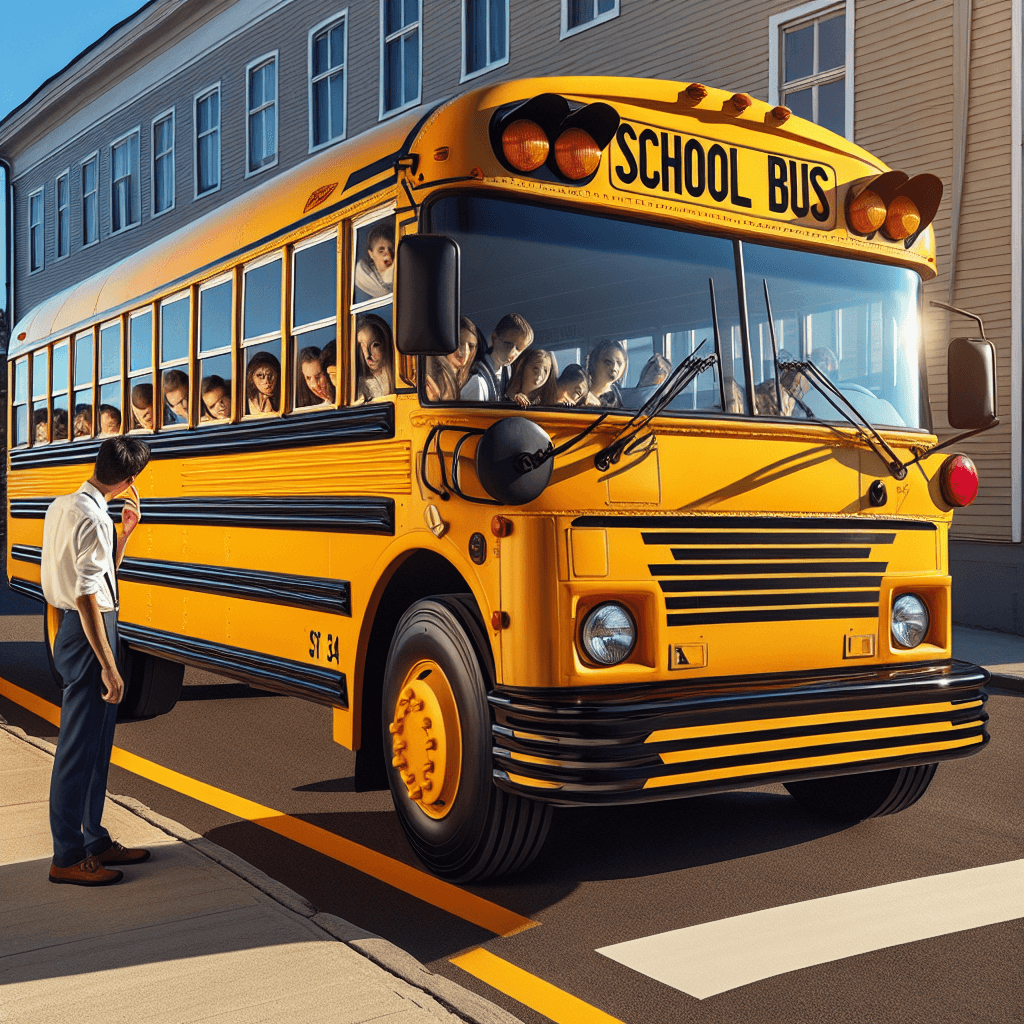
Why do school buses have those thick black horizontal stripes running along their sides
Those iconic black stripes aren’t just for decoration; they’re actually a hidden "armor" designed to protect students and guide rescuers during an accident. Discover the life-saving engineering secret hiding in plain sight on every school bus.

Too Long; Didn't Read
These black stripes, known as rub rails, reinforce the thin metal sides of the bus to prevent them from crumpling during a collision. They also serve as visual markers for emergency responders, indicating the height of the internal floor and seats to help them determine the safest places to cut the vehicle during a rescue.
More Than Just Design: Why Do School Buses Have Those Thick Black Horizontal Stripes Running Along Their Sides?
Almost everyone can identify the iconic silhouette of a North American school bus. While the "School Bus Glossy Yellow" paint is the most obvious safety feature, there is another curious detail that often goes unnoticed: the thick black horizontal stripes running the length of the vehicle. Have you ever wondered if these lines are merely decorative, or if they serve a more technical purpose?
Far from being a simple stylistic choice, these stripes—known professionally as "rub rails"—are critical safety components engineered to protect students and assist emergency responders. This post explores the structural and functional reasons why do school buses have those thick black horizontal stripes running along their sides, revealing how these simple metal bands play a massive role in vehicle integrity.
What are Rub Rails?
The thick black stripes on a school bus are actually longitudinal steel bars called rub rails. While they are painted black to provide a sharp visual contrast against the yellow body, their primary function is physical rather than aesthetic. These rails are bolted or riveted to the exterior of the bus's "skin" and are specifically designed to reinforce the thin sheet metal of the side walls.
According to safety standards established by the National School Transportation Specifications and Procedures, these rails must be present on every school bus to ensure a uniform level of protection across all manufacturers.
Structural Reinforcement and Impact Protection
The primary reason these stripes exist is to provide structural integrity. School buses are designed with a "cage" construction, and the rub rails act as external skeletal supports. Their placement is strategic:
- Impact Absorption: In the event of a side-collision (a "T-bone" accident), the rub rails are the first point of contact. They absorb and distribute the force of the impact along the entire length of the bus frame rather than allowing the colliding vehicle to easily puncture the thin side panels.
- Preventing Intrusion: By stiffening the side of the bus, the rails prevent the exterior walls from collapsing inward into the passenger seating area.
- Deflecting Objects: The "rub" in rub rail refers to their ability to allow the bus to "rub" against an object—like a post or a high curb—without sustaining significant structural damage to the main body.
A Hidden Map for Emergency Responders
Perhaps the most fascinating reason why do school buses have those thick black horizontal stripes running along their sides is that they act as a visual "map" of the bus's interior. In a serious accident where visibility might be low or the bus is overturned, emergency responders use these stripes to identify where to focus their rescue efforts.
The stripes are typically placed at three specific heights:
- The Window Level (Top Rail): This stripe usually aligns with the bottom of the window frames and the top of the passenger seats.
- The Seat Level (Middle Rail): This stripe marks the height of the actual seat cushions where the students are sitting.
- The Floor Level (Bottom Rail): This stripe indicates the location of the bus floor.
By looking at these lines, firefighters and paramedics immediately know where the "crash zone" is versus the "passenger zone." If they need to use hydraulic rescue tools (like the Jaws of Life) to cut into the bus, the stripes tell them exactly where the floor and seats are located, ensuring they don't accidentally cut into a structural support or a space occupied by a student.
Why are They Black?
While some districts or manufacturers may use different colors, black is the industry standard for several reasons:
- Contrast: Black provides the highest visibility against the yellow background, making the "map" easy to read from a distance.
- Maintenance: Rub rails are prone to scratches and minor scuffs. Black paint is inexpensive and easy to touch up, helping the bus maintain a professional appearance despite the wear and tear of daily routes.
Conclusion
The presence of those thick black horizontal stripes is a perfect example of how school bus design prioritizes safety above all else. These rub rails are not just for show; they are vital pieces of safety equipment that reinforce the bus's structure and provide life-saving information to emergency personnel during a crisis.
Understanding why do school buses have those thick black horizontal stripes running along their sides helps us appreciate the rigorous engineering behind the vehicles that transport millions of children every day. The next time you see a school bus, you’ll know that those stripes are much more than a design choice—they are a silent guardian built into the very frame of the vehicle.