
Why does a shower curtain always pull inward toward you instead of away when the water is running
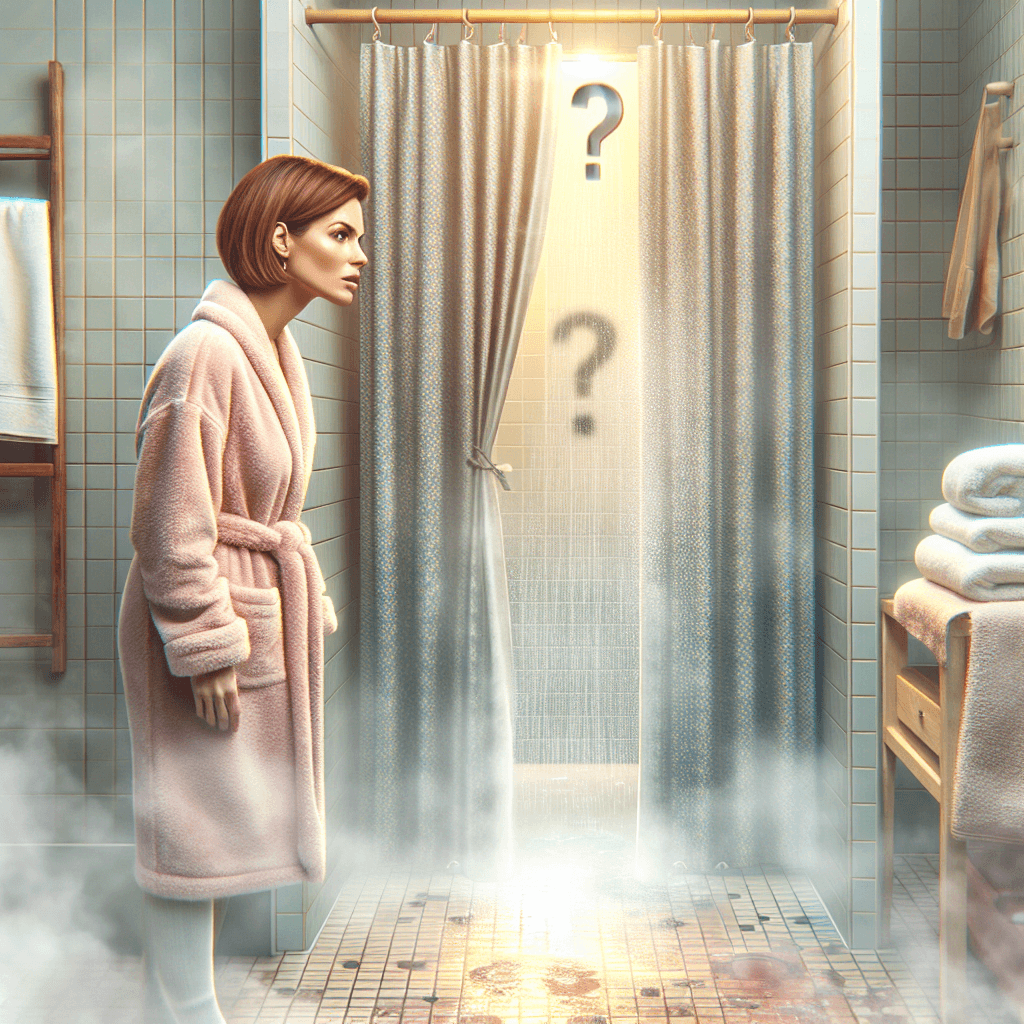
It’s the invisible "ghost" that attacks you every morning: why does your shower curtain always cling to your legs instead of blowing away? Dive into the surprising physics behind this daily annoyance and discover the hidden forces lurking in your bathroom.

Too Long; Didn't Read
Shower curtains pull inward due to a drop in air pressure inside the stall. This is caused by the Bernoulli effect and horizontal vortexes created by the falling water, which results in the higher air pressure outside the shower pushing the curtain toward the low-pressure zone.
The Science of the "Shower Curtain Effect": Why Does a Shower Curtain Pull Inward Toward You Instead of Away?
It is a universal morning frustration: you step into a relaxing, hot shower, only to have the cold, plastic curtain suddenly billow inward and cling to your legs. It feels as though the curtain is intentionally attacking you, but this phenomenon, known formally as the "shower curtain effect," is actually a complex display of fluid dynamics. For decades, the question of why does a shower curtain always pull inward toward you instead of away when the water is running? has intrigued both frustrated bathers and serious scientists alike. While it may seem like a minor nuisance, the physics behind it involves competing theories of pressure, temperature, and airflow. This post will break down the leading scientific explanations for this curious domestic mystery.
The Leading Theories: Why the Curtain Moves
Scientists have proposed several explanations for this movement. While early theories focused on simple pressure changes, modern computer modeling has revealed a more intricate interaction of forces.
1. Bernoulli’s Principle
One of the most common explanations cited in physics classrooms is Bernoulli’s Principle. This principle states that as the speed of a moving fluid (including air) increases, its pressure decreases.
- How it applies: When you turn on the shower, the water droplets accelerate the air around them.
- The Result: This moving air creates a zone of lower pressure inside the shower stall. Because the air pressure outside the shower remains higher (atmospheric pressure), it pushes the curtain inward toward the area of lower pressure.
However, many physicists argue that Bernoulli’s Principle alone isn't enough to cause such a strong pull, especially in showers with low-flow heads.
2. The Buoyancy (Chimney) Effect
Another popular theory is the Buoyancy Effect, often referred to as the "chimney effect." This theory focuses on the temperature difference between the air inside and outside the shower.
- The Process: Hot water from the shower heats the air inside the stall.
- The Movement: Because hot air is less dense than cold air, it rises (just like smoke in a chimney), escaping over the top of the shower rod.
- The Replacement: To replace the rising hot air, cooler, denser air from the bathroom floor is sucked under the curtain. This constant displacement creates a current that pulls the bottom of the curtain inward.
3. The Horizontal Vortex Theory (The Schmidt Model)
The most comprehensive answer came in 2001 from David Schmidt, an assistant professor at the University of Massachusetts. Using a complex computer simulation that tracked 1.5 million tiny cells of air, Schmidt discovered a previously unrecognized factor: a horizontal vortex.
According to Schmidt’s research, which earned him an Ig Nobel Prize, the spray of the shower creates a "mini-cyclone" or vortex. The axis of this vortex is horizontal, perpendicular to the shower curtain. The center of this swirling vortex is a low-pressure zone, which acts like a vacuum, sucking the curtain toward the water stream.
Key Factors That Influence the Pull
Not every shower experience is the same. Several variables can dictate just how aggressively the curtain moves:
- Water Pressure: Higher pressure increases air displacement and vortex strength.
- Curtain Weight: Lightweight plastic liners are far more susceptible to pressure changes than heavy fabric or weighted curtains.
- Temperature: While the effect can happen with cold water, steam significantly amplifies the Buoyancy Effect.
Practical Solutions to Stop the Cling
If the physics are more annoying than interesting, there are several ways to counteract these forces:
- Weighted Curtains: Using liners with magnets or lead weights at the bottom provides enough gravitational force to resist the pressure differential.
- Increased Airflow: Leaving a small gap at the side of the curtain can help equalize the pressure between the inside and outside of the shower.
- The "Water Seal": Splashing a bit of water on the edge of the tub before closing the curtain can create a temporary adhesive seal that keeps the liner in place.
Conclusion
The question of why does a shower curtain always pull inward toward you instead of away when the water is running? is more than just a bathroom quirk; it is a demonstration of Bernoulli’s Principle, thermal buoyancy, and vortex dynamics working in tandem. From the rising heat of the water to the invisible cyclones created by the showerhead, multiple forces are constantly pushing and pulling on that thin piece of plastic.
Understanding these principles transforms a daily annoyance into a fascinating physics lesson. Whether you choose to upgrade to a weighted curtain or simply appreciate the fluid dynamics at play, you can now rest easy knowing that your shower curtain isn't actually out to get you—it’s just following the laws of science. For those interested in home science, observing how different water temperatures affect the "cling" is a great way to see these theories in action.


