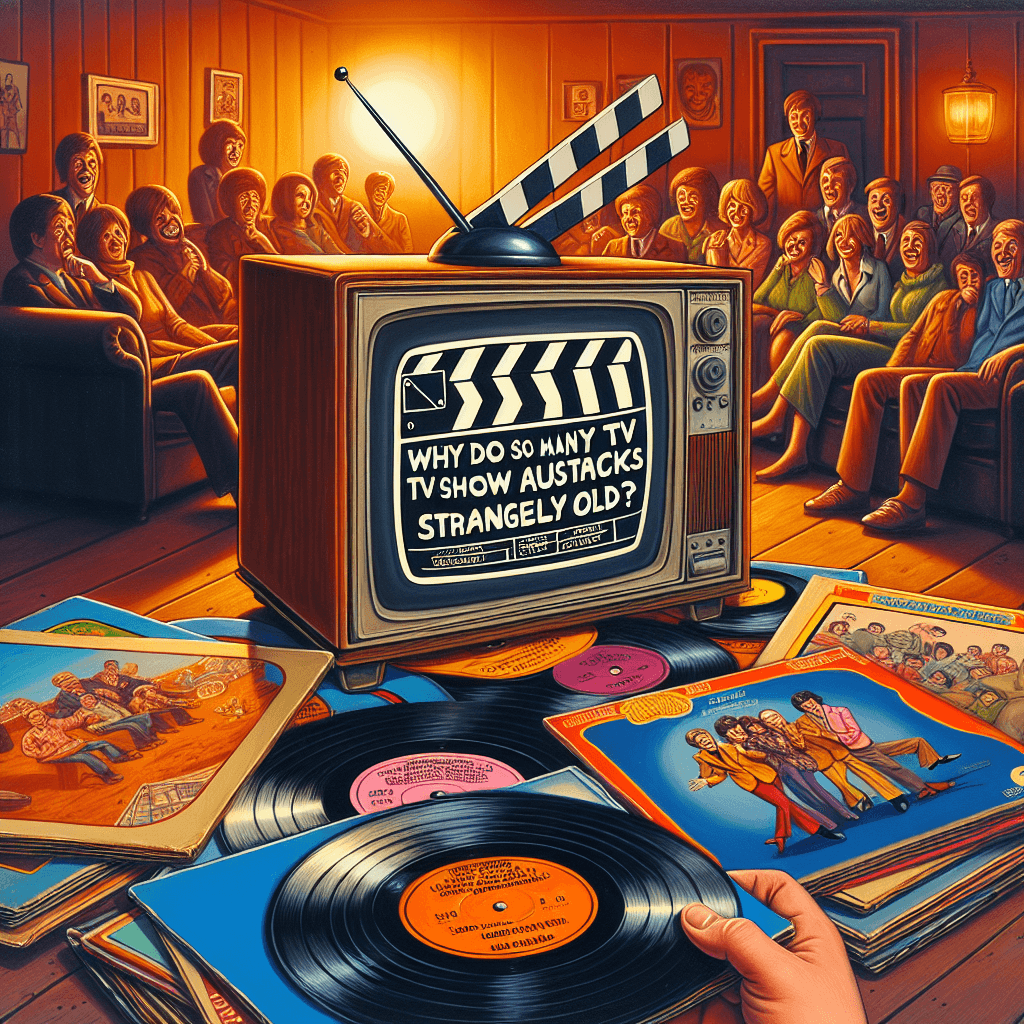
Why do so many TV show laugh tracks sound strangely old
That familiar laugh track has a surprisingly spooky secret: you’re often hearing the actual laughter of people who have been dead for decades.

Too Long; Didn't Read
TLDR: TV laugh tracks sound old because they are. Most come from a library of recordings made in the 1950s that have been endlessly recycled for decades, meaning you are often hearing the laughter of people who are long dead.
The Ghost in the Machine: Why Do So Many TV Show Laugh Tracks Sound Strangely Old?
Have you ever settled in to watch a sitcom, maybe a classic like Friends or even a more recent show like The Big Bang Theory, and felt a strange sense of sonic déjà vu? The jokes are contemporary, the actors are familiar, but the bursts of audience laughter sound… well, old. It’s a distinct, slightly muffled sound that feels out of place in a modern production. You’re not imagining it. That disembodied laughter isn't just old-fashioned; in many cases, it's literally the sound of an audience from the 1950s. This blog post will uncover the fascinating history behind the canned laugh, revealing why the same vintage chuckles and guffaws have echoed through our television sets for over 70 years.
The Man Behind the Machine: Charles Douglass
The story of the laugh track begins with one man: Charles "Charley" Douglass. A sound engineer for CBS in the early 1950s, Douglass was tasked with solving a problem for live television. Early sitcoms were often filmed in front of a live studio audience, but a joke falling flat or an inconsistent reaction could ruin a scene's pacing. The audience was an unpredictable element.
Douglass’s ingenious solution was the "Laff Box." This wasn't a simple recording of laughter played on a loop. It was a complex, piano-sized contraption that required a skilled operator. Inside, it held dozens of tape loops containing a meticulously curated library of different human reactions—everything from a small titter to a rolling belly laugh. An operator could "play" the Laff Box like an instrument, mixing and layering these sounds to create a seamless and perfectly timed audience reaction for any scene.
The "Laff Box" and Its Secret Sounds
What made Charley Douglass’s work so influential was not just his invention, but his library of sounds. He spent countless hours recording real audiences from hit programs of the era, such as I Love Lucy and The Red Skelton Show. He then painstakingly edited these recordings, isolating the best and most usable laughs. He filtered out any background noise or specific words, leaving only the pure, universal sound of human amusement.
Crucially, Douglass guarded this audio library as a trade secret. TV producers didn't buy his tapes; they hired his company, Northridge Electronics, to bring the Laff Box to their studio and "sweeten" their show's audio. This gave Douglass a near-monopoly on the industry that lasted for decades. From the 1950s through the 1980s, if a show had a laugh track, it was almost certainly the work of Douglass and his family.
The Enduring Echo: Why We Still Hear Them Today
The dominance of Northridge Electronics is the primary reason why these sounds became so standardized. The "Douglass laugh" became what producers, directors, and even audiences subconsciously expected a sitcom to sound like. When digital technology eventually replaced the cumbersome Laff Box, sound editors didn't start from scratch. They sought out the best, most effective laughs available—and those were the ones from the classic, time-tested Douglass library.
There are several key reasons why these specific 1950s laughs persist:
- Industry Standard: For decades, the Douglass library was the only professional option, embedding its sound deep into the DNA of television production.
- Proven Effectiveness: These laughs were edited for maximum impact. They are clean, well-timed, and proven to work on audiences.
- Digital Inheritance: As sound effects moved to digital libraries, the most famous and recognizable laughs—many originating from Douglass's tapes—were digitized and included in modern software and archives.
- Vintage Audio Quality: The original recordings were made using 1950s technology. Their slightly compressed, monaural quality is part of what gives them that distinct, "old" character compared to the crisp, stereo sound of modern productions.
Because these recordings were made over 70 years ago, it is a literal truth that when you hear that laugh track, you are hearing the voices of people who are no longer with us—a ghostly audience providing the soundtrack for generation after generation of comedy.
A Legacy of Laughter
So, the next time you notice that strangely familiar, vintage-sounding laughter on a TV show, you'll know why. It’s not a production oversight but a direct sonic link to the golden age of television. It’s the legacy of Charley Douglass, his mysterious Laff Box, and a secret library of sounds that proved so effective it has never been replaced. That old-fashioned chuckle is more than just a sound effect; it’s a genuine piece of broadcasting history, an enduring echo from a studio audience of the past.