
Why do some giant tarantulas keep tiny pet frogs to protect their eggs from insects
In one of nature’s most bizarre alliances, giant tarantulas are enlisting tiny frog "bodyguards" to protect their precious eggs from lethal invaders. Discover the fascinating science behind why these natural enemies have traded predation for a life-saving partnership.

Too Long; Didn't Read
Giant tarantulas and tiny frogs share a symbiotic relationship where the spider provides protection while the frog eats small insects that threaten the spider's eggs. This mutually beneficial partnership ensures the safety of the spider's offspring and gives the frog a secure, food-rich home.
Nature’s Oddest Couple: Why do some giant tarantulas keep tiny pet frogs to protect their eggs from insects?
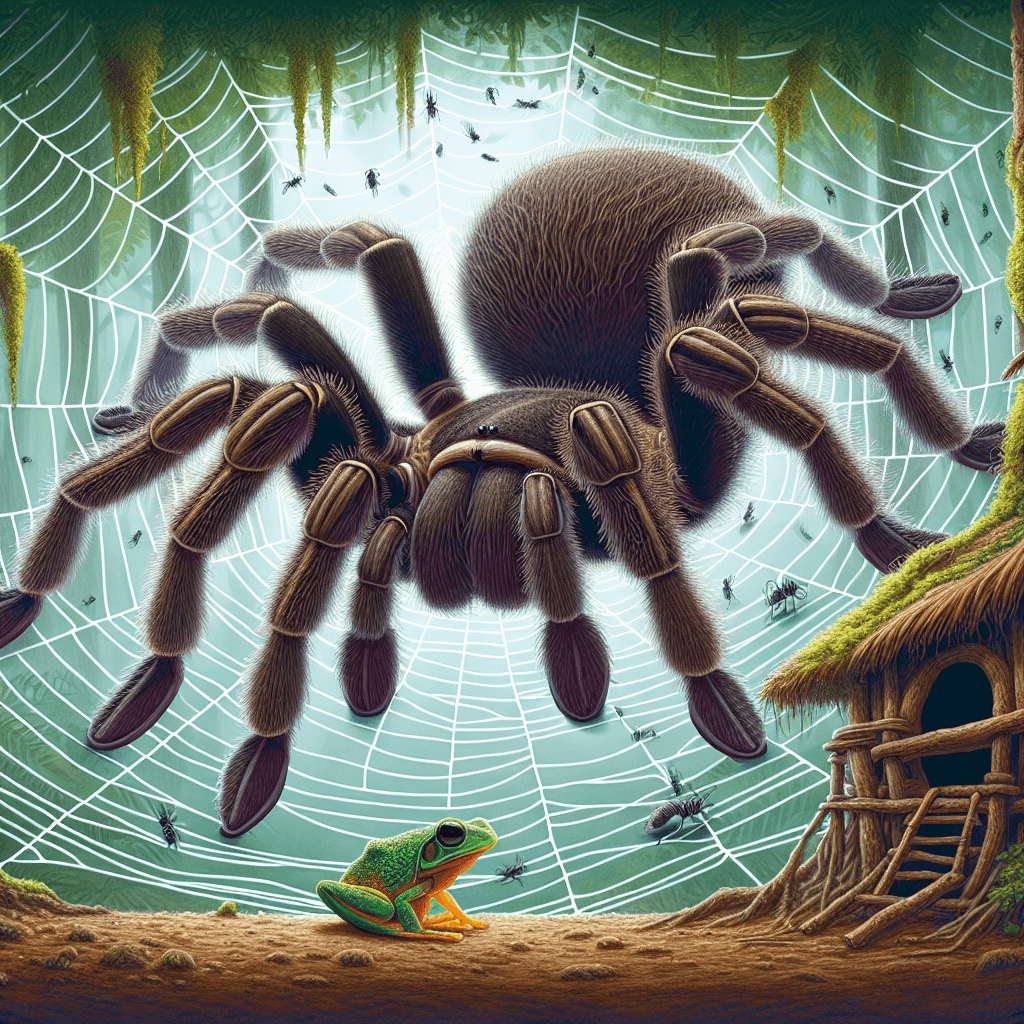
In the dense, competitive rainforests of South America, nature frequently forms alliances that seem to defy logic. Perhaps the most startling of these is the bond between the Colombian Lesserblack tarantula and the tiny dotted humming frog. At first glance, it looks like a predator-prey encounter frozen in time: a spider the size of a dinner plate looming over a frog no larger than a thumb. However, instead of a quick meal, what researchers have discovered is a sophisticated biological partnership. This phenomenon leads many to wonder: Why do some giant tarantulas keep tiny pet frogs to protect their eggs from insects? This blog post explores the fascinating mutualistic relationship between these two unlikely roommates and how their cooperation ensures the survival of the next generation.
The Players: A Giant Spider and a Tiny Frog
The primary subjects of this biological mystery are the Xenesthis immanis (the Colombian Lesserblack tarantula) and the Chiasmocleis ventrimaculata (the dotted humming frog). While these tarantulas are formidable predators capable of eating small rodents and birds, they allow these specific frogs to live within their burrows unharmed.
According to observations published in the Journal of Natural History, this relationship is a classic example of mutualism—a type of symbiosis where both species benefit from the presence of the other. The tarantula provides a safe haven, and in exchange, the frog provides a specialized service that the spider, despite its size, cannot perform alone.
The Bodyguard: Protecting the Egg Sac
The central reason for this alliance is the protection of the tarantula’s offspring. Giant tarantulas face a significant threat from small, opportunistic scavengers that are too small for the spider to effectively fight off.
- Ants and Flies: Small insects, particularly ants and certain species of flies, are attracted to the nutrient-rich egg sacs of the tarantula.
- The Frog's Role: Dotted humming frogs are microhylids, meaning they specialize in eating small invertebrates. By living in the burrow, the frog feeds on the very insects that would otherwise devour the spider’s eggs or young spiderlings.
- Pest Control: The frog acts as a dedicated pest control officer. It consumes ants, mites, and larvae that are too small for the tarantula to detect or catch with its large fangs.
The Sanctuary: What the Frog Gains
While the spider gets a bodyguard for its eggs, the frog receives benefits that make the risk of living with a giant arachnid worthwhile. In the harsh environment of the rainforest floor, a tiny frog is vulnerable to a long list of predators, including snakes, birds, and larger amphibians.
- Predator Deterrence: Few predators are brave enough to enter the burrow of a giant tarantula. The sheer presence of the spider offers the frog a "protective umbrella."
- Moisture and Climate Control: Tarantula burrows are typically humid and temperature-regulated, providing the ideal microclimate for a small frog to stay hydrated and healthy.
- Abundant Food Source: Because the spider’s prey remains and egg sacs attract insects, the frog has a consistent, localized food source within the safety of the burrow.
Why Doesn't the Spider Eat the Frog?
One of the most intriguing questions is how the tarantula distinguishes its "pet" from a potential meal. Research suggests that chemical signaling and tactile feedback play a crucial role. When a tarantula encounters an organism, it often uses its legs to "taste" or sense the creature.
Studies have indicated that these frogs may possess skin toxins or specific chemical signatures that signal to the tarantula that they are unpalatable. Furthermore, when the spider touches the frog, the frog remains relatively still or moves in a way that doesn't trigger the spider’s predatory strike reflex. This complex "recognition system" ensures that the tarantula recognizes the frog as a beneficial partner rather than prey.
Conclusion
The relationship between the Colombian Lesserblack tarantula and the dotted humming frog is a powerful reminder that nature is not always a simple story of "survival of the fittest" through competition. Often, survival is achieved through cooperation. By answering the question—why do some giant tarantulas keep tiny pet frogs to protect their eggs from insects?—we gain a deeper appreciation for the intricate checks and balances within our ecosystems. These two species have evolved a strategy that utilizes their individual strengths to overcome their shared vulnerabilities. As we continue to study these unique interactions, we learn that even the most fearsome predators can find value in a tiny, unlikely friend.


