Why was the world's first vending machine invented in ancient Egypt to dispense measured amounts of holy water
Long before snacks and sodas, ancient temple-goers were dropping bronze coins into a mechanical marvel to receive a precisely measured blessing. Discover the ingenious 2,000-year-old mystery behind the world’s first vending machine and the surprisingly modern problem it was designed to solve.

Too Long; Didn't Read
Hero of Alexandria invented the first vending machine in 1st-century Roman Egypt to stop temple visitors from taking more holy water than they paid for. His coin-operated device used a weighted lever system to dispense a precise amount of water, ensuring the temple received proper payment while preventing waste and theft.
Divine Automation: Why Was the World’s First Vending Machine Invented in Ancient Egypt to Dispense Measured Amounts of Holy Water?
When we think of vending machines, we usually picture refrigerated boxes filled with sodas and snacks in a modern breakroom. However, the concept of automated retail is nearly 2,000 years old. Long before the first patent for a modern coin-operated machine was filed in the 1880s, a Greek engineer and mathematician named Hero of Alexandria designed a revolutionary device in 1st-century Roman Egypt. But why was the world’s first vending machine invented in ancient Egypt to dispense measured amounts of holy water? The answer lies at the intersection of spiritual devotion, resource management, and ingenious engineering. This post explores the historical necessity and the brilliant mechanics behind this ancient innovation.
Hero of Alexandria: The Father of Automation
The story of the first vending machine begins with Hero of Alexandria (also known as Heron), a prolific inventor who lived in the city of Alexandria during the 1st century AD. Alexandria was then a melting pot of Greek, Roman, and Egyptian cultures, serving as a global hub for science and philosophy.
In his famous treatise Pneumatica, Hero described dozens of machines powered by steam, air pressure, and water. While he is often remembered for the aeolipile (the first steam engine), his holy water dispenser was perhaps his most practical contribution to daily life. This device was not a toy for the elite; it was a functional tool designed for the bustling temples of Egypt, which were under significant logistical pressure at the time.
The Problem: Spiritual Greed and Resource Waste
To understand why this machine was necessary, one must look at the economic and social environment of the ancient Egyptian temples. Temples were high-traffic areas where pilgrims arrived daily to perform rituals. A key part of these rituals involved washing one's hands or being sprinkled with "lustral" or holy water before entering the sacred space.
However, the temples faced a recurring problem: human nature. According to historical accounts of the era, many worshippers were taking far more holy water than they were entitled to, or more than they had donated for. This led to several issues:
- Resource Depletion: Holy water was often costly to prepare or transport, and rapid depletion strained temple resources.
- Financial Loss: Temples relied heavily on donations. When people took excess water without providing an equivalent offering, the temple’s ability to maintain its facilities was compromised.
- Inefficiency: Stationing priests at every basin to monitor water usage was an inefficient use of temple labor.
The vending machine was invented as a technological solution to a human problem. It ensured that the distribution of holy water was automated, equitable, and—most importantly—profitable.
How the World’s First Vending Machine Worked
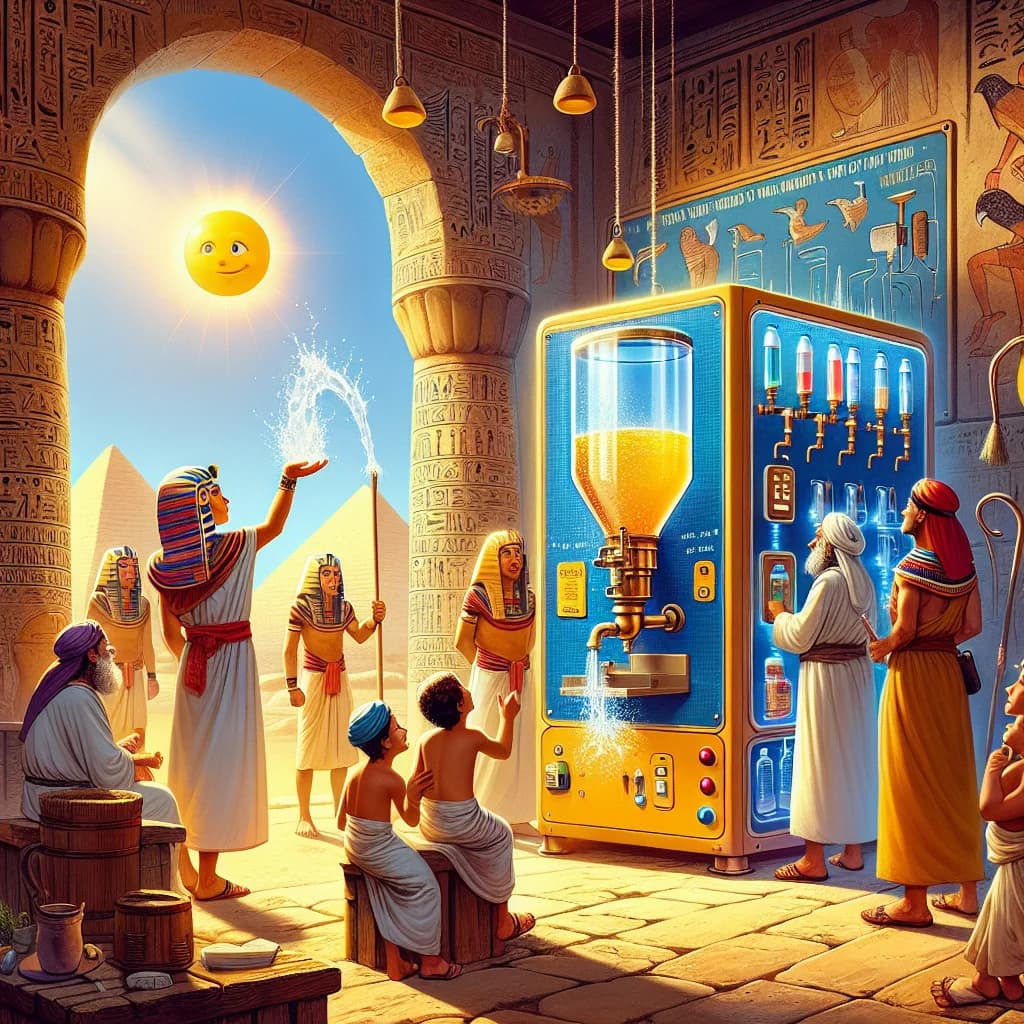
Hero’s design was a masterclass in simplicity and physics. It utilized gravity and a basic lever system to ensure a "measured amount" was dispensed every time. Here is the step-by-step process of how the ancient machine operated:
- The Coin Slot: The user would drop a five-drachma coin into a slot at the top of the machine.
- The Balance Lever: The coin would land on a small pan attached to a balanced horizontal beam (a lever).
- The Valve Opening: The weight of the coin would cause the pan to tip downward. This movement lifted a plug or a valve at the other end of the lever, which was submerged in a reservoir of water.
- The Dispensing: While the valve was lifted, water flowed out of a spout to the waiting worshipper.
- The Reset: As the lever tilted, the coin eventually slid off the slanted pan and fell into a collection box. Without the weight of the coin, the lever would snap back into its original position, reseating the plug and stopping the flow of water.
The Legacy of Ancient Innovation
The invention of the holy water dispenser highlights the incredible sophistication of ancient Egyptian and Greek engineering. It represents the first documented instance of a machine replacing a human to perform a transaction. By using the principles of weights and measures, Hero of Alexandria created a system that was fair to both the institution and the individual.
While the machine eventually faded from use as the Roman Empire transitioned, its core logic—using a standardized token to trigger a mechanical action—remained dormant for centuries until the Industrial Revolution.
Conclusion
The first vending machine was not born out of a desire for convenience, but as a solution to ensure the fair distribution of a sacred resource. By understanding why the world’s first vending machine was invented in ancient Egypt to dispense measured amounts of holy water, we gain insight into the timeless nature of human behavior and the ingenuity of early engineers. Hero of Alexandria managed to bridge the gap between the divine and the mechanical, proving that technology has always been a tool for solving the most human of problems. Today, as we tap our cards against modern machines, we are participating in a tradition of automated commerce that began in a sun-drenched temple nearly two millennia ago.