
Why does a woodpecker's tongue wrap all the way around the back of its skull
Imagine a tongue so long it wraps around your brain to fit inside your head—for the woodpecker, this isn't a bizarre deformity, but a life-saving crash helmet.

Too Long; Didn't Read
TLDR: A woodpecker's tongue wraps around its skull to act as a shock absorber, protecting its brain from the force of pecking while also storing its extreme length for reaching insects deep inside trees.
Nature’s Bungee Cord: The Astonishing Reason Why a Woodpecker's Tongue Wraps Around Its Skull
Imagine slamming your head against a wall at 15 miles per hour, over and over again, more than 12,000 times a day. For a human, this would be catastrophic. For a woodpecker, it’s just another day at the office. These remarkable birds experience deceleration forces exceeding 1,200 g's with every peck, a force that would turn a human brain to mush. How do they survive? The answer lies in a suite of incredible adaptations, but perhaps the most bizarre and brilliant is one you’d never expect: their tongue. This post will unravel the fascinating mystery of why a woodpecker's tongue is so long that it wraps all the way around the back of its skull.
The Tongue's Primary Job: A Superior Foraging Tool
Before we get to brain protection, let's look at the tongue's day job. A woodpecker’s primary diet consists of insects, larvae, and ants hiding deep within the bark and wood of trees. After chiseling an opening with its powerful beak, the bird needs a way to extract its meal from intricate tunnels.
This is where the tongue's extreme length comes in. The woodpecker’s tongue, supported by a flexible structure of bone and cartilage called the hyoid apparatus, can extend several inches past the tip of its beak. The tip of the tongue is often barbed and coated with sticky saliva, making it a perfect spear for snagging insects and pulling them out of their hiding spots. To have this incredible reach, the tongue simply needs to be stored somewhere, and the bird's skull provides the only available real estate.
The Astonishing Anatomy: How Does It Even Fit?
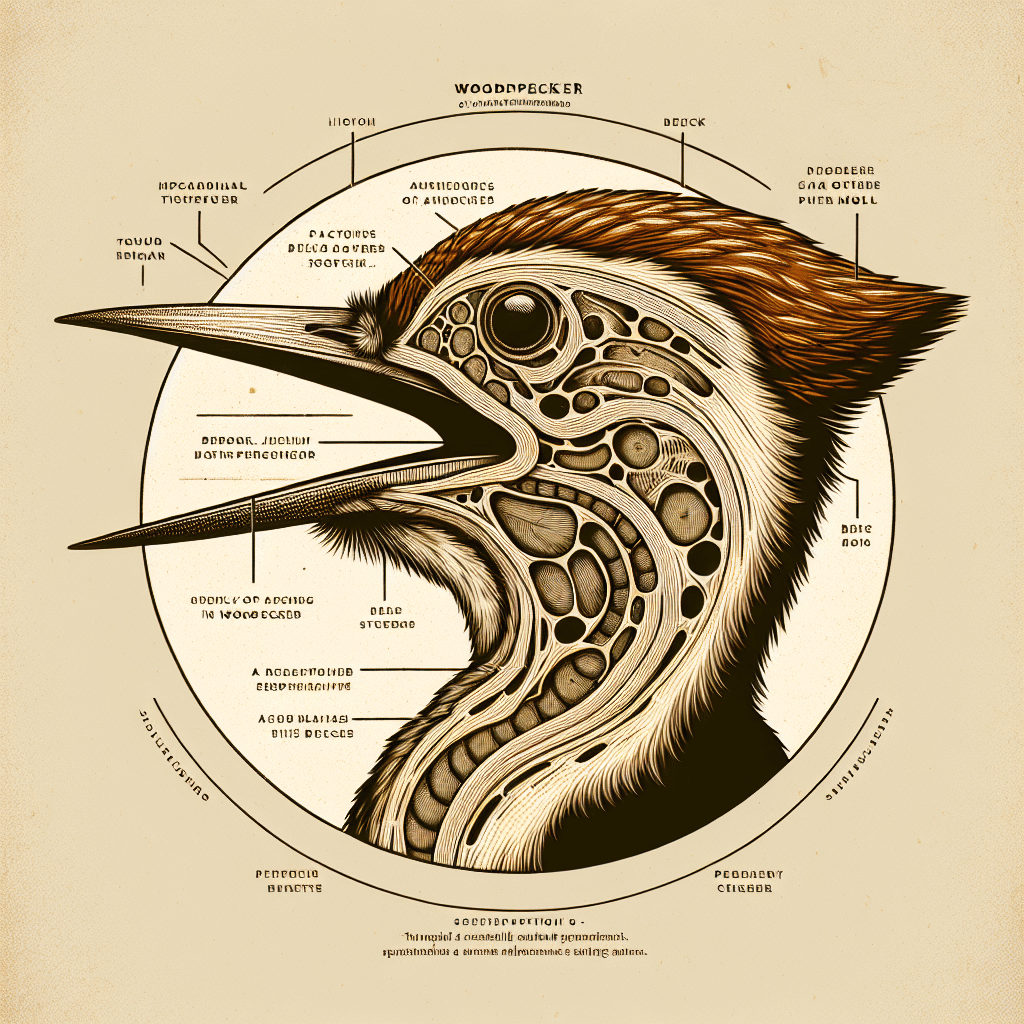
The way a woodpecker stores this appendage is a marvel of anatomical engineering. The hyoid apparatus doesn't just sit in the bird's throat. Instead, it performs an extraordinary feat of biological origami:
- It extends out of the lower jaw.
- It splits into two "horns" that travel down and back.
- These horns wrap completely around the back of the skull.
- They continue over the top of the skull, anchoring near the forehead. In some species, like the Northern Flicker, the tongue is so long it even enters the right nostril.
This unique arrangement keeps the tongue safely stowed when not in use, ready to be deployed in an instant. But as scientists have discovered, this bizarre wrapping does much more than just store a long tongue.
Nature’s Ultimate Helmet: A Built-In Shock Absorber
The primary reason the woodpecker’s tongue wraps around its skull is for protection. This anatomical feature is a crucial part of the bird’s sophisticated shock-absorption system, safeguarding its brain from repeated, high-impact trauma.
Think of the hyoid apparatus as a natural seatbelt or a bungee cord for the brain. According to studies on woodpecker anatomy, just before the beak strikes the wood, the muscles around the hyoid contract, tightening the entire structure. This action creates a tension-band effect that dissipates the force of the impact. Instead of the shockwave rattling the skull and brain, the force is distributed along the length of the tongue and hyoid bones, away from the delicate braincase.
This system works in concert with other protective features, including a thick, spongy bone plate in the skull and a minimal amount of cerebrospinal fluid, which reduces sloshing. Together, these adaptations allow the woodpecker to drum relentlessly without suffering from constant concussions.
Conclusion
So, why does a woodpecker’s tongue wrap around its skull? It’s a brilliant, two-for-one evolutionary solution. The incredible length allows the bird to be an expert forager, reaching deep into wood for food that other birds can't access. Simultaneously, the unique way this tongue is stored—wrapped around the entire skull—provides a life-saving shock-absorbing system that protects its brain from the immense forces of its daily drumming. The next time you hear that familiar tap-tap-tapping in the woods, you'll know you're hearing one of nature's most sophisticated and surprising engineers hard at work.


