
Why were some ancient Roman statues designed with detachable heads that could be swapped whenever leadership changed
Imagine a marble masterpiece where the face changes as quickly as the political climate. Discover the ingenious—and slightly ruthless—reason why ancient Romans designed statues with "pop-off" heads to keep up with the empire's revolving door of leaders.

Too Long; Didn't Read
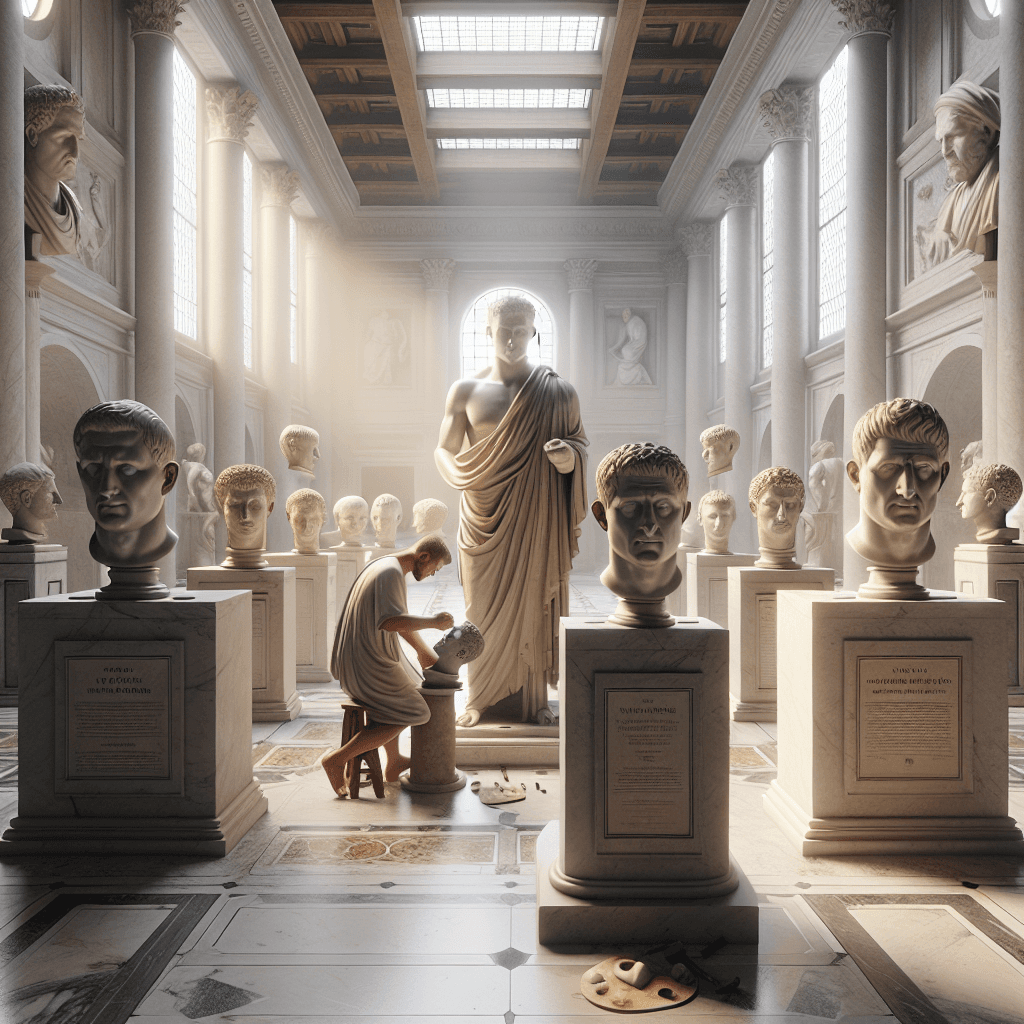
Ancient Roman statues featured detachable heads to quickly and cheaply update monuments during leadership transitions. By swapping only the portrait, officials saved time and expensive marble, allowing the same high-quality body to represent multiple rulers as political tides shifted.
The Original "Plug and Play": Why Were Some Ancient Roman Statues Designed With Detachable Heads?
Imagine walking through a Roman forum in the second century CE. You see a grand, marble statue of an emperor in a heroic pose, but upon closer inspection, you notice a distinct seam around the neck. This wasn't the result of a repair or a clumsy accident; it was a deliberate design choice. The Romans, known for their engineering prowess and pragmatism, frequently utilized statues with detachable heads. While it may seem like a bizarre artistic shortcut, this practice was a sophisticated solution to the unique economic and political pressures of the Roman Empire. This blog post will explore the fascinating reasons behind this "swappable" portraiture and what it reveals about Roman society.
The Economics of Marble and Efficiency
The primary driver behind detachable heads was simple logistics: marble was expensive and time-consuming to carve. Transporting heavy blocks of stone from quarries in Carrara or Greece to the heart of Rome involved massive costs and risks. By creating a standardized "body" with a hollowed-out neck socket, workshops could mass-produce statues in advance.
According to research from the Metropolitan Museum of Art, these "stock" bodies usually depicted idealized forms: the courageous general in armor, the wise philosopher in a toga, or the divine hero in semi-nudity. When a specific official or wealthy citizen commissioned a portrait, the sculptor only needed to carve the head—a much smaller and faster task. This allowed for:
- Reduced Labor Costs: Master sculptors could focus on the complex likeness of the face, while apprentices handled the repetitive work of the body.
- Faster Turnaround: A new governor or magistrate could have a statue erected in weeks rather than months.
- Inventory Management: Workshops could keep various body types "in stock," ready for a head to be fitted via a mortise and tenon joint.
Political Volatility and Damnatio Memoriae
Roman politics were notoriously unstable. An emperor who was worshipped one day could be assassinated and declared an "enemy of the state" the next. When a leader fell from grace, the Roman Senate often issued a decree of damnatio memoriae—the "condemnation of memory." This mandated that every trace of the individual, including their name in inscriptions and their likeness in art, be erased from history.
Rather than destroying a costly, perfectly good marble body, it was far more efficient to simply pop off the disgraced leader's head and replace it with a portrait of the successor. As noted by historians specializing in Roman iconography, this was particularly common during the "Year of the Four Emperors" and the turbulent third century, when leadership changed hands with dizzying frequency. It was a literal way of "changing the face of the government" without the expense of a new monument.
The Contrast of Idealism and Realism
There was also a cultural and aesthetic reason for this modular approach. Roman art often sat at the intersection of Greek idealism and Roman realism (verism).
- The Body as Symbol: The statue’s body represented the office or the virtue of the person—strength, piety, or leadership. These were timeless concepts that didn't need to be unique to the individual.
- The Head as Identity: The Romans placed a high value on realistic facial features to honor their ancestors and record their specific history.
By separating the two, the Romans could maintain a "perfected" symbolic body while still featuring a "realistic" face. This modularity allowed a single statue to evolve; for example, an aging Empress Livia could have her youthful portrait head replaced with one that reflected her mature status as the matriarch of the Julio-Claudian dynasty.
Conclusion
The practice of designing statues with detachable heads was a masterclass in Roman pragmatism. It blended economic efficiency with the harsh realities of a volatile political landscape, allowing the Empire to maintain its grand visual landscape even as leaders rose and fell. These swappable heads remind us that ancient art was rarely just for "art's sake"; it was a functional tool for propaganda, commerce, and historical preservation.
Understanding this technique changes how we view Roman galleries today. Those seams in the marble are not flaws, but rather echoes of a fast-paced society that valued both the permanence of the Roman state and the fleeting nature of its individual rulers. To learn more about Roman craftsmanship, consider exploring digital archives of the Capitoline Museums, which house several prominent examples of these modular masterpieces.


