Why are horses anatomically unable to vomit even when they experience severe digestive distress
Unlike most animals, horses are biologically trapped in a "one-way street" where even the most severe nausea has no physical escape route. Discover the fascinating, high-stakes anatomical quirk that makes this inability to vomit one of nature’s most dangerous design flaws.

Too Long; Didn't Read
Horses cannot vomit because the esophagus enters the stomach at a sharp angle, creating a powerful one-way valve. Combined with an exceptionally strong esophageal sphincter and the lack of a neural vomiting reflex, their anatomy physically prevents stomach contents from moving backward.
One-Way System: Why Are Horses Anatomically Unable to Vomit Even When They Experience Severe Digestive Distress?
For most mammals, the ability to vomit is a vital survival mechanism, allowing the body to expel toxins or indigestible material before they cause lasting harm. However, the horse is a striking biological exception. While a dog or a human might find relief through emesis (the act of vomiting) during an upset stomach, a horse is physically incapable of this action. This unique physiological trait is not merely a quirk of evolution; it is a fundamental aspect of equine anatomy that has profound implications for their health and management.
Understanding why horses are anatomically unable to vomit even when they experience severe digestive distress is essential for any equestrian or animal lover. Because horses cannot purge their stomachs, digestive issues can quickly escalate into life-threatening emergencies. This post explores the complex structural and neurological barriers that create this "one-way" digestive system and what it means for equine welfare.
The Physical Barriers: A Powerful Valve
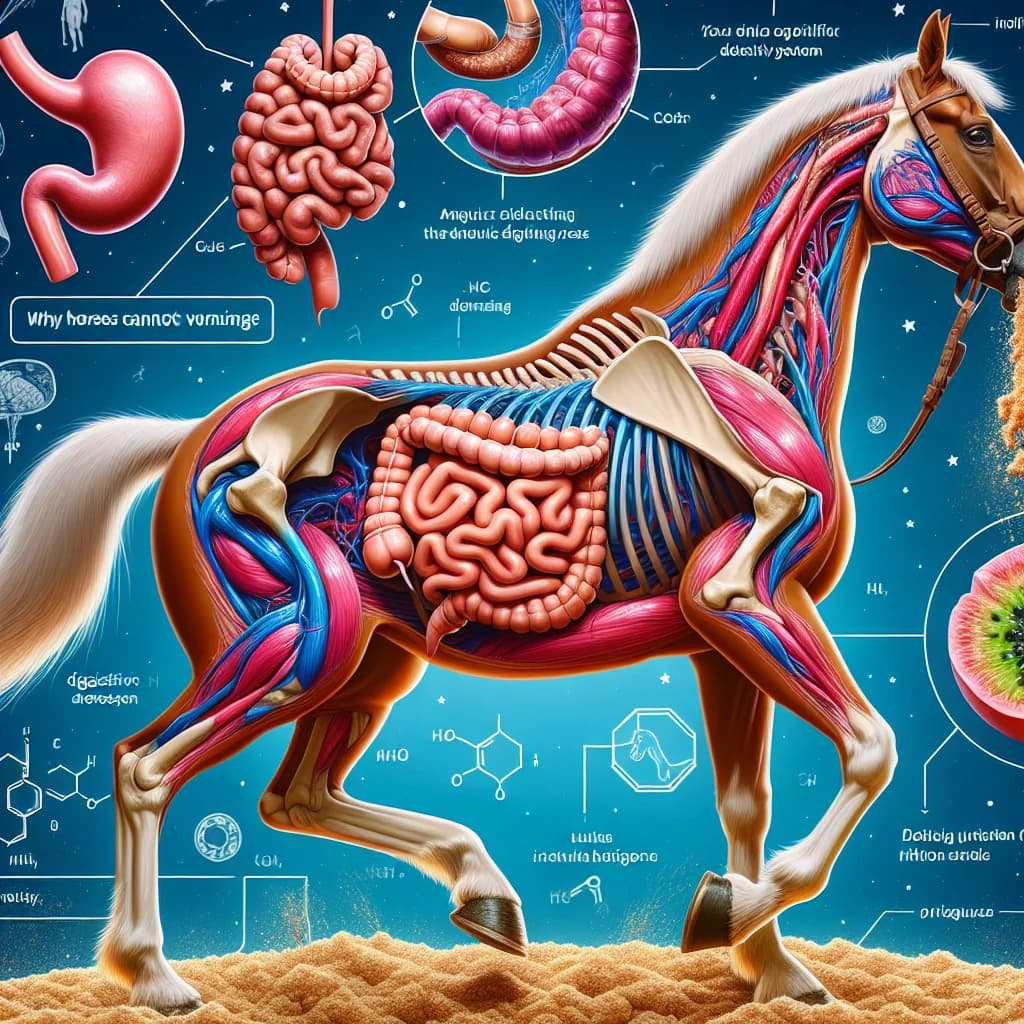
The primary reason a horse cannot vomit lies in the structure of the cardiac sphincter, a ring of muscle located at the junction where the esophagus meets the stomach. In many species, this muscle is relatively flexible, opening easily to allow food to pass down or, if necessary, back up.
In the horse, however, this sphincter acts as a powerful one-way valve. It is exceptionally strong and thick, remaining tightly closed once food has entered the stomach. Under the pressure of gas or fluid attempting to move backward from the stomach, the muscle actually contracts more firmly. This prevents the backward flow of gastric contents, regardless of how much pressure builds up within the stomach.
The Angle of Entry
Beyond the strength of the sphincter itself, the "plumbing" of the equine digestive tract is designed to discourage reflux. The esophagus joins the stomach at a very acute (sharp) angle.
- Compression Mechanism: When a horse's stomach becomes distended with gas or excess food, the stomach wall pushes against the lower end of the esophagus.
- The Seal: This pressure essentially "kinks" the tube and pins the valve shut. The fuller the stomach becomes, the more tightly the entrance is sealed.
This anatomical configuration is so effective that in cases of extreme gastric distress, the stomach is more likely to rupture than the cardiac sphincter is to open.
The Absence of the Emetic Reflex
While the physical structures are the primary barriers, the neurological component is equally important. Most animals possess a well-developed emetic reflex, controlled by a specific region in the brainstem. This reflex coordinates the complex sequence of muscle contractions—involving the diaphragm, abdominal muscles, and the esophagus—required to vomit.
Veterinary research suggests that horses lack the neural pathways necessary to coordinate these movements. Even if the physical valve were weaker, the horse's brain is not "wired" to trigger the synchronized heave required to expel stomach contents. In the rare, catastrophic event where a horse appears to be "vomiting" (fluid coming from the nose), it is usually a sign of a ruptured stomach or a severe esophageal obstruction, rather than a functional reflex.
Evolutionary Context: Why the One-Way System?
From an evolutionary standpoint, this trait likely developed because horses are "flight" animals. In the wild, horses spend much of their time grazing and must be ready to gallop at a moment's notice to escape predators.
A heavy, swinging stomach filled with grass could potentially trigger a gag reflex during a high-speed gallop if the valve were loose. By having a rigid, one-way system, the horse can run at full speed immediately after eating without the risk of inhaling stomach contents into the lungs, which would lead to aspiration pneumonia.
Implications for Equine Care
Because horses cannot vomit, they are particularly susceptible to colic—a general term for abdominal pain. Owners must be vigilant because any toxin or excess gas trapped in the stomach must travel through the entire 70-foot intestinal tract to be expelled.
To support this unique anatomy, caretakers should follow evidence-based practices:
- Small, Frequent Meals: Mirroring natural grazing prevents stomach over-distension.
- Hydration: Ensures that food remains mobile within the "one-way" tract.
- Slow Feeders: Prevents "bolting" food, which can lead to choke or gastric impaction.
Conclusion
The fact that horses are anatomically unable to vomit even when they experience severe digestive distress is a testament to their specialized evolution as elite runners. However, this biological "one-way street" makes them incredibly vulnerable to gastrointestinal upsets. Understanding the strength of the cardiac sphincter, the sharp angle of the esophagus, and the lack of a neural emetic reflex highlights why digestive health is the cornerstone of equine husbandry.
By recognizing that horses lack this common safety valve, owners can better appreciate the necessity of high-quality forage, consistent feeding schedules, and immediate veterinary intervention at the first sign of discomfort. Responsible care starts with understanding the unique biology of these magnificent animals.