Why can a galloping horse only take exactly one breath for every stride it makes
Imagine your body forcing you to inhale and exhale with every single step you take. Discover the fascinating "piston effect" that physically locks a galloping horse’s breathing to its stride, turning every leap into a mandatory breath.

Too Long; Didn't Read
Galloping horses use a mechanism called locomotor-respiratory coupling. Their internal organs act like a piston, shifting back and forth with each stride to physically force air in and out of the lungs. This mechanical synchronization means every breath must perfectly align with a single stride to maintain efficiency and balance.
The Science of Speed: Why Can a Galloping Horse Only Take Exactly One Breath for Every Stride It Makes?
The thunderous sound of a horse at full gallop is one of nature’s most powerful displays of biomechanical efficiency. To the casual observer, a horse in motion is a blur of muscle and speed, but beneath the surface, a rigid physiological law is at work. Unlike humans, who can take several breaths per stride or hold their breath while sprinting, a galloping horse is physically locked into a strict 1:1 ratio: one breath for every single stride.
Understanding why can a galloping horse only take exactly one breath for every stride it makes is essential for riders, trainers, and animal enthusiasts alike. This phenomenon, known as Locomotor-Respiratory Coupling (LRC), is not a choice made by the horse, but a mechanical necessity of its anatomy. This blog post explores the "visceral piston" and the fascinating biological engineering that allows the horse to reach high speeds while managing the massive oxygen demands of its muscles.
The Visceral Piston: How Anatomy Dictates Breath
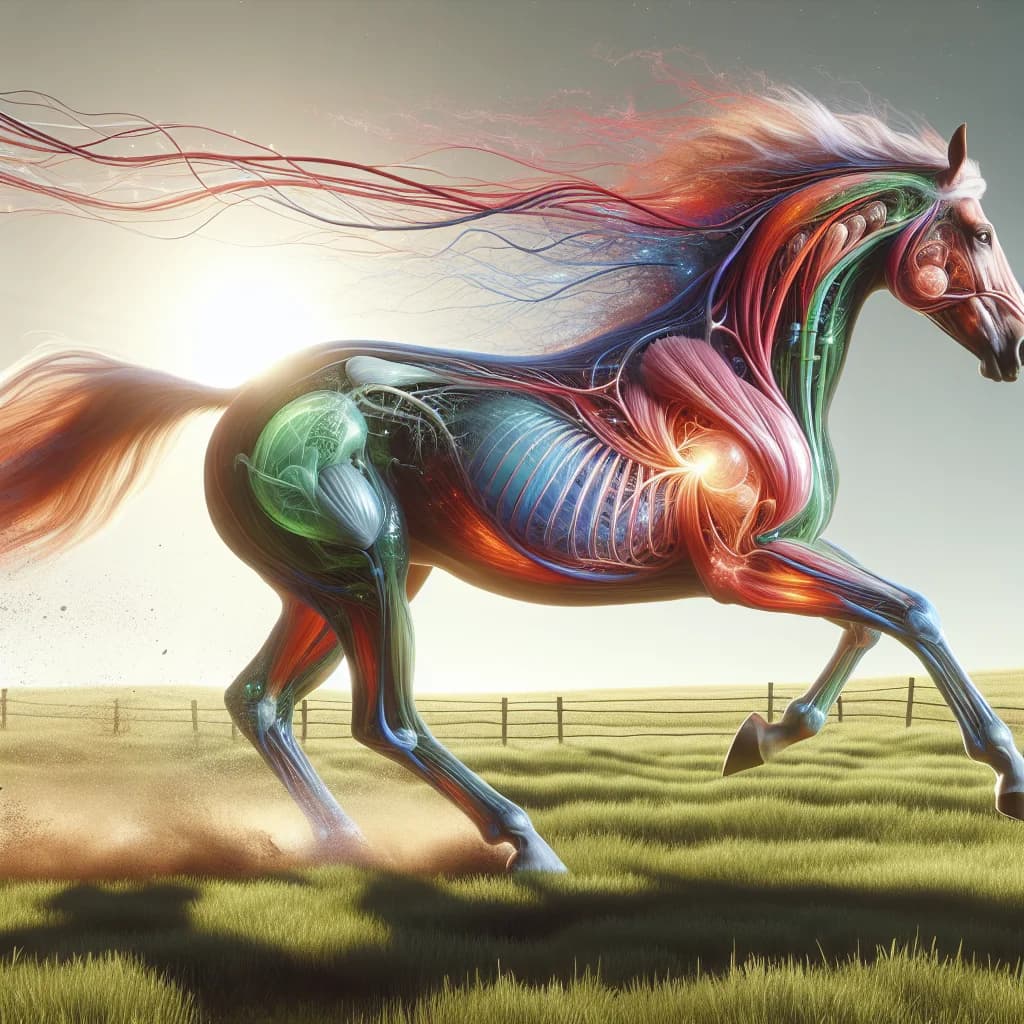
The primary reason a horse is limited to one breath per stride during a gallop is the movement of its internal organs. In the scientific community, this is frequently referred to as the "visceral piston" mechanism. A horse’s digestive tract is massive, containing a heavy "visceral mass" of liver, stomach, and intestines.
When a horse gallops, these organs shift back and forth within the abdominal cavity like a giant piston.
- The Exhalation Phase: As the horse’s front legs strike the ground, the momentum causes the heavy internal organs to slide forward. This mass pushes against the diaphragm, which in turn compresses the lungs and forces air out.
- The Inhalation Phase: As the horse pushes off and begins the "airborne" or suspension phase of the gallop, the internal organs slide backward toward the hindquarters. This movement pulls the diaphragm back, creating a vacuum that draws air into the lungs.
Because these organs move in direct response to the horse's acceleration and deceleration within each stride, the breath is mechanically timed to the movement of the legs.
Spinal Flexion and Thoracic Compression
In addition to the piston effect, the horse's skeletal movement plays a critical role. During a gallop, the horse’s spine flexes and extends. When the hind legs reach forward under the body, the back arches, and the rib cage is compressed. This physical squeezing of the chest cavity assists in pushing air out.
Conversely, when the horse extends its body to cover ground, the chest cavity expands, facilitating the intake of air. Because the gallop is a four-beat gait with a moment of suspension, the timing of this expansion and contraction is fixed. The horse cannot physically expand its ribs to take a second breath while its body is in the compression phase of the stride.
Comparative Biology: Horses vs. Humans
To appreciate the uniqueness of this trait, one can look at human runners. Humans are bipedal, meaning our breathing is not mechanically linked to our leg movements. A human runner might take one breath for every two, three, or even four steps.
Horses, however, are quadrupeds whose lungs are positioned horizontally. This orientation makes them subject to the forces of inertia acting on their internal organs. While this "coupling" limits the frequency of breaths, it is incredibly efficient. The horse does not have to use as much muscular effort to move the diaphragm; the momentum of the gallop does much of the work for them.
Impact on Health and Performance
Understanding this 1:1 ratio is vital for ensuring equine welfare. Since a horse cannot "breathe faster" to get more oxygen while galloping, it can only increase its oxygen intake by taking deeper breaths or increasing its stride frequency. This puts a massive premium on respiratory health.
- Airway Obstructions: Conditions like Recurrent Airway Obstruction (RAO) or "roaring" (laryngeal hemiplegia) are devastating because the horse cannot compensate for a restricted airway by changing its breathing rhythm.
- Conditioning: Training focuses on improving the horse's aerobic capacity and stride efficiency, allowing them to maximize the volume of that single, mandatory breath.
Conclusion
The fact that a galloping horse can only take exactly one breath for every stride it makes is a testament to the specialized evolution of the species. This "Locomotor-Respiratory Coupling" transforms the horse’s entire body into a functional bellows, using the energy of motion to power the respiratory system.
By understanding the mechanical constraints of the visceral piston and spinal flexion, owners and riders can better appreciate the immense physical strain placed on a horse during high-speed exercise. Protecting a horse’s respiratory health is not just about comfort; it is about supporting a biological system that is hard-wired for a specific, rhythmic harmony between breath and hoofbeat. For those looking to optimize their horse's performance or well-being, consulting with a veterinarian to monitor lung function is a vital step in responsible care.