Why can pet axolotls perfectly regrow their limbs, spinal cords, and even parts of their brains without scarring
While most creatures heal with scars, the axolotl possesses the near-miraculous ability to perfectly rebuild its own limbs, spine, and even its brain from scratch. Step inside the fascinating biology of nature’s most gifted regenerator to see how these "water monsters" are rewriting the rules of medical science.

Too Long; Didn't Read
Axolotls regenerate perfectly by forming a blastema, a mass of stem-like cells that rebuild complex tissues. Unlike humans, their immune system suppresses scarring, allowing embryonic growth genes to reactivate and flawlessly reconstruct bones, muscles, and nerves.
Nature’s Ultimate Regenerators: Why Can Pet Axolotls Perfectly Regrow Their Limbs, Spinal Cords, and Even Parts of Their Brains Without Scarring?
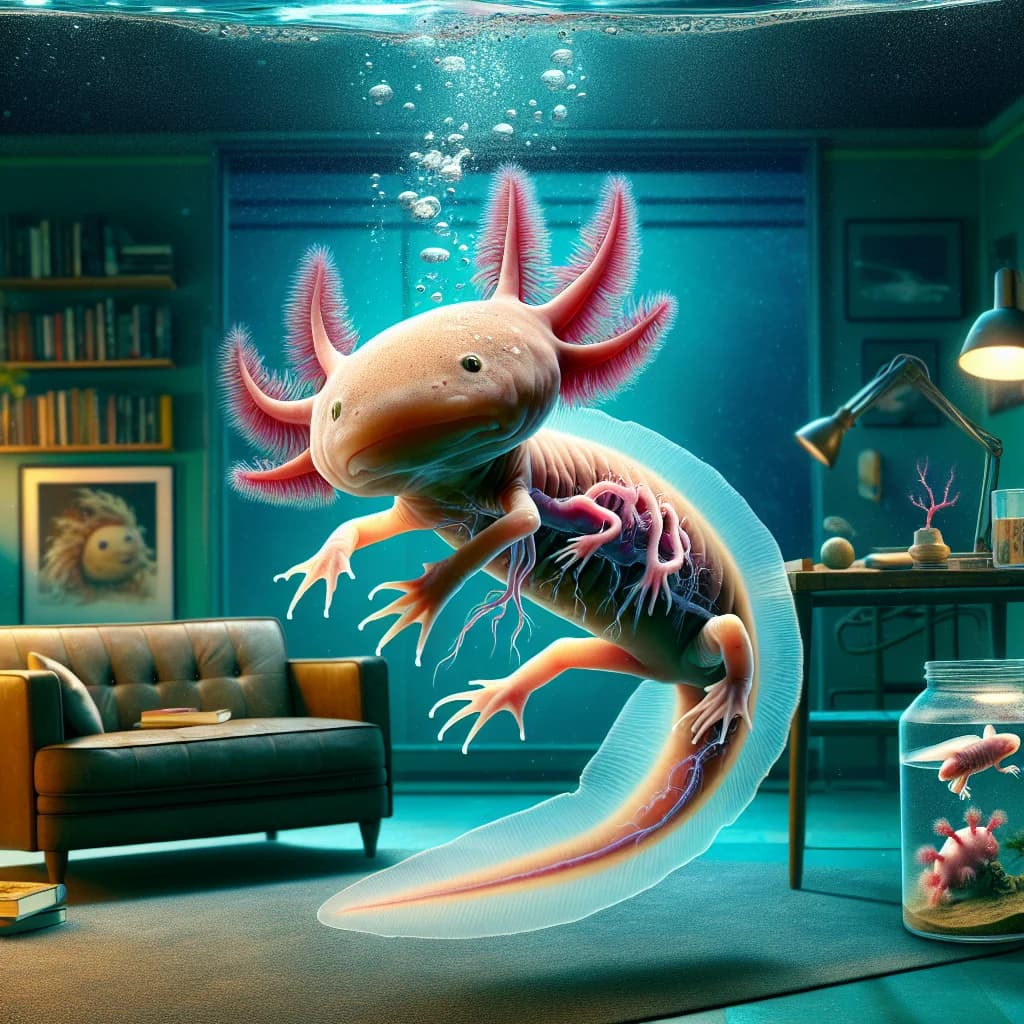
The axolotl (Ambystoma mexicanum) is often called the "Peter Pan" of the animal kingdom. Unlike most amphibians that undergo metamorphosis to live on land, the axolotl remains in its larval, aquatic state for its entire life—a biological phenomenon known as neoteny. Beyond its endearing "smile" and feathery external gills, the axolotl possesses a biological superpower that has fascinated the scientific community for over a century: the ability to achieve perfect tissue regeneration. While a human body responds to deep injury by forming a rigid scar, the axolotl can completely replace lost limbs, complex organs, and even segments of its central nervous system. This blog post explores the cellular mechanisms and evolutionary adaptations that answer the question: Why can pet axolotls perfectly regrow their limbs, spinal cords, and even parts of their brains without scarring?
The Biological Blueprint: From Wound to Blastema
The secret to the axolotl’s regenerative success lies in its unique cellular response to injury. In mammals, when a limb is lost, the body’s primary goal is to close the wound quickly to prevent infection, which results in the formation of fibrotic scar tissue. In contrast, the axolotl initiates a process called "epimorphic regeneration."
When an axolotl loses a limb, a specialized structure called a blastema forms at the site of the injury. The blastema is a mass of undifferentiated cells that act similarly to stem cells. Through a process called dedifferentiation, specialized cells near the wound (such as muscle or bone cells) "revert" to a more primitive state. These cells then multiply and "redifferentiate" into the specific types needed to reconstruct the missing part. This ensures that the new limb is an exact replica of the original, containing the correct arrangement of bone, muscle, nerves, and blood vessels.
The Role of the Immune System in Avoiding Scars
One of the most significant hurdles in mammalian healing is fibrosis, or scarring. Scars are composed of dense collagen fibers that protect the body but prevent functional tissue from regrowing. Research in regenerative biology has found that the axolotl’s immune system is the key to avoiding this outcome.
- Macrophage Recruitment: When an injury occurs, axolotls deploy specific immune cells called macrophages. These cells are essential for clearing debris and, crucially, for signaling the start of the regenerative process.
- Minimal Fibrosis: Studies have shown that if macrophages are depleted, axolotls actually lose their ability to regenerate and instead form scar tissue, much like humans.
- The Regenerative Window: The axolotl maintains a specific inflammatory environment that encourages tissue growth rather than the rapid "patching" that leads to scars.
Beyond Limbs: Regenerating the Brain and Spinal Cord
Perhaps the most staggering aspect of axolotl biology is their ability to repair the central nervous system. If an axolotl suffers a spinal cord injury, the cells at the site of the trauma reactivate developmental genetic programs. Within weeks, the animal regains full mobility, with no signs of the "glial scarring" that typically leads to permanent paralysis in mammals.
Similarly, researchers have demonstrated that axolotls can regrow portions of their telencephalon (the front part of the brain). When brain tissue is removed, the surrounding cells proliferate and replace the lost neurons, effectively reintegrating into the existing neural circuits. This capability is supported by the axolotl’s massive genome—ten times larger than the human genome—which contains specialized sequences that regulate tissue growth and development.
Care and Husbandry: Supporting a Regenerative Species
While axolotls are masters of healing, their regenerative abilities are heavily dependent on their environment. For pet owners, maintaining optimal health is vital to ensuring these biological processes function correctly.
- Water Quality: High levels of ammonia or nitrites can stress the immune system, slowing or halting regeneration.
- Temperature Control: Axolotls are cold-water creatures. Water temperatures above 70°F (21°C) can lead to fungal infections, which interfere with the blastema formation.
- Nutrition: A protein-rich diet of earthworms or high-quality sinking pellets provides the metabolic energy required for the "costly" process of regrowing complex tissues.
Conclusion
The axolotl’s ability to regrow limbs, spinal cords, and brain tissue without scarring is one of the most sophisticated survival mechanisms in the natural world. By utilizing dedifferentiation and a specialized immune response, these salamanders bypass the limitations of fibrosis that affect almost all other vertebrates. Understanding these biological pathways is not only fascinating for pet enthusiasts but is also a cornerstone of modern regenerative medicine research. For the responsible owner, appreciating the science behind the axolotl emphasizes the importance of meticulous husbandry. By providing a stable, stress-free environment, we allow these remarkable "Mexican Walking Fish" to maintain the extraordinary cellular machinery that makes them unique among the world's species.