Why can pet birds sleep while standing on a perch without falling off due to a specialized locking tendon
Ever wonder how your bird stays perfectly anchored while fast asleep without ever losing its grip? Discover the "automatic" secret behind the specialized tendon that lets them lock onto a perch for a gravity-defying, worry-free night's rest.

Too Long; Didn't Read
Birds stay securely on perches while sleeping thanks to a digital flexor tendon that automatically pulls their toes shut when they settle down. This involuntary locking mechanism uses the bird's own body weight to maintain a tight grip without any muscle effort, ensuring they remain attached even during deep rest.
Gravity-Defying Rest: Why Can Pet Birds Sleep While Standing on a Perch Without Falling Off?
Imagine trying to get a restful night’s sleep while standing balanced on a narrow clothesline. For a human, this is a physical impossibility, yet for our avian companions, it is a nightly routine. Whether it is a tiny budgie or a large macaw, pet birds possess the incredible ability to remain upright and secure on a perch while in a deep state of slumber. This feat is not a result of constant muscular effort or a sense of balance alone; rather, it is the result of a sophisticated biological "locking" mechanism. Understanding this specialized anatomy, known as the digital flexor mechanism, offers a fascinating glimpse into avian evolution and provides essential insights into proper bird husbandry and welfare. This post explores the science behind the specialized locking tendon that keeps birds securely attached to their perches.
The Biomechanics of the Avian Foot
To understand how a bird stays on a perch, one must first look at the unique anatomy of its lower limbs. Unlike humans, whose resting state involves relaxed muscles and open hands, a bird’s resting state—specifically when the legs are bent—triggers an automatic grip.
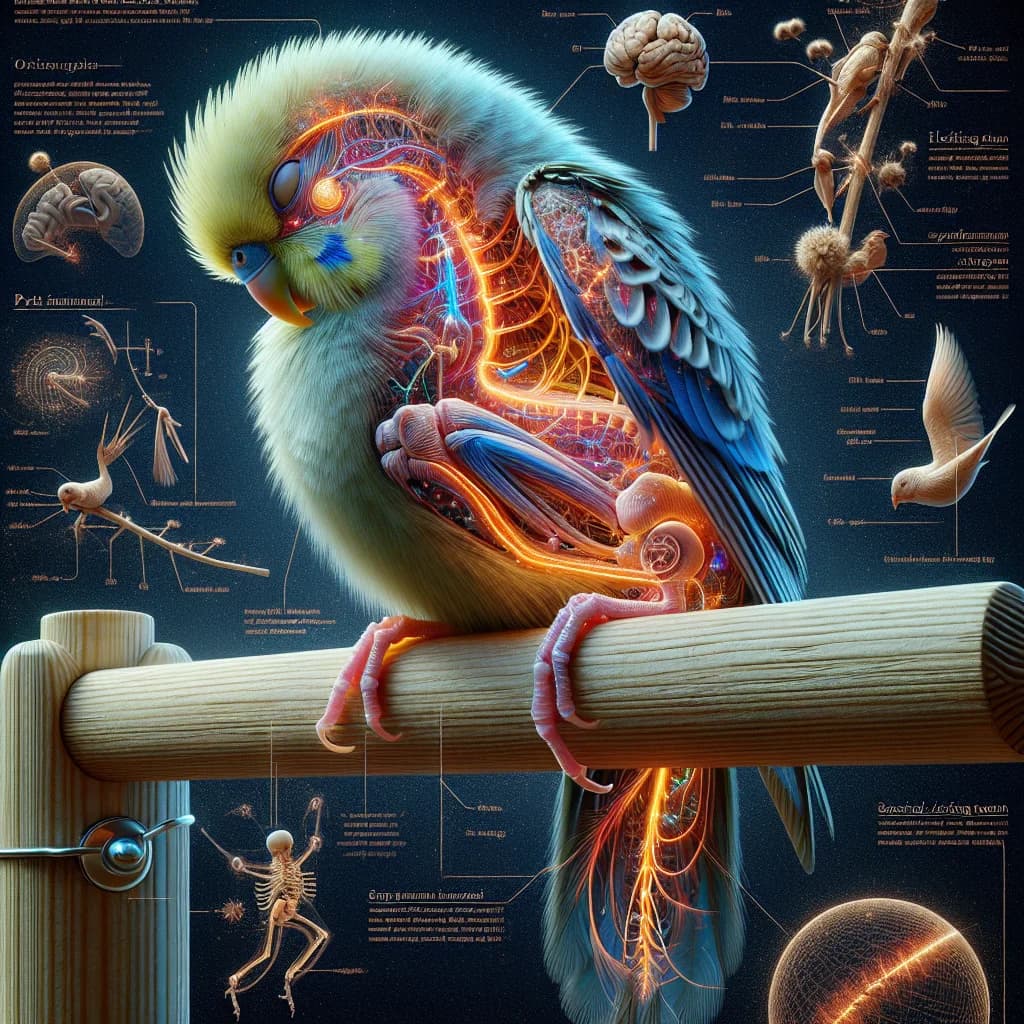
At the heart of this system is the digital flexor tendon. These tendons run down the back of the bird's leg, passing over the back of the intertarsal joint (equivalent to a human ankle but often mistaken for a knee) and extending down to the underside of the toes. When a bird settles down to sleep, its body weight causes the legs to bend at the joints. This bending motion automatically pulls the tendons taut, much like a string being pulled tight across a corner. This tension forces the toes to curl inward and snap shut around the perch.
The Specialized Locking Tendon: Nature’s Ratchet System
While the tension of the tendon provides the initial grip, the "locking" feature is what prevents the bird from slipping if it shifts its weight or encounters a gust of wind. Within the tendon sheath of many bird species, particularly perching birds (passerines) and parrots (psittacines), there are specialized structures that act like a biological ratchet.
The Mechanism of Plicae
On the underside of the digital flexor tendons and the inner surface of the surrounding sheath, there are hundreds of tiny, microscopic ridges or tooth-like projections called plicae. When the bird’s weight is applied and the tendon is pulled tight:
- The ridges on the tendon interlock with the ridges on the sheath.
- This creates a high-friction "lock" that holds the toes in a clenched position.
- The grip becomes passive, meaning it requires zero muscular energy to maintain.
This system is so effective that a bird can remain securely attached to a branch even if it loses consciousness. To release the grip, the bird must physically stand up, straightening its legs to release the tension on the tendon and disengage the interlocking ridges.
Evolutionary Advantages and Energy Conservation
From an evolutionary perspective, the specialized locking tendon is a masterpiece of efficiency. Birds have high metabolic rates and must conserve energy whenever possible. If a bird had to consciously contract its muscles to hold onto a branch all night, it would be physically exhausted by morning.
Furthermore, this mechanism serves as a vital survival strategy. By being able to sleep soundly on an elevated perch without the risk of falling, birds remain out of reach of many terrestrial predators. Because the grip is mechanical and involuntary, it allows the bird to enter various stages of sleep—including REM sleep—while remaining safely anchored.
Implications for Pet Bird Care and Husbandry
For pet bird owners, understanding this anatomy is crucial for maintaining the health of their feathered friends. Because a bird’s feet are designed to "lock" based on the diameter of the perch, providing the right environment is essential to prevent long-term injury.
- Perch Variety: In the wild, birds encounter branches of various textures and diameters. In a home setting, providing only uniform, smooth plastic or dowel perches can lead to "pressure sores" or pododermatitis (commonly known as bumblefoot), as the locking mechanism always engages at the exact same pressure point.
- Natural Materials: Using natural wood perches with varying thicknesses allows the bird’s tendons and joints to engage at different angles, promoting better foot health and preventing muscle atrophy.
- Arthritis Awareness: As birds age, they may develop arthritis in their joints. If the intertarsal joint cannot bend fully, the locking tendon may not engage properly, making it difficult for the bird to sleep securely.
Conclusion
The ability of a pet bird to sleep while standing on a perch is a testament to the remarkable specialized locking tendon system. This passive mechanical grip allows birds to conserve vital energy and remain secure throughout the night without the need for conscious muscular effort. By appreciating the complexity of the digital flexor mechanism, bird owners can better understand the importance of providing diverse perching options and monitoring foot health. Recognizing the science behind these biological "locks" ensures that our avian companions remain safe, comfortable, and well-rested. If you ever notice your bird having difficulty gripping or staying upright, consult an avian veterinarian to ensure their specialized tendons and joints are functioning correctly.