Why can pet chickens recognize and remember over one hundred different human and animal faces
Behind those beady eyes lies a sophisticated social "database" capable of cataloging over a hundred distinct human and animal faces. Discover the surprising evolutionary secret that makes your backyard flock far more observant than you ever imagined.

Too Long; Didn't Read
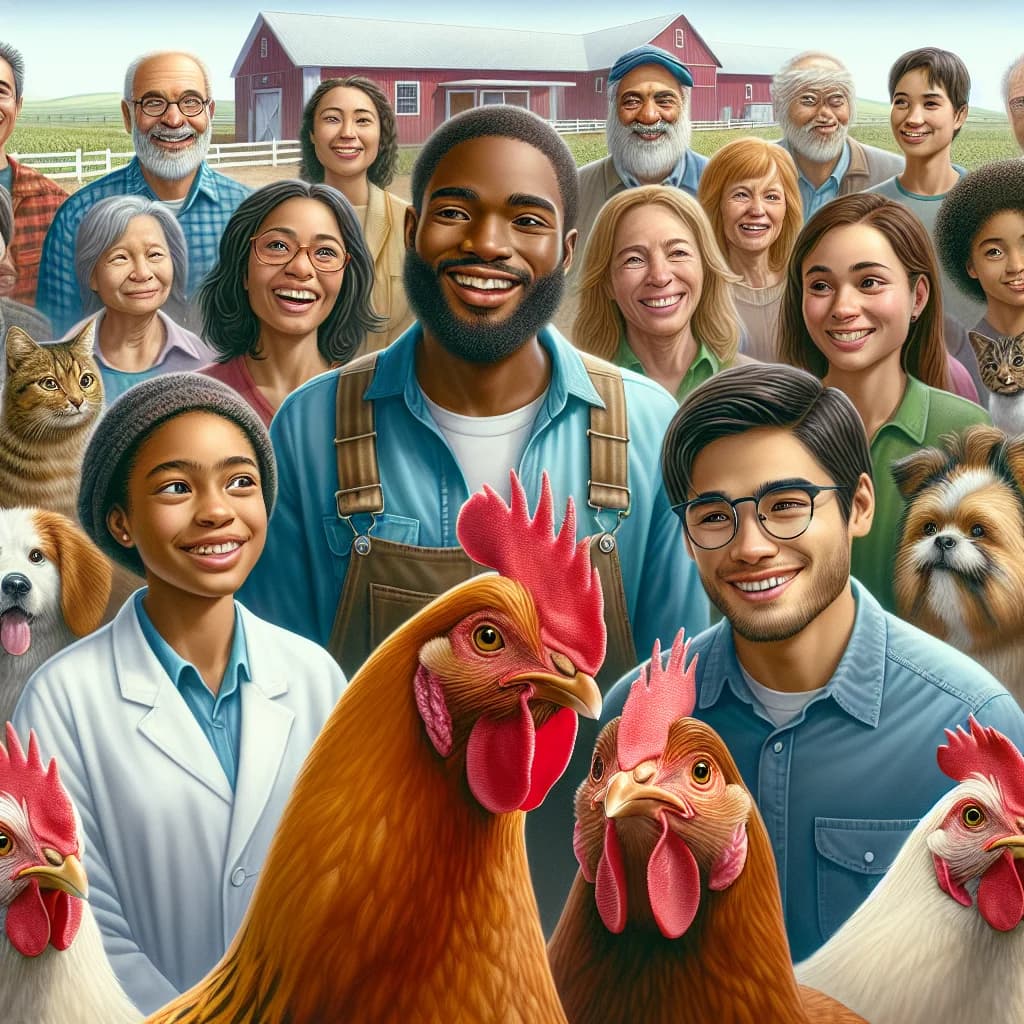
Chickens are highly social animals that evolved to recognize over one hundred faces to maintain a complex pecking order and ensure survival. Their advanced visual processing allows them to distinguish between individuals, helping them identify familiar allies and potential threats among humans and other animals.
The Science of Recognition: Why Can Pet Chickens Recognize and Remember Over One Hundred Different Human and Animal Faces?
For decades, the phrase "bird-brained" has been used to imply a lack of intelligence, yet modern avian science is rapidly dismantling this stereotype. Among the most surprising revelations in animal behavior is the sophisticated cognitive capacity of the domestic chicken (Gallus gallus domesticus). Far from being simple creatures of instinct, pet chickens possess a remarkable ability to distinguish between individuals, accurately identifying and remembering over one hundred different human and animal faces. This facial recognition is not merely a parlor trick; it is a fundamental biological trait essential for their survival, social stability, and welfare. Understanding the mechanics behind this ability offers pet owners profound insight into the complex internal lives of their flock.
The Evolutionary Necessity of the "Pecking Order"
To understand why a chicken can remember your face, one must first look at their social structure. Chickens are highly social animals that live in complex hierarchies known as "pecking orders." This social system, first described by zoologist Thorleif Schjelderup-Ebbe in the 1920s, reduces flock-wide aggression by establishing a clear rank for every individual.
For a pecking order to function, every member of the flock must be able to recognize every other member. If a chicken cannot remember who is above or below them in the hierarchy, the social structure would collapse into constant physical conflict. Evolutionary biology has, therefore, favored individuals with high-level facial and individual recognition. Studies in animal behavior have demonstrated that chickens use a combination of head shape, comb size, and facial features to categorize their peers. This cognitive hardware naturally extends to humans and other household pets, whom the chicken integrates into its social map.
Neurological Lateralization and Visual Acuity
The secret to a chicken’s memory lies in its unique brain structure and superior vision. Unlike humans, who have eyes on the front of their heads, chickens have eyes on the sides, providing a panoramic view. Their brains are "lateralized," meaning the left and right hemispheres perform different specialized tasks.
- Tetrachromatic Vision: Chickens possess four types of light-sensitive cones in their eyes (humans have three), allowing them to see ultraviolet light and a broader spectrum of colors. This helps them detect subtle variations in facial features and skin tones that humans might miss.
- The Right-Eye Advantage: Research into avian neurology indicates that the right eye (connected to the left hemisphere) is primarily responsible for identifying familiar objects and individuals. This specialization allows chickens to process complex visual data rapidly and store it in long-term memory.
- Feature Mapping: Animal science findings suggest that chickens do not just see a "blur" of a person; they recognize specific facial geometry. If a familiar person changes their hair or wears a hat, a chicken may initially show caution, but they quickly recalibrate by focusing on stable facial landmarks.
The Research: Proving the 100-Face Milestone
The "one hundred faces" figure is not an arbitrary estimate but is supported by comparative cognitive studies. Research led by experts such as Dr. Chris Evans at Macquarie University has shown that chickens can differentiate between dozens of flock mates and still have the cognitive "bandwidth" to recognize multiple humans.
These studies often utilize "operant conditioning," where chickens are trained to peck at photographs of specific individuals to receive a reward. The results consistently show that chickens can memorize and recall specific faces even after months of separation. Their memory is not limited to their own species; they can distinguish between different dogs, cats, and human caretakers, associating each face with specific outcomes, such as food, safety, or perceived threats.
Practical Implications for Pet Owners
Understanding that your chicken recognizes you has significant implications for husbandry and welfare:
- Consistency is Key: Because chickens remember faces, consistent positive interactions are vital. A single traumatic event with a specific person can lead to long-term avoidance behavior toward that individual.
- Stress Reduction: Chickens show lower cortisol (stress hormone) levels when handled by a familiar caretaker versus a stranger. Recognizing their "human" provides a sense of security.
- Social Enrichment: Recognizing the intelligence of chickens allows owners to provide better mental stimulation. Training exercises that involve facial recognition or signal-based cues can improve the bird’s quality of life.
Conclusion
The ability of pet chickens to recognize and remember over one hundred different human and animal faces is a testament to their evolutionary sophistication. This trait is a product of millions of years of social living, supported by specialized neurological pathways and exceptional visual acuity. By acknowledging that chickens are individuals capable of forming distinct memories of those around them, owners can foster a deeper human-animal bond and provide a more enriching environment. Understanding avian cognition is a vital step toward responsible poultry ownership, ensuring these intelligent birds are treated with the respect and care their complex minds deserve.