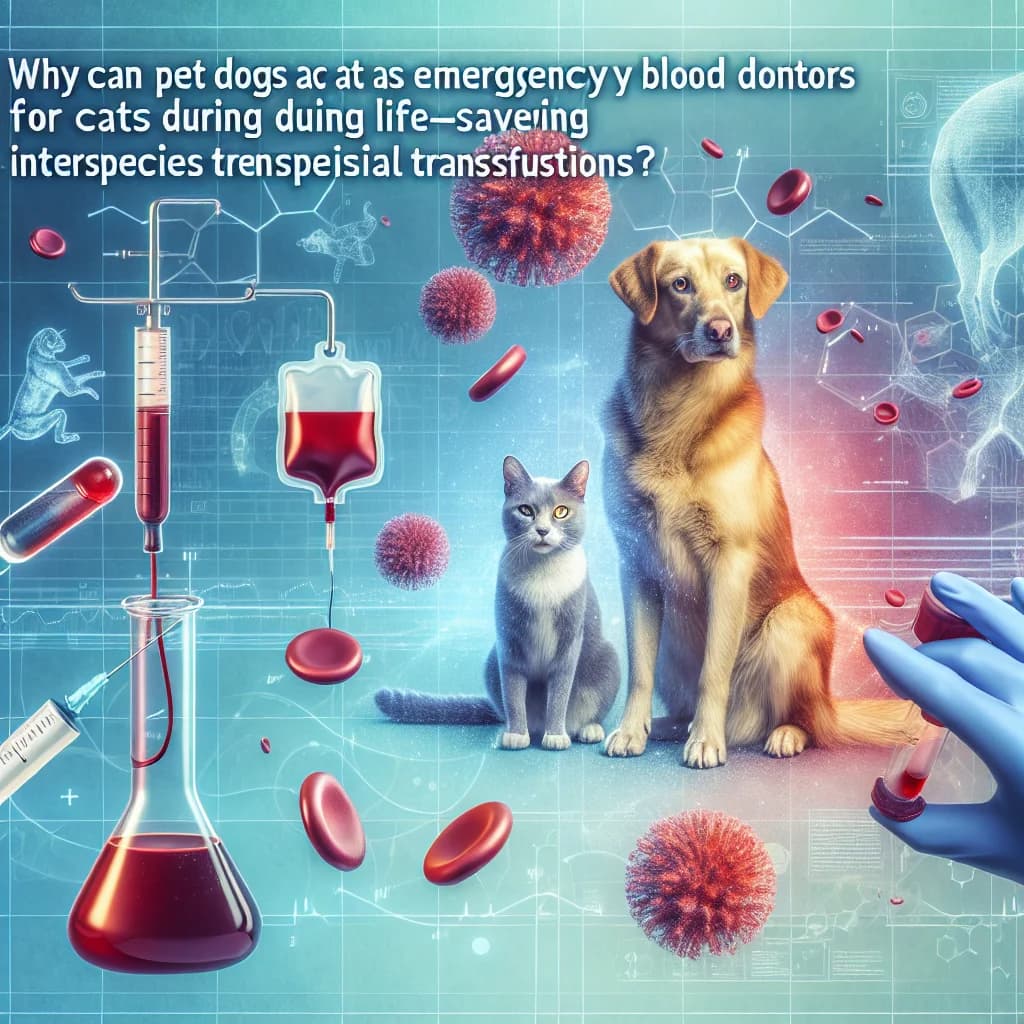
Why can pet dogs act as emergency blood donors for cats during life-saving interspecies transfusions
When every second counts and feline blood is out of reach, an unlikely hero steps in: the family dog. Discover the fascinating biological loophole that allows dogs to serve as emergency life-savers for cats through the incredible science of interspecies transfusions.

Too Long; Didn't Read
Cats can receive a one-time emergency blood transfusion from dogs because they do not naturally possess antibodies against canine red blood cells. This process, known as xenotransfusion, provides a life-saving temporary solution when feline blood is unavailable, though it cannot be repeated as the cat will develop antibodies after the first exposure.
Lifesaving Bonds: Why can pet dogs act as emergency blood donors for cats during life-saving interspecies transfusions?
In the high-stakes environment of an emergency veterinary clinic, every second counts. When a feline patient suffers from severe anemia or acute blood loss, the immediate availability of feline blood can be the difference between life and death. However, feline blood banks are often less stocked than their canine counterparts, and finding a local donor cat in the middle of the night can be challenging. This logistical hurdle has led to the use of a fascinating biological phenomenon: xenotransfusion. While it may sound like science fiction, the practice of using dog blood for cats is a documented veterinary procedure. Understanding why can pet dogs act as emergency blood donors for cats during life-saving interspecies transfusions? reveals a unique quirk in animal immunology that provides a critical "bridge" to survival for cats in dire need.
The Science of Xenotransfusion
Xenotransfusion refers to the transfer of blood or blood products from one species to another. While generally avoided in modern medicine due to the risks of adverse reactions, it remains a valid emergency protocol in veterinary science. The primary reason a dog can donate to a cat lies in the cat’s lack of naturally occurring antibodies against canine red blood cell antigens.
In feline-to-feline transfusions, blood typing is mandatory because cats possess strong, naturally occurring antibodies against other feline blood types (Type A, B, or AB). If a Type B cat receives Type A blood, the reaction is immediate and often fatal. Surprisingly, because cats have never "met" canine blood through evolutionary history, their immune systems do not initially recognize canine red blood cells as an immediate threat.
The Immunological "Grace Period"
When canine blood is introduced into a feline patient, the cat's immune system does not trigger an immediate, hyperacute rejection. This creates a vital window of time, usually lasting four to seven days.
- Initial Acceptance: During the first few days, the dog's red blood cells circulate within the cat, carrying oxygen to vital organs and stabilizing the patient.
- Delayed Hemolysis: The cat’s immune system is not fooled forever. Within a week, the cat will begin producing antibodies against the foreign canine cells. This leads to delayed hemolysis—the destruction of the dog's red blood cells—but by this time, the cat has hopefully stabilized or a compatible feline donor has been located.
- The One-Time Rule: Because the cat becomes sensitized to canine blood after one exposure, a second xenotransfusion is strictly prohibited. A subsequent dose of dog blood would trigger a massive, life-threatening allergic reaction (anaphylaxis).
Why Dogs are Practical Donors
Beyond the biological compatibility, there are practical reasons why dogs are chosen as emergency donors for cats.
Blood Volume and Accessibility
A medium-to-large dog can safely donate a significantly larger volume of blood than a cat. A standard feline donation is typically 40-50ml, whereas a dog can easily provide enough blood to stabilize multiple feline patients if necessary. Furthermore, dogs are often more readily available in emergency settings, and their blood is easier to collect due to their size and temperament.
The Role of Universal Donors
Veterinarians typically prefer "Universal" canine donors—dogs that are negative for Dog Erythrocyte Antigen (DEA) 1.1. Using DEA 1.1 negative blood further minimizes the risk of an immediate reaction, providing a cleaner "bridge" for the feline recipient.
Veterinary Perspectives and Safety
Despite its life-saving potential, xenotransfusion is viewed as a treatment of last resort. Veterinary consensus prioritizes species-specific blood whenever possible. Research published in journals like the Journal of Veterinary Emergency and Critical Care indicates that while xenotransfusion is effective for immediate stabilization, the survival rate of the transfused red blood cells is much shorter than in an allotransfusion (cat-to-cat).
Clinical signs of a reaction, such as fever, vomiting, or increased heart rate, must be monitored with extreme care. The decision to perform a xenotransfusion is always based on a risk-benefit analysis: the risk of a delayed reaction versus the certainty of death without a transfusion.
Conclusion
The phenomenon of why can pet dogs act as emergency blood donors for cats during life-saving interspecies transfusions? highlights the incredible adaptability of veterinary medicine. This biological loophole—the cat's lack of initial anti-dog antibodies—allows a dog’s donation to serve as a temporary "biological bridge," keeping a cat alive long enough for its own body to recover or for a feline donor to be found.
Understanding these complex interspecies connections underscores the importance of supporting veterinary blood banks and being aware of the advanced life-saving measures available today. If you are a pet owner, consider discussing blood donation with your veterinarian; your healthy pet could one day be the hero that saves a life in an emergency.