Why did dogs evolve a specific facial muscle just to raise their inner eyebrows at humans
Your dog’s irresistible "puppy eyes" aren’t just a fluke of nature—they’re a specialized evolutionary tool developed specifically to tug at human heartstrings. Discover the fascinating science behind the unique facial muscle that separates your furry best friend from their wolf ancestors.

Too Long; Didn't Read
Dogs evolved a unique muscle to create puppy dog eyes because the expression mimics human sadness and infant-like vulnerability. This trait triggers a nurturing instinct in people, providing an evolutionary advantage by strengthening the emotional bond and encouraging humans to provide food and protection.
The Science of Puppy Dog Eyes: Why Did Dogs Evolve a Specific Facial Muscle Just to Raise Their Inner Eyebrows at Humans?
Few things are as disarming as a dog’s pleading gaze. Known colloquially as "puppy dog eyes," this look has the power to melt hearts and secure extra treats. However, this expression is far more than a charming quirk; it is a remarkable biological adaptation. Recent evolutionary research has revealed that dogs possess a specific facial muscle dedicated almost exclusively to raising their inner eyebrows, a feature notably absent in their wild ancestors. This anatomical development serves as a specialized tool for cross-species communication, bridging the gap between canine and human. Understanding why dogs evolve a specific facial muscle just to raise their inner eyebrows at humans provides deep insight into the history of domestication and the unique psychological bond we share with our canine companions.
The Anatomy of an Expression: The LAOM Muscle
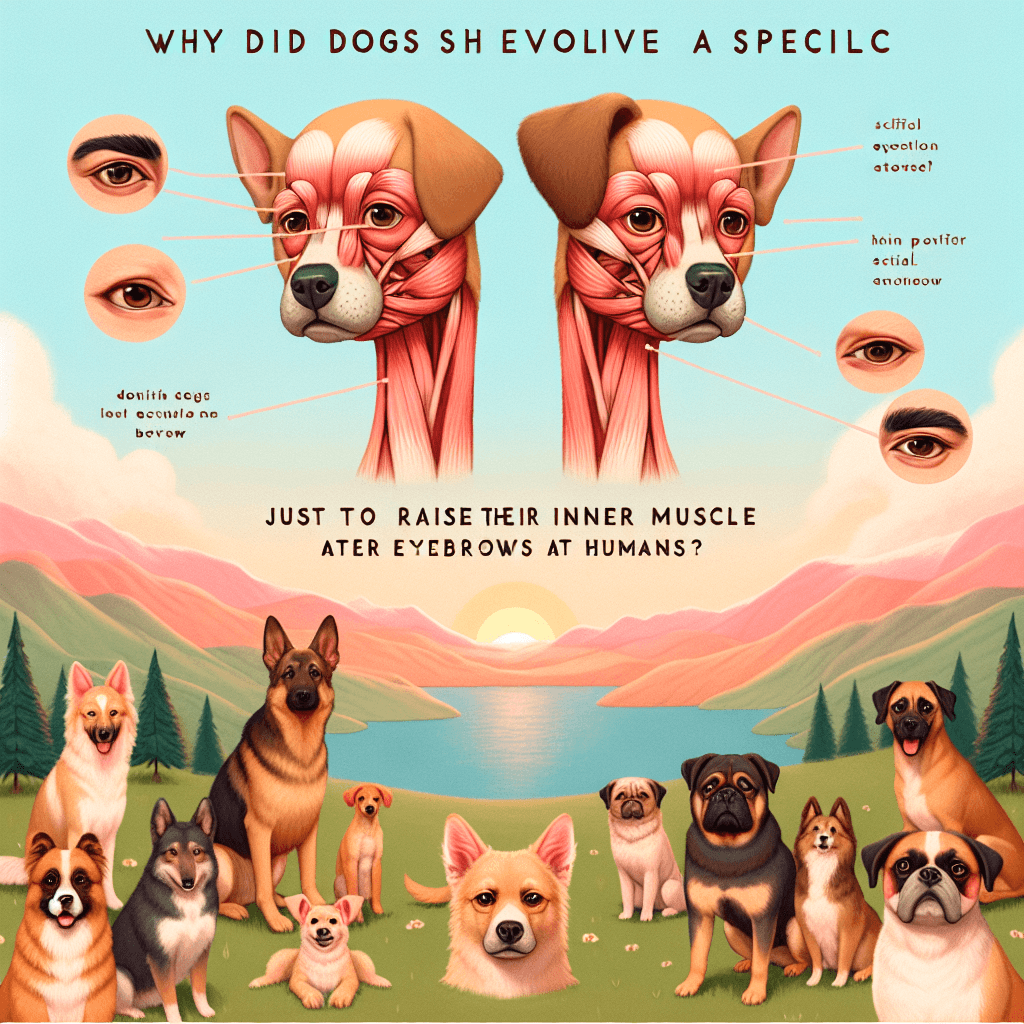
At the heart of this evolutionary marvel is a small but significant muscle called the levator anguli oculi medialis (LAOM). This muscle allows dogs to lift their inner eyebrows intensely, making their eyes appear larger, rounder, and more "infant-like." In biological terms, this is a form of paedomorphism—the retention of juvenile traits into adulthood.
While modern domestic dogs possess this muscle, research comparing their anatomy to that of gray wolves—the species from which they diverged approximately 33,000 years ago—reveals a striking difference. Gray wolves have only a thin, irregular bundle of fibers in that region, or lack the muscle entirely. The presence of a fully developed LAOM in dogs suggests that this trait evolved specifically during the domestication process to facilitate better interaction with humans.
Why Evolution Favored the "Sad" Look
The evolution of the LAOM muscle was likely driven by human preference, whether conscious or unconscious. As humans began domesticating wolves, they favored individuals that appeared more approachable or communicative.
- The Nurturing Instinct: When a dog raises its inner eyebrows, it triggers a "caregiving" response in humans. The expression mimics the facial movements humans make when they are sad or vulnerable, activating our innate desire to protect and provide.
- Oxytocin Feedback Loops: Studies in animal behavior have shown that mutual gazing between dogs and humans increases levels of oxytocin, often called the "bonding hormone," in both species. The ability to manipulate the eye area makes these gazes more frequent and impactful.
- Enhanced Visibility: Larger-looking eyes are easier for humans to read from a distance, allowing for better non-verbal communication during hunting or guarding tasks.
Domestication and Selective Pressure
The development of the LAOM muscle is a prime example of rapid evolution through selective breeding. Unlike natural selection, which is driven by survival in the wild, this was "social selection." Dogs that could produce these expressions were more likely to be fed, sheltered, and allowed to reproduce by their human handlers.
Interestingly, research indicates that this muscle is present in almost all modern dog breeds, though it is slightly less developed in ancient breeds like the Siberian Husky, which are more closely related to wolves. This suggests that the closer a breed's working relationship with humans, the more pronounced these facial adaptations became.
Beyond the Muscle: Communicative Intent
The use of the inner eyebrow raise is not just a reflex; it appears to be a social tool. Animal behaviorists have noted that dogs use this expression significantly more often when a human is looking at them than when they are alone or focused on food. This indicates that dogs are aware of the "audience effect," utilizing their unique facial anatomy to capture human attention and solicit a response.
Conclusion: A Bond Written in Biology
The discovery of the LAOM muscle answers the intriguing question: Why did dogs evolve a specific facial muscle just to raise their inner eyebrows at humans? It reveals that our dogs have literally reshaped their faces over millennia to communicate more effectively with us. This biological adaptation highlights the profound impact of the human-animal bond, showing that domestication is a two-way street that changes both behavior and biology. By appreciating the science behind those "puppy dog eyes," owners can better understand the sophisticated ways their pets seek connection. Recognizing these traits fosters a deeper appreciation for our canine friends and underscores the importance of responsible care for a species that has evolved specifically to be by our side.