Why do chickens keep their heads perfectly still even while their bodies are being moved around
It looks like a glitch in the matrix: a chicken’s body moves, but its head stays frozen in space like a high-tech camera gimbal. Discover the fascinating evolutionary secret behind nature’s most bizarre built-in stabilizer and why it’s essential for their survival.

Too Long; Didn't Read
Chickens keep their heads still to compensate for their inability to move their eyes within their sockets. By locking their heads in place, they maintain a stable and blur-free field of vision, which is essential for spotting food and predators while their bodies are in motion.
Nature’s Gyroscope: Why Do Chickens Keep Their Heads Perfectly Still Even While Their Bodies Are Being Moved Around?
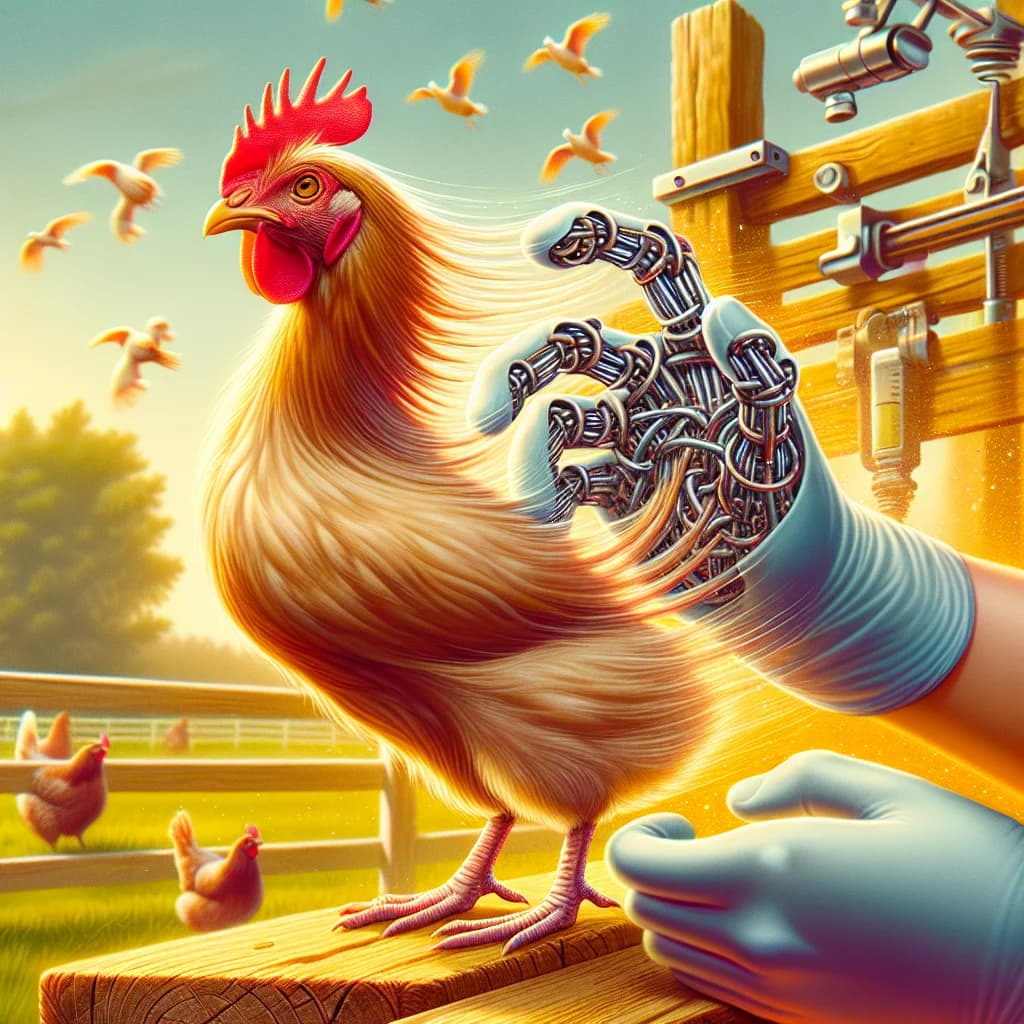
If you have ever picked up a backyard hen and gently swayed her from side to side, you likely noticed a bizarre and fascinating phenomenon: while her body moves, her head remains locked in space as if attached to an invisible tripod. This "gyroscopic" stability has become a viral sensation on social media, but for the chicken, it is a sophisticated biological necessity. This remarkable feat of avian engineering is not just a party trick; it is a fundamental aspect of how birds perceive and interact with their environment. Understanding this behavior provides deep insight into avian evolution, sensory biology, and the unique ways prey species have adapted to survive in a world of constant motion. This post explores the science behind why chickens keep their heads perfectly still and what it reveals about their internal world.
The Limitation of Fixed Eyes
To understand why a chicken’s head stays still, we must first look at their eyes. Unlike humans, who have large, spherical eyes that can rotate freely within their sockets, chickens have relatively fixed eyes. Their eyes are so large in proportion to their skull that there is very little room for the muscles required to move them independently.
If a human walks or runs, our eyes automatically "track" to compensate for the bobbing of our head, a process that keeps our vision steady. Because chickens cannot move their eyes within their sockets to any significant degree, they must move their entire head to achieve the same result. If their head moved in sync with their body, their vision would become a dizzying, motion-blurred mess, making it impossible to identify food or spot an approaching predator.
The Vestibulo-Ocular Reflex (VOR)
The biological mechanism responsible for this stabilization is known as the Vestibulo-Ocular Reflex (VOR), though in birds, it is often referred to as a "vestibulo-collic reflex" because it involves the neck (collum) rather than just the eyes.
This system relies on several key components:
- The Inner Ear: Deep within the chicken's skull are semicircular canals filled with fluid. As the chicken’s body moves, this fluid shifts, triggering sensory hair cells that send instant data to the brain about the direction and speed of the movement.
- Rapid Processing: The avian brain processes these balance signals with incredible speed, far faster than a conscious thought.
- Neck Flexibility: Chickens possess 14 cervical vertebrae—double the number found in humans. This extreme flexibility allows the neck to act as a shock absorber, counteracting body movements with equal and opposite adjustments to keep the skull stationary.
Evolutionary Advantages: Why Stability Matters
This "head-tracking" behavior evolved as a critical survival mechanism. As ground-dwelling prey animals, chickens rely on two primary visual tasks that require absolute focus:
1. Predator Detection
A chicken needs to be able to detect the slightest movement on the horizon or in the sky. If their vision blurred every time they took a step or shifted their weight, a hawk or a fox could easily approach unnoticed. By locking their head in place, they maintain a high-resolution "frame" of their surroundings.
2. Precision Foraging
Chickens survive by pecking at tiny seeds, insects, and grains. This requires immense depth perception and accuracy. By stabilizing their head, they can calculate the exact distance to a moving bug or a small seed, ensuring their beak hits the target with surgical precision.
The "Saccadic" Movement Pattern
You may also notice that when a chicken walks, its head appears to "jerk" forward. This is actually a two-part process called a saccade:
- The Thrust: The chicken pushes its head forward quickly to a new position.
- The Hold: The head remains perfectly still while the body catches up.
During the "Hold" phase, the chicken is actually processing visual information. They are effectively taking a series of high-speed, stabilized "photographs" of their environment rather than watching a continuous, blurry video.
Summary of Key Takeaways
- Fixed Eye Anatomy: Chickens cannot move their eyes much, so they move their heads to compensate.
- Biological Gimbal: The inner ear and a highly flexible neck work together to create a natural stabilization system.
- Survival Instinct: Head stability is essential for spotting predators and accurately pecking at food.
- Health Indicator: A chicken that loses the ability to stabilize its head may be suffering from vestibular disease, ear infections, or neurological trauma and should be seen by a veterinarian.
Conclusion
The sight of a chicken keeping its head perfectly still while its body moves is a masterclass in evolutionary biology. It is a reminder that even the most common farm animals possess "superpowers" specifically tuned to their survival needs. By understanding the vestibulo-collic reflex and the limitations of avian vision, keepers can better appreciate the way their birds perceive the world. This stability is the hallmark of a healthy, alert bird. As responsible caretakers, observing these natural behaviors not only deepens our bond with these fascinating animals but also helps us identify when something is wrong, ensuring our feathered friends remain sharp, steady, and safe.