Why do dogs and cats have a mysterious skin fold on their outer ear called Henry's pocket
That strange little slit on the edge of your pet’s ear isn't an accident—it's a biological mystery known as Henry’s pocket. Uncover the fascinating theories behind this hidden skin fold and discover if it’s the secret to your pet’s incredible hearing.

Too Long; Didn't Read
Henry's pocket, scientifically known as the cutaneous marginal pouch, is a small fold of skin on the outer ear of cats and some dogs. While its exact function remains a mystery, experts suggest it likely helps animals detect high-pitched frequencies, enhances ear flexibility for movement, or improves their ability to pinpoint the direction of sounds.
The Anatomy of an Ear: Why do dogs and cats have a mysterious skin fold on their outer ear called Henry's pocket?
If you have ever spent a quiet moment scratching your pet behind the ears, you may have noticed a peculiar anatomical feature: a small, slit-like pouch located at the base of the outer ear. This delicate skin fold, known technically as the cutaneous marginal pouch but more affectionately as "Henry’s pocket," is a common find in nearly all cats and several specific dog breeds. While it looks like a minor anatomical quirk, its presence has intrigued biologists and veterinarians for decades. Understanding why do dogs and cats have a mysterious skin fold on their outer ear called Henry's pocket? is more than just a matter of curiosity; it provides insight into the evolutionary precision of our pets' sensory systems and highlights important aspects of feline and canine husbandry. This blog post explores the biological theories and practical care considerations surrounding this enigmatic ear fold.
What Is Henry’s Pocket?
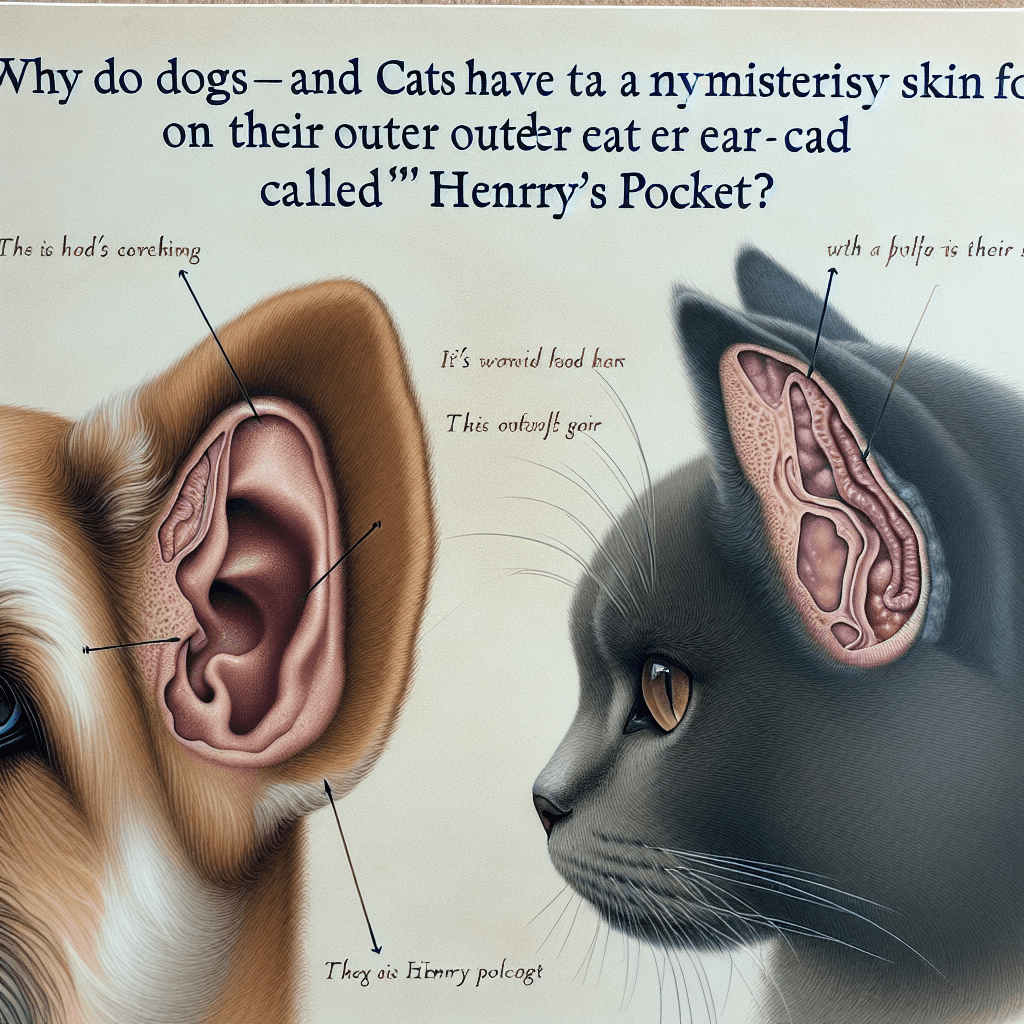
Scientifically referred to as the cutaneous marginal pouch, Henry’s pocket is a small fold of skin located on the posterior-lateral margin of the pinna (the external part of the ear). In the animal kingdom, this feature is most prominently seen in felids (cats), but it also appears in certain canine breeds—particularly those with erect ears or thin ear leather, such as Chihuahuas, Corgis, and Greyhounds. It is also found in other mammalian species, including weasels and bats.
While the origin of the name "Henry" remains a historical mystery in veterinary nomenclature, the biological structure itself is well-documented. It consists of a thin layer of skin that forms a shallow pocket, creating a distinct "slit" at the very edge of the ear flap.
Evolutionary Theories: Why Does It Exist?
Despite its prevalence, the exact biological function of the cutaneous marginal pouch is not yet definitively proven by science. However, the veterinary and zoological communities have proposed several highly plausible theories based on animal behavior and mechanics.
1. Acoustic Localization and Sound Management
One of the most prominent theories suggests that the pocket assists in sound detection. Cats and dogs are highly specialized predators that rely on "ultrasonic" hearing to locate small prey.
- High-Frequency Detection: The pocket may help direct sound waves into the ear canal more efficiently, particularly high-frequency sounds that might otherwise be deflected by the flat surface of the pinna.
- Sound Filtering: Some researchers believe the fold acts as a "damper," helping the animal filter out background noise to better focus on the specific rustle of a rodent or the chirping of a bird.
2. Enhanced Ear Mobility and Flexibility
Dogs and cats possess an incredible range of motion in their ears, controlled by over 30 muscles. They can pivot, flatten, and rotate their ears independently to express emotion or locate sound sources.
- Mechanical Relief: The cutaneous marginal pouch may provide the necessary "slack" in the skin to allow the ear to fold or rotate without tension.
- Expression: By allowing the pinna to flatten more effectively against the head, the pocket aids in non-verbal communication, such as when a cat is frightened or a dog is showing submission.
Practical Care and Veterinary Importance
While Henry’s pocket is a normal anatomical feature, it requires attention from pet owners during routine grooming. Because it is a dark, warm, and secluded fold of skin, it can inadvertently become a "hiding spot" for various external issues.
- Parasite Detection: Ticks and ear mites frequently gravitate toward the cutaneous marginal pouch because the skin is thin and the area is protected. During a routine check, owners should gently spread the fold to ensure no parasites are attached.
- Debris and Infection: Dust, wax, and moisture can become trapped within the pocket. If left uncleaned, this can lead to localized dermatitis or fungal infections.
- Cleaning Tips: When cleaning your pet’s ears with a veterinarian-approved solution, use a soft cotton ball to gently wipe the interior of Henry's pocket. Avoid using Q-tips, which can push debris deeper or damage the delicate skin.
Conclusion
Understanding why do dogs and cats have a mysterious skin fold on their outer ear called Henry's pocket? allows pet owners to appreciate the complex evolutionary history of their companions. Whether it serves as a sophisticated acoustic aid or a mechanical necessity for ear movement, the cutaneous marginal pouch is a testament to the specialized biology of predatory mammals. By incorporating a quick check of Henry’s pocket into your weekly grooming routine, you can ensure that this small anatomical feature remains healthy and free of irritants. Appreciating these finer details of pet anatomy not only strengthens the human-animal bond but also ensures a higher standard of preventative care. If you ever notice persistent redness, swelling, or a foul odor emanating from this area, consult your veterinarian for a professional evaluation.