Why do dogs curve their tongues backward into a tiny spoon shape to lap up water
Your dog isn’t just making a mess at the water bowl—they’re actually performing a high-speed feat of fluid dynamics. Discover the surprising physics behind that "backward spoon" and how it turns every lap into a precision-engineered masterclass in survival.

Too Long; Didn't Read
Dogs curl their tongues backward to create a makeshift ladle, pulling a column of water upward through rapid movement. Since they lack the ability to suck up liquid, they use this technique to catch and swallow the rising stream before gravity takes over.
The Science of the Sip: Why Do Dogs Curve Their Tongues Backward into a Tiny Spoon Shape to Lap Up Water?
If you have ever watched your dog return from a vigorous walk and head straight for the water bowl, you have likely noticed the rhythmic "lap-lap-lap" sound and the inevitable splash on the floor. To the naked eye, it looks like a messy, frantic process. However, beneath the surface of this everyday behavior lies a sophisticated display of fluid dynamics and evolutionary biology. Unlike humans, who can use their "complete" cheeks to create suction and sip through a straw or from a cup, dogs possess a different anatomical structure that requires a unique mechanical workaround.
Understanding the mechanics of how dogs drink is more than just a curiosity; it provides insight into their predatory ancestry and physical capabilities. This blog post will explore the biomechanics of the canine "ladle," the physics of water columns, and why the backward curve of the tongue is an essential adaptation for the survival and health of our canine companions.
The Anatomy of the Incomplete Cheek
To understand why dogs curve their tongues, we must first look at their facial structure. Most predatory mammals, including dogs and cats, have what are known as "incomplete cheeks." Their mouths are split far back toward the jaw to allow for a wide gape, which is an evolutionary necessity for hunting, gripping prey, and panting to regulate body temperature.
Because their cheeks do not form a sealed cylinder around the mouth, dogs cannot create the vacuum pressure required to suck up liquid. To compensate, they have evolved a method of drinking that relies on high-speed movement and the physical properties of water itself: adhesion and inertia.
The "Backward Ladle" Mechanics
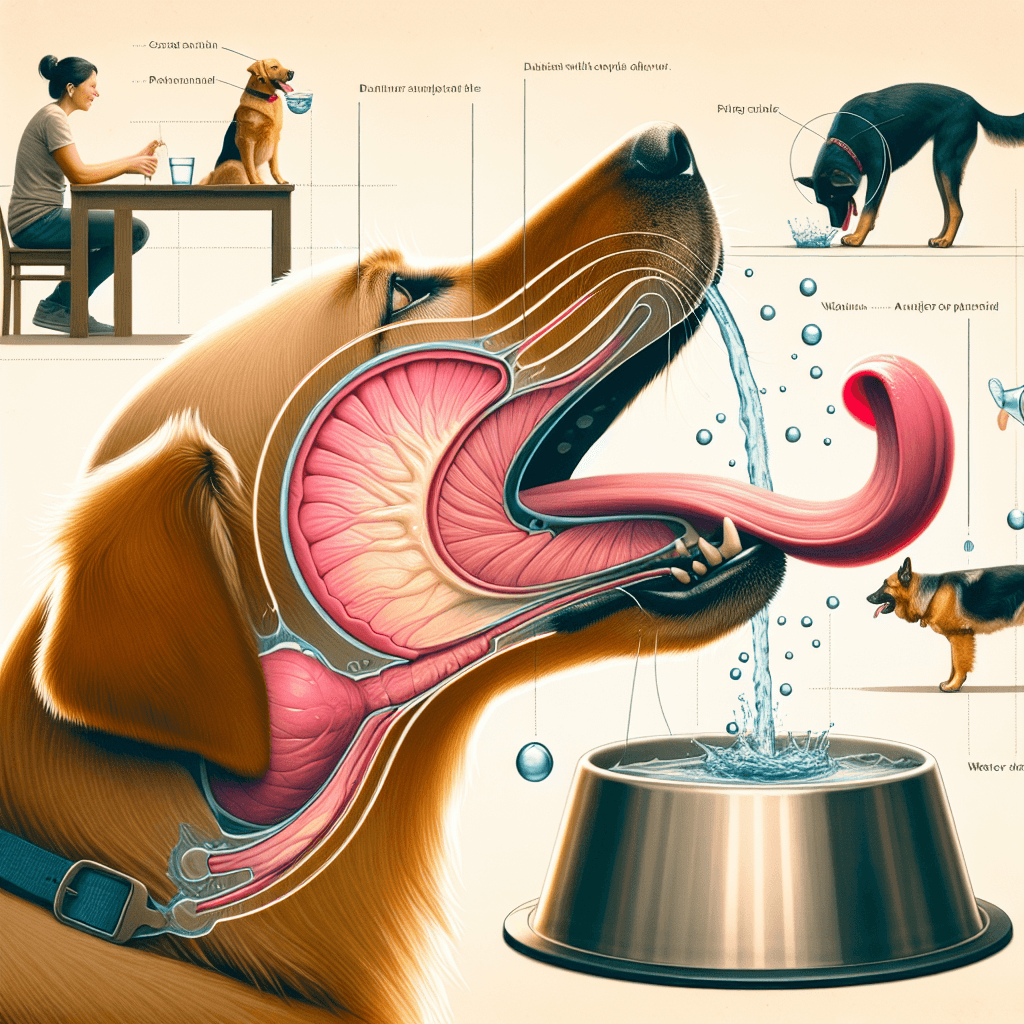
When a dog drinks, they do not simply dip their tongue in and out. High-speed cinematography research, notably conducted by biophysicists at Virginia Tech, has revealed a precise three-step process:
- The Extension and Curl: The dog extends its tongue and curls the tip backward, toward the throat, forming a "ladle" or spoon shape with the bottom of the tongue.
- The Impact: The dog plunges this backward-curled tongue into the water.
- The Withdrawal: The dog quickly retracts the tongue toward the mouth.
Contrary to popular belief, the "spoon" doesn't just hold a tiny bit of water. Instead, the rapid retraction of the curled tongue creates a significant amount of surface tension. This action pulls a column of water upward into the air. Before gravity can pull the liquid back down, the dog snaps its jaws shut, capturing the top of the water column.
The Physics of Fluid Dynamics: Dogs vs. Cats
While both dogs and cats utilize liquid columns to drink, their techniques differ significantly due to their size and jaw structure.
- Cats: Felines are known for their "elegant" drinking. They barely touch the surface of the water with the very tip of their tongue and pull up a delicate column of liquid.
- Dogs: Canines are much more forceful. Because dogs generally have larger mouths and different hydration needs, they must move a larger volume of water. To achieve this, dogs plunge their tongues deeper into the bowl and move them at a higher frequency. The backward-curving "spoon" increases the surface area of the tongue hitting the water, which in turn increases the mass of the water column being pulled upward.
Why the Backward Curve Matters
The specific backward curve is a masterclass in biological engineering. If a dog curved its tongue forward, the water would likely be pushed away from the mouth during the retraction phase. By curving the tongue backward, the dog creates a pocket that maximizes the "drag" on the water.
Key takeaways from canine drinking research include:
- Volume: A dog can move a surprising amount of liquid per lap—roughly one to two teaspoons depending on the size of the dog.
- Speed: The tongue can move at a rate of several laps per second.
- Inertia: The success of the "bite" depends entirely on the timing. If the dog is too slow, the water column collapses; if they are too fast, they waste energy.
Implications for Canine Welfare
Recognizing the mechanics of how dogs drink can help owners better care for their pets. Because dogs rely on the momentum of a water column, they often require a deep enough pool of water to properly submerge the "ladle" of their tongue. Shallow dishes can make it difficult for large dogs to drink efficiently, leading to faster dehydration. Furthermore, because this method is inherently splashy, "messy" drinking is rarely a behavioral issue—it is simply a biological requirement of their anatomy.
Conclusion
The sight of a dog lapping up water is one of the most common scenes in any pet-owning household, yet it represents a fascinating intersection of evolution and physics. By curving their tongues backward into a tiny spoon shape, dogs bypass their inability to suction, instead utilizing the principles of fluid dynamics to stay hydrated. This "backward ladle" is a testament to the incredible adaptability of the canine body.
Next time you hear the familiar splash at the water bowl, you can appreciate the high-speed science at work. Understanding these biological nuances not only deepens our appreciation for our pets but also reminds us of the importance of providing them with the proper environment—starting with a deep, clean bowl of water—to support their unique physiological needs.