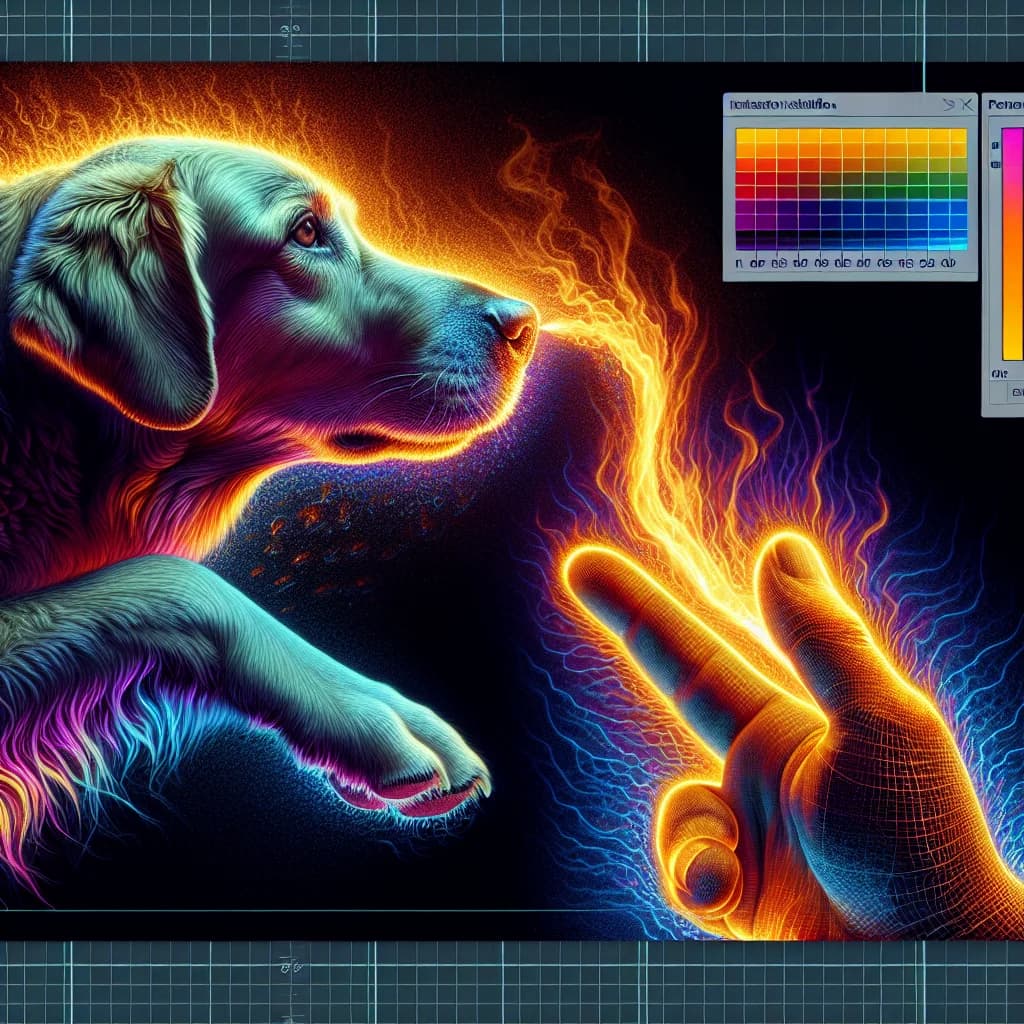
Why do dogs spin in circles to align themselves with Earth’s magnetic field before they poop
Ever wonder why your dog treats every bathroom break like a high-stakes navigation mission? Science reveals your pup is actually acting as a living compass, using Earth’s magnetic field to find the perfect North-South alignment before they go.

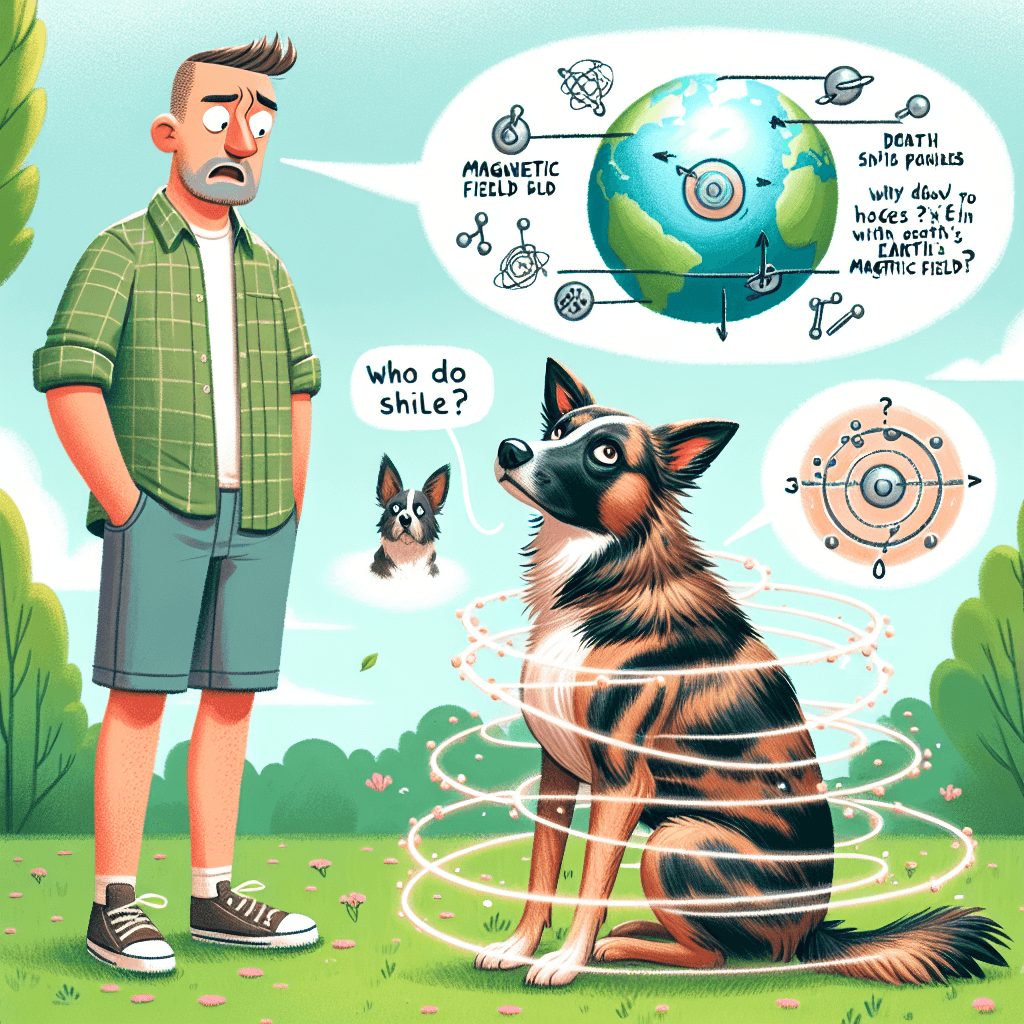
Too Long; Didn't Read
Dogs spin to align their bodies with Earth’s north-south magnetic axis before pooping. Research suggests they possess an internal compass and prefer this orientation when the planet’s magnetic field is stable, helping them find a consistent sense of direction.
The Compass in Your Canine: Why Do Dogs Spin in Circles to Align Themselves with Earth’s Magnetic Field Before They Poop?
Every dog owner is familiar with the pre-elimination ritual: the frantic sniffing, the selective stepping, and, most notably, the repetitive spinning. While it may look like a quirky personality trait or a simple search for the perfect blade of grass, this behavior is actually a sophisticated biological phenomenon. Recent scientific inquiries have revealed that our canine companions possess a sensory capability far beyond our own. This ritualistic circling is often a manifestation of magnetoreception—the ability to perceive and react to the Earth's magnetic field. Understanding why do dogs spin in circles to align themselves with Earth’s magnetic field before they poop offers a fascinating glimpse into animal behavior and the deep evolutionary links between domestic pets and the natural world. This post explores the science behind this "internal compass" and what it means for our understanding of canine biology.
The Science of Magnetoreception in Mammals
Magnetoreception is the ability of an organism to detect a magnetic field to perceive direction, altitude, or location. While well-documented in migratory birds, sea turtles, and honeybees, the discovery of this sense in large mammals—specifically domestic dogs—is a relatively recent breakthrough in zoology.
Biologically, researchers believe this sense may be linked to cryptochromes, light-sensitive proteins found in the eyes of many species, or tiny particles of magnetite within the nervous system. In dogs, this "internal GPS" allows them to sense the invisible magnetic ley lines that wrap around the globe. This biological hardware is not just for decoration; it serves as a fundamental tool for spatial orientation, helping animals navigate environments and maintain a sense of place.
The Burda Study: Quantifying the "Poop Compass"
The most significant evidence regarding this behavior comes from a comprehensive study published in the journal Frontiers in Zoology by researcher Hynek Burda and his team at the Czech University of Life Sciences. Over a period of two years, researchers observed 70 dogs across 37 different breeds, recording a total of 1,893 defecations and 5,582 urinations.
The findings were definitive: under "calm" magnetic field conditions, dogs showed a statistically significant preference for aligning their bodies along the North-South axis. Interestingly, they actively avoided an East-West orientation. This study provided the first clear evidence that dogs are sensitive to small fluctuations in the Earth’s magnetic field (EMF) and use this sensitivity to position themselves during their most vulnerable moments.
The Role of Magnetic Stability
One of the most fascinating aspects of the research was that dogs only displayed this alignment when the Earth’s magnetic field was stable. The Earth’s magnetic field is constantly fluctuating due to solar flares and geomagnetic storms.
- Stable Fields: During periods of magnetic calm (roughly 20% of daylight hours), dogs were highly consistent in their North-South alignment.
- Unstable Fields: When the magnetic field was shifted or unstable due to solar activity, the dogs' alignment became random.
This suggests that dogs aren't just "choosing" a direction; they are responding to a sensory input that can be "scrambled" by space weather, much like a traditional compass might fail near a large magnet.
Why Do They Align Themselves?
While science has confirmed that they align, the why remains a subject of professional discussion. There are several leading theories within the animal behavior community:
- Spatial Mapping: By aligning with the magnetic field, dogs may be "calibrating" their internal map. Since elimination is often a territorial marking behavior, consistent alignment might help them remember exactly where they left their scent in relation to the landscape.
- Cognitive Comfort: Much like humans feel "centered" in a familiar environment, aligning with the Earth’s poles might provide a sense of security and balance during a moment of physical vulnerability.
- Evolutionary Heritage: Many wild canines, such as foxes, use magnetoreception for hunting (mousing). Domestic dogs may have retained this sensitivity as an evolutionary "vestige," even if its primary survival function has faded.
Practical Implications for Dog Owners
For the average pet owner, this behavior is a sign of a healthy, sensitive animal. There is no need to intervene or "correct" the spinning. In fact, understanding this behavior can improve animal welfare by highlighting the importance of giving a dog enough time and space to find their preferred orientation.
- Patience is Key: If your dog is taking a long time to circle, they may be waiting for a "clear signal" from the magnetic field or struggling with local magnetic interference (such as underground power lines).
- Observe the Pattern: If you notice your dog suddenly stops their usual alignment ritual or seems distressed, it could indicate a musculoskeletal issue or a gastrointestinal problem rather than a magnetic one.
Conclusion
The next time you find yourself waiting in the rain while your dog spins in endless circles, remember that you are witnessing a marvel of natural engineering. Why do dogs spin in circles to align themselves with Earth’s magnetic field before they poop? They do so because they are biologically attuned to the planet in a way humans can barely perceive. This behavior is a testament to the complex sensory world our pets inhabit. By appreciating these subtle biological cues, we can deepen our bond with our canine companions and foster a greater respect for the sophisticated evolutionary traits that define the domestic dog. Understanding the "poop compass" is more than just a fun fact; it is a reminder that our dogs are constantly in tune with the world around them.