Why do domestic goldfish lack a biological stomach and instead process food through a long intestinal tract
Think your goldfish is just a bottomless pit? Discover the fascinating evolutionary mystery of why these aquatic icons lack a stomach entirely and how their "stomachless" biology changes everything you know about feeding them.

Too Long; Didn't Read
Goldfish lack a stomach because they evolved as continuous foragers that eat small, frequent meals rather than large prey. Instead of using acid to break down food in a storage organ, they rely on a long intestinal tract to steadily process and absorb nutrients from a constant stream of vegetation and small organisms.
The Science of Digestion: Why Do Domestic Goldfish Lack a Biological Stomach and Instead Process Food Through a Long Intestinal Tract?
For many pet owners, the domestic goldfish (Carassius auratus) is the first introduction to the world of aquatic husbandry. While they are often viewed as simple "starter pets," their internal biology is remarkably specialized. One of the most fascinating and frequently misunderstood aspects of goldfish anatomy is their digestive system. Unlike humans, dogs, or even many other fish species, goldfish do not possess a true biological stomach. Instead, they utilize a continuous, elongated intestinal tract to break down nutrients. Understanding this unique physiological trait is not merely a matter of scientific curiosity; it is a fundamental requirement for responsible goldfish care. This post explores the evolutionary origins and biological mechanics of the goldfish’s "stomachless" anatomy and explains how this specialized system dictates their dietary needs and overall well-being.
The Evolutionary Roots of the Agastric Fish
To understand why domestic goldfish lack a stomach, we must look at their ancestors: the wild Crucian carp of East Asia. In nature, these fish are "continuous foragers" or grazers. Their natural diet consists of small, frequent portions of algae, plant matter, and tiny invertebrates found in the sediment.
In biological terms, goldfish are "agastric," meaning they lack the acidic chamber (the stomach) designed for the storage and initial breakdown of large proteins. Evolutionarily, a stomach is an energy-intensive organ to maintain. For a species that eats small amounts of low-nutrient food throughout the entire day, the ability to store a large, singular meal is unnecessary. By losing the stomach through evolution, the ancestors of the goldfish were able to divert more energy toward growth and reproduction, relying instead on a streamlined digestive process suited for a grazing lifestyle.
How the Long Intestinal Tract Functions
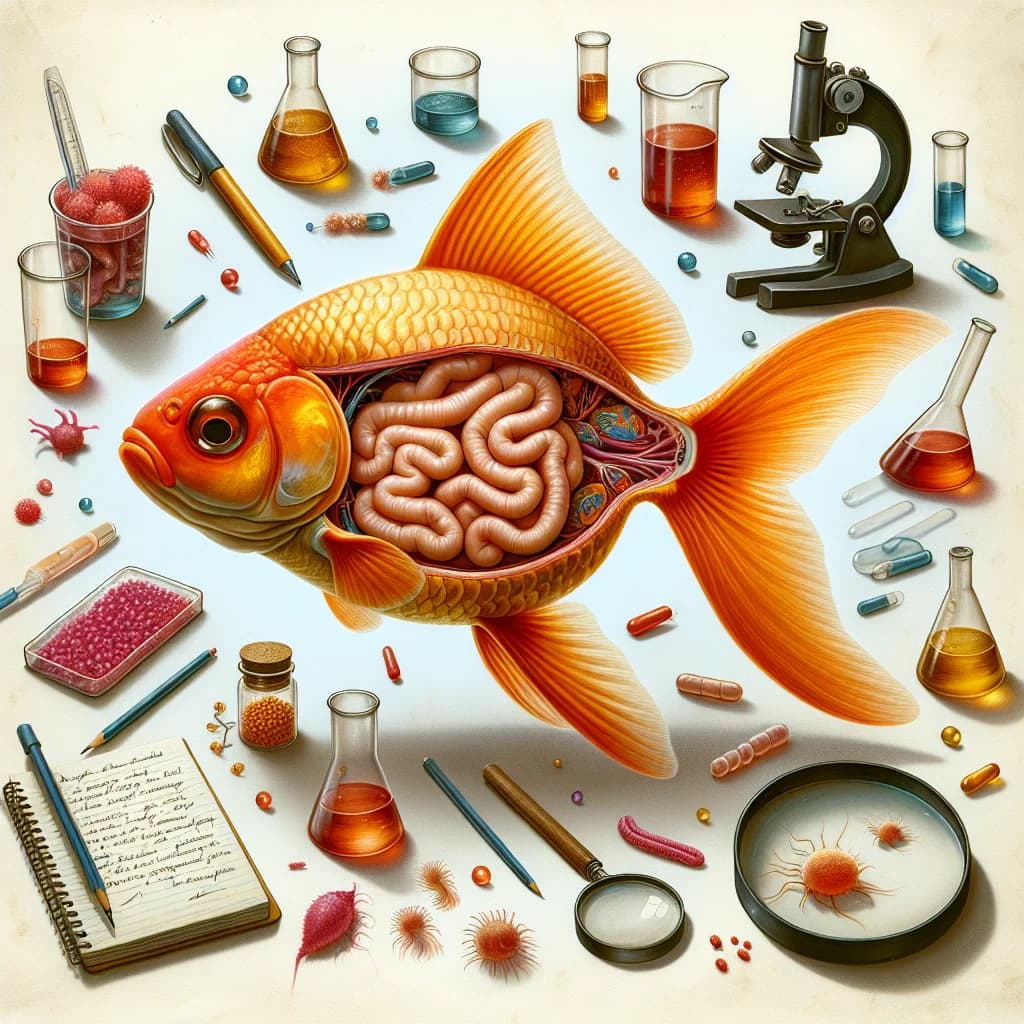
Since goldfish lack the hydrochloric acid and pepsin typically found in a stomach, their digestion begins almost immediately in the intestinal tract.
The Intestinal Bulb
While goldfish do not have a stomach, they do possess a slight widening at the beginning of the small intestine called the "intestinal bulb." This area serves as a temporary holding zone, but it lacks the acidic environment required to break down complex tissues. Instead, the goldfish relies on enzymes produced by the pancreas and the lining of the intestine itself to chemically decompose food.
Nutrient Absorption and Length
The intestinal tract of a goldfish is exceptionally long relative to its body size—often several times the length of the fish itself. This length is a common trait among herbivores and omnivores. Because plant matter is more difficult to break down than animal protein, the food must spend a significant amount of time traveling through the tract to ensure maximum nutrient absorption. This "slow-transit" system compensates for the lack of aggressive acidic digestion.
Implications for Domestic Goldfish Care
Understanding that a goldfish is essentially a "living tube" with no storage capacity has direct implications for how they should be fed in a home aquarium.
- Frequent, Small Meals: Because there is no stomach to hold a large meal, feeding a goldfish one massive portion per day can lead to indigestion and nutrient waste. Veterinary experts generally recommend several small feedings daily to mimic their natural grazing behavior.
- The Risk of Impaction: In "fancy" goldfish breeds (such as Orandas or Ranchus), the body is bred to be short and round. This compresses the already long intestinal tract into a cramped space. If these fish are fed low-quality, air-filled flakes, they are highly susceptible to constipation and "swim bladder" issues, which are often actually digestive blockages pressing against the buoyancy organ.
- Dietary Composition: Since they lack stomach acid to break down heavy proteins, goldfish thrive on diets rich in vegetable matter and easily digestible carbohydrates. High-quality sinking pellets or blanched greens are often preferred over high-protein "growth" formulas which can strain their agastric system.
Conclusion
The fact that domestic goldfish lack a biological stomach and instead process food through a long intestinal tract is a brilliant example of evolutionary efficiency. By adapting to a life of constant grazing, the goldfish’s ancestors traded a complex acidic chamber for a simplified, effective nutrient-absorption tube. For the modern hobbyist, recognizing this anatomical reality is the key to preventing common ailments and ensuring a long, healthy life for these aquatic companions. By prioritizing high-quality, easily digestible foods and frequent, small feedings, owners can respect the unique biological heritage of the goldfish. If you notice signs of lethargy or buoyancy issues in your pet, always consult an aquatic veterinarian to ensure their specialized digestive system is functioning optimally.