Why do domestic horses have mysterious crusty patches called chestnuts that are actually vestigial remnants of extra toes
Ever wondered about those strange, crusty patches on your horse's legs? Discover the mind-bending evolutionary secret behind "chestnuts"—the ghostly remnants of prehistoric toes that prove your horse's ancestors were far more alien than you ever imagined.

Too Long; Didn't Read
Horse chestnuts are vestigial structures representing lost toes from prehistoric ancestors. These crusty leg patches are evolutionary remnants left behind as horses transitioned from multi-toed feet to single-toed hooves.
The Evolutionary Secret of Equine Limbs: Why Do Domestic Horses Have Mysterious Crusty Patches Called Chestnuts That Are Actually Vestigial Remnants of Extra Toes?
If you have ever run your hand down the inner leg of a horse, you may have been startled to find a rough, thickened patch of skin that feels almost like wood or a callous. These unique structures are known as "chestnuts," and to the uninitiated, they can look like a strange skin condition or an injury. However, far from being a medical concern, these patches are one of nature’s most fascinating historical markers. Understanding why do domestic horses have mysterious crusty patches called chestnuts that are actually vestigial remnants of extra toes requires a journey back 50 million years. These growths are not mere accidents of biology; they are the literal "fingerprints" of equine evolution, providing a tangible link between the modern horse and its multi-toed ancestors. This blog post explores the biological origins, evolutionary significance, and proper care of these curious equine features.
What Exactly Are Chestnuts and Ergots?
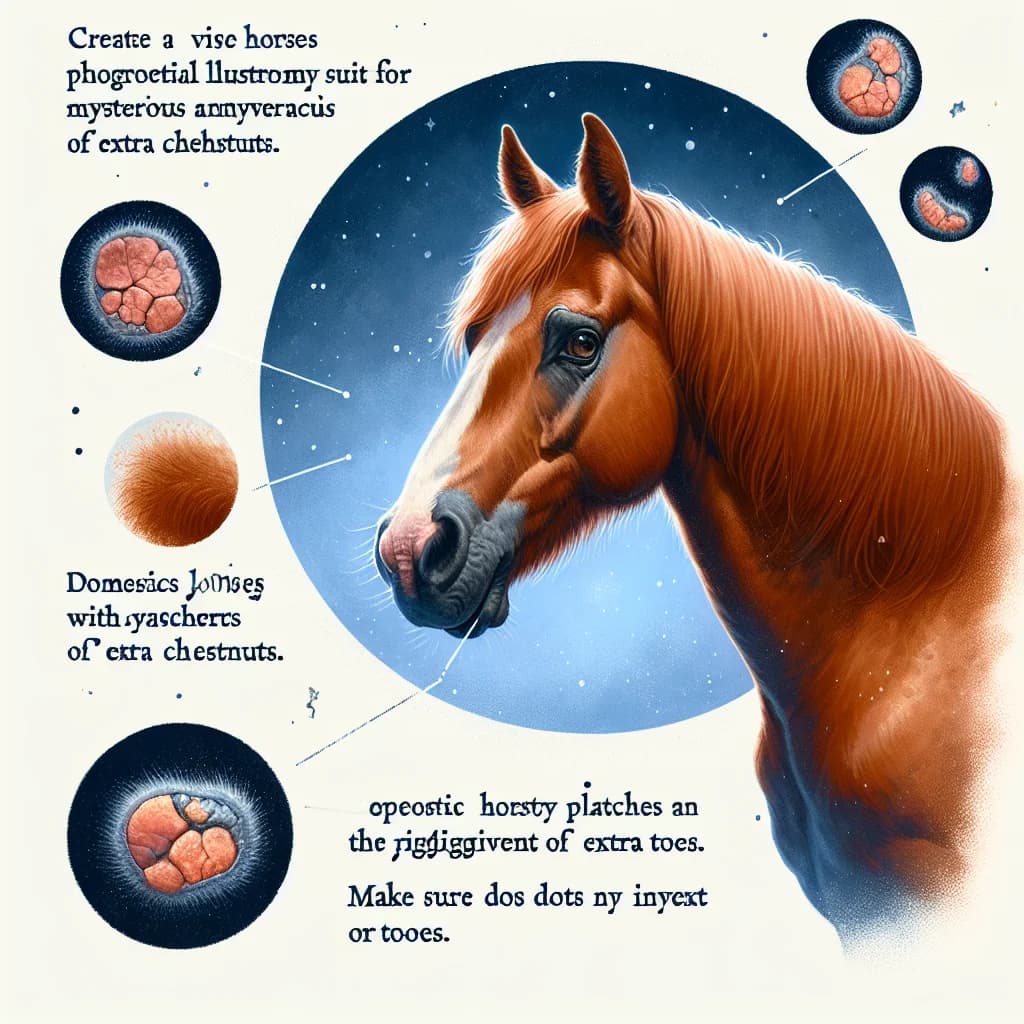
To understand the chestnut, we must first define what it is biologically. A chestnut is a growth of cornified (keratinized) skin found on the medial side of a horse's legs. In most horses, they are located above the "knee" (carpus) on the front legs and below the hock (tarsus) on the hind legs. A related structure, the "ergot," is a smaller callous found buried in the hair at the back of the fetlock joint.
Like the hoof itself, chestnuts are composed of keratin—the same protein that makes up human hair and fingernails. While they lack a direct blood supply or nerve endings within the hardened growth, they are firmly attached to the underlying skin, which is highly sensitive. Interestingly, while most horse breeds possess chestnuts on all four legs, some—such as the Icelandic horse or the Shire—may lack them on the hind legs entirely, showcasing the subtle genetic variations across the species.
From Forest Dwellers to Plains Runners: An Evolutionary Timeline
The primary reason why do domestic horses have mysterious crusty patches called chestnuts that are actually vestigial remnants of extra toes lies in the transition of the species Eohippus (the "dawn horse"). Fifty million years ago, horse ancestors were small, dog-sized creatures that inhabited swampy forests. Unlike the modern single-hoofed horse, these ancestors had four toes on their front feet and three on their back feet.
As the Earth’s climate shifted and forests gave way to hard-packed grasslands, the horse’s anatomy had to adapt for speed and efficiency over long distances. Evolutionary biology shows a clear progression:
- The Weight Shift: To run faster and escape predators, the central toe (the third digit) became larger and stronger to bear the animal's weight.
- Reduction of Digits: The outer toes (the first, second, fourth, and fifth digits) gradually lost contact with the ground.
- The Vestigial Result: Over millions of years, these extra toes shrank. Most disappeared entirely or became the "splint bones" hidden under the skin of the lower leg. The chestnuts and ergots are the external, keratinized remnants of these ancient footpads or lost digits.
The Role of Chestnuts in Modern Horse Care
While chestnuts are vestigial—meaning they no longer serve their original purpose—they still require attention during routine grooming. Because they are made of keratin, they grow continuously, much like a hoof. In the wild, these patches would naturally be abraded by tall brush or rough terrain. In a domestic setting, they can become quite long and unsightly if left unmanaged.
Guidelines for Safe Maintenance:
- Softening: During a bath, the water will naturally soften the keratin, making it more pliable.
- Peeling: Once softened, many chestnuts can be easily peeled back by hand. You should only remove the layers that are ready to come off naturally.
- Avoid Force: Never pull aggressively on a dry chestnut, as this can tear the sensitive skin underneath and lead to pain or infection.
- Professional Trimming: If a chestnut becomes excessively thick or "horn-like," your farrier can safely trim it using hoof nippers during a regular shoeing appointment.
Scientific Perspectives and Myths
In the equestrian community, several myths persist regarding chestnuts. Some folklore suggests they are "night eyes" that help horses see in the dark, or that they are scent glands similar to those found in deer. However, zoological consensus firmly identifies them as vestigial structures. While some research has looked into the chemical signals that might be trapped in the flaky layers of keratin, there is no verified evidence that modern chestnuts function as active scent-marking organs. Instead, they remain a primary example of "evolutionary baggage"—physical traits that remain long after their function has ceased.
Conclusion
Understanding why do domestic horses have mysterious crusty patches called chestnuts that are actually vestigial remnants of extra toes enriches our appreciation for the complex history of the equine species. These small, crusty patches are not blemishes but are instead profound evidence of a 50-million-year success story. By recognizing them as the remnants of ancient toes, owners can better understand their horse's anatomy and provide more informed care. While chestnuts may seem like a minor detail in the grand scheme of horse husbandry, they serve as a constant reminder of the incredible journey the horse has taken from the forest floor to the open plains. Always consult with a veterinarian or professional farrier if you notice unusual discharge or inflammation around these areas, ensuring your horse remains healthy from hoof to chestnut.