Why do goldfish lose their bright orange color and turn white if they are kept in the dark
Ever wondered why your vibrant goldfish is slowly fading into a ghostly pale? Discover the hidden science between light and pigment that keeps your fish glowing—and the surprising reason they lose their luster when left in the shadows.

Too Long; Didn't Read
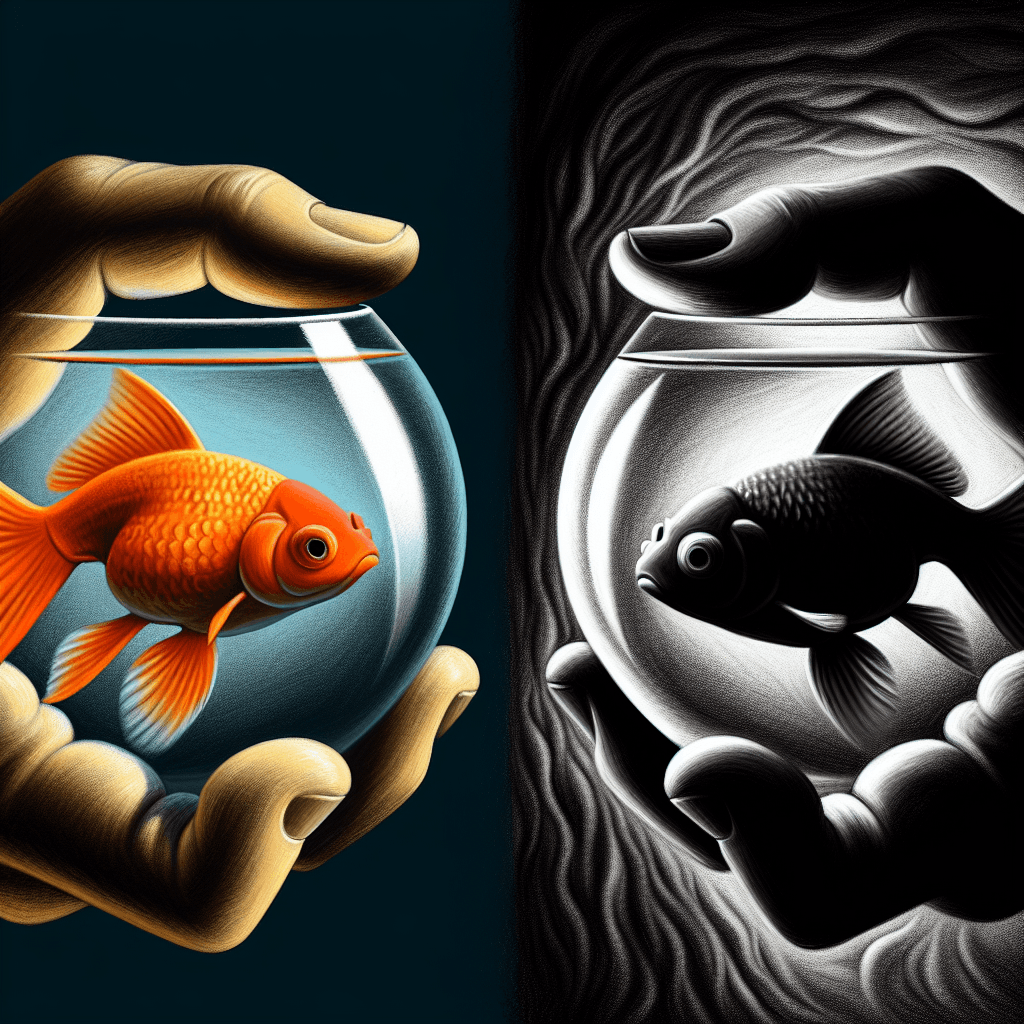
Goldfish lose their vibrant orange color in the dark because their pigment-producing cells, called chromatophores, require light to stay active. Without regular exposure to light, these cells stop producing pigment, causing the fish's color to fade and eventually turn white.
Nature’s Living Gems: Why Do Goldfish Lose Their Bright Orange Color and Turn White if They Are Kept in the Dark?
Imagine watching your vibrant, sunset-orange goldfish slowly transform into a pale, ghostly white over several months. For many aquarium enthusiasts, this sudden change can be alarming, leading to concerns about disease or water quality. However, this phenomenon is often a fascinating demonstration of biology in action rather than a medical emergency. The goldfish (Carassius auratus), a species with a rich history of selective breeding dating back over a thousand years to ancient China, possesses a complex physiological relationship with its environment. Understanding why do goldfish lose their bright orange color and turn white if they are kept in the dark is essential for any responsible hobbyist. This post explores the scientific mechanisms behind piscine pigmentation, the role of light in cellular health, and how proper husbandry can preserve your fish’s brilliant hues.
The Biological Mechanism: Understanding Chromatophores
The secret to a goldfish’s color lies in specialized cells called chromatophores. These are pigment-bearing and light-reflecting cells found in the dermal layer of the skin. In goldfish, the primary types are erythrophores (which contain red pigments) and xanthophores (which contain yellow pigments). When these pigments are concentrated and active, they blend to create the iconic bright orange hue we associate with the species.
These cells are not static; they are highly responsive to external stimuli. Light acts as a primary catalyst for pigment production and maintenance. When a goldfish is exposed to full-spectrum light, it triggers the cells to produce and maintain high levels of pigment. Conversely, in the absence of light, these cells effectively "switch off" or stop producing new pigment. Over time, the existing pigment breaks down and is not replaced, leading to a bleached or white appearance.
The Role of Photoreception and UV Light
Goldfish do not just "see" light through their eyes; their skin and internal systems are biologically tuned to respond to it. In the wild, their ancestors—the Prussian carp—relied on sunlight to regulate biological rhythms and camouflage. While selective breeding has prioritized aesthetics over camouflage, the underlying biology remains.
Sunlight, or high-quality artificial light that mimics the solar spectrum, provides ultraviolet (UV) radiation. This radiation stimulates the production of melanin and other pigments. This process is somewhat analogous to a human developing a tan; the pigment is a physiological response to light exposure. Without this stimulation, the fish's body stops investing energy into maintaining the costly pigments required for bright coloration. Veterinary studies suggest that a lack of light can also impact the fish's circadian rhythm, which further affects metabolic processes, including how nutrients are synthesized into skin color.
The Synergy of Diet and Environment
While light is the "trigger" for color, nutrition provides the "building blocks." Goldfish cannot synthesize their own pigments from scratch; they must ingest carotenoids. These are organic pigments found in algae, small crustaceans, and high-quality commercial flakes.
- Astaxanthin: A common carotenoid that enhances red and orange tones.
- Spirulina: A nutrient-rich algae often added to feed to bolster color intensity.
If a goldfish is kept in the dark, even a diet rich in carotenoids may not be enough to maintain its color. The biological "signal" to move those pigments into the chromatophores is missing. Therefore, the most effective animal science approach to color maintenance is a combination of appropriate light cycles (10–12 hours of light per day) and a scientifically formulated diet.
Historical Context and Genetic Factors
It is important to remember that the bright orange color of a goldfish is an evolutionary anomaly. In nature, a bright orange fish would be easily spotted by predators. Domesticated goldfish were selectively bred from wild carp that were naturally olive-green or grey. This means their bright colors are genetically "unstable" compared to their wild counterparts. If the environment does not actively support the expression of these domestic traits—such as through adequate lighting—the fish may revert to a more neutral, "base" state, which often manifests as a translucent white or pale silver in captive environments.
Conclusion
Understanding why do goldfish lose their bright orange color and turn white if they are kept in the dark highlights the profound impact of environment on animal physiology. The transition from orange to white is a direct result of inactive chromatophores and a lack of light-stimulated pigment production. To ensure the welfare and aesthetic vibrancy of these aquatic companions, keepers must provide an environment that mimics natural light cycles and offers a nutrient-dense diet. By prioritizing biological needs, such as full-spectrum lighting and carotenoid-rich food, pet owners can support the complex internal systems that keep goldfish healthy and colorful. If you notice a sudden change in your fish's color alongside lethargy or loss of appetite, always consult an aquatic veterinarian to rule out underlying health issues.