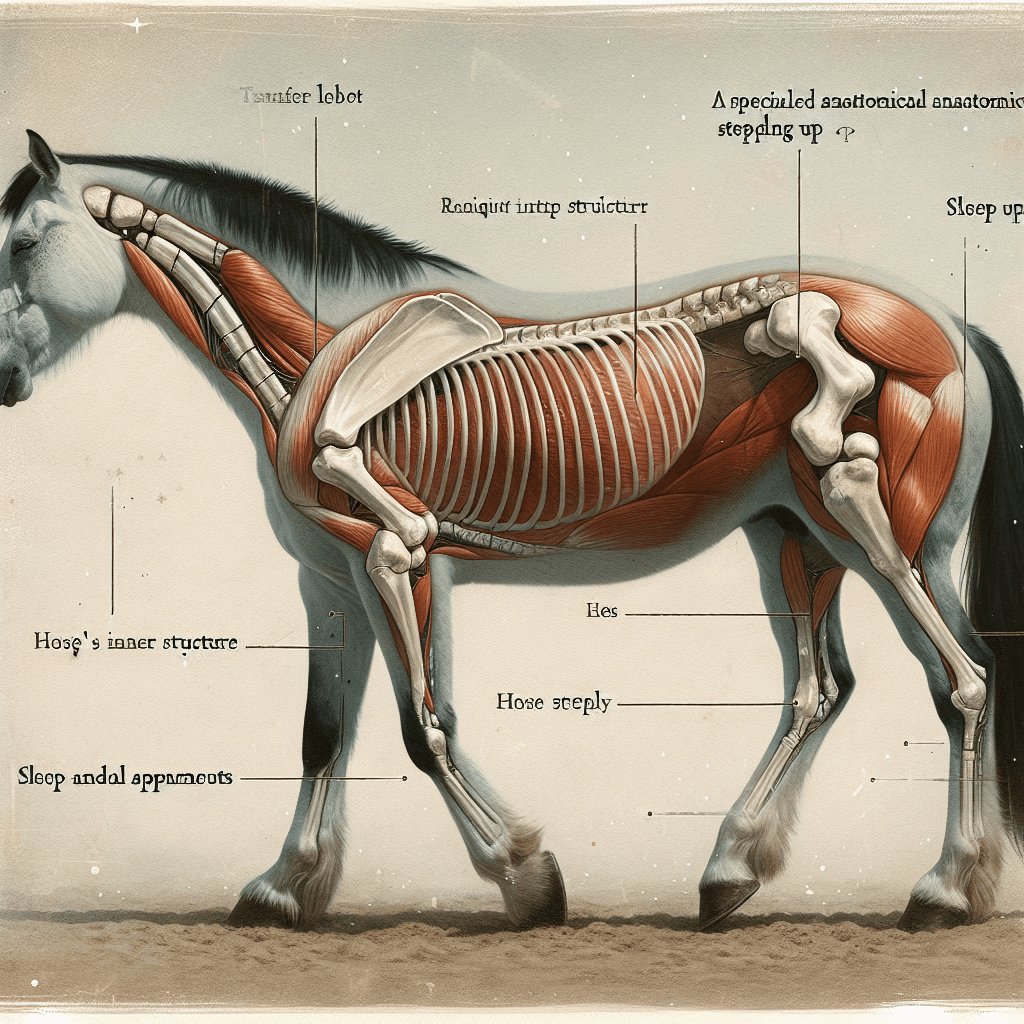
Why do horses sleep standing up without their legs collapsing thanks to a specialized anatomical stay apparatus
Have you ever wondered how a thousand-pound horse can drift into a deep sleep without ever hitting the ground? Discover the incredible "stay apparatus"—a biological locking mechanism that allows these majestic animals to snooze on their feet while remaining ready to bolt at a moment's notice.

Too Long; Didn't Read
Horses sleep standing up thanks to a stay apparatus, a specialized system of tendons and ligaments that locks their leg joints in place. This anatomical feature allows them to relax their muscles without collapsing, ensuring they can rest while remaining ready to flee from predators at a moment's notice.
Standing Guard: Why Do Horses Sleep Standing Up Without Their Legs Collapsing Thanks to a Specialized Anatomical Stay Apparatus?
Have you ever looked into a moonlit pasture and seen a herd of horses motionless, seemingly asleep while perfectly upright? To the casual observer, this may look like a feat of incredible muscular endurance, but for the horse, it is an essential evolutionary adaptation. As prey animals, horses evolved on open plains where the ability to flee from a predator at a moment’s notice was the difference between life and death. To balance the need for rest with the requirement for safety, horses developed a complex biological "locking" mechanism. This blog post explores the fascinating science of why do horses sleep standing up without their legs collapsing thanks to a specialized anatomical stay apparatus, detailing how this biological marvel functions to protect and preserve equine health.
The Evolutionary Necessity of the Stay Apparatus
In the wild, a horse that is lying down is at its most vulnerable. The transition from a recumbent position to a full gallop takes several seconds—a lifetime when being pursued by a predator. Consequently, horses developed the ability to achieve "slow-wave sleep" (a light form of slumber) while remaining on their feet.
The biological key to this ability is the stay apparatus. This is a complex system of muscles, tendons, and ligaments that work together to lock the major joints in the limbs. By bypassing the need for constant muscular contraction, the stay apparatus allows a horse to remain upright with nearly zero energy expenditure and no muscular fatigue.
How the Front Legs Lock
The mechanics of the stay apparatus differ slightly between the front and hind limbs. In the front legs, the mechanism is primarily passive, relying on a series of non-elastic connective tissues.
- The Biceps Brachii and Tendinous Internal Cables: The horse’s front leg contains a powerful internal "cable" of connective tissue that runs through the biceps muscle.
- The Lacertus Fibrosus: This heavy band of tissue connects the biceps to the extensor muscles lower in the leg.
- Joint Stabilization: When the horse relaxes into a standing sleep, these tendons and ligaments tension up, preventing the shoulder, elbow, and knee (carpus) from buckling. Because these tissues are not muscle, they do not tire, allowing the horse to remain braced for hours without "feeling" the weight.
The Hind Limbs and the Patellar Locking Mechanism
The hind legs utilize a more active locking system known as the patellar locking mechanism. This is perhaps the most famous component of equine anatomy related to rest.
- Shifting Weight: A horse will typically "cock" one hind leg, resting it on the edge of the hoof, while the other leg bears the weight.
- Hooking the Kneecap: The horse lifts its patella (kneecap) and hooks a ligament (the medial patellar ligament) over a bony protrusion at the end of the femur called the medial trochlear ridge.
- The Stay: Once hooked, the stifle joint is locked in place. Because the stifle and the hock are linked by the "reciprocal apparatus" (a system of tendons), locking the stifle automatically locks the hock.
- Alternating Rest: Periodically, the horse will shift its weight to the other leg to prevent long-term strain on the standing limb.
Slow-Wave Sleep vs. REM Sleep
While the stay apparatus is an engineering marvel, it does have limitations. Horses can achieve light sleep and drowsy states while standing, but they cannot achieve Rapid Eye Movement (REM) sleep in this position.
REM sleep requires total muscle relaxation (atonia), which would cause the stay apparatus to fail and the horse to collapse. Therefore, for complete physiological well-being, horses must lie down for approximately 30 to 60 minutes a day, usually in short bursts. Veterinary studies have shown that horses deprived of a safe, comfortable space to lie down can suffer from "sleep crashing," where they fall over into a deep sleep due to exhaustion because they lacked the security to lie down voluntarily.
The Importance of Understanding Equine Rest
For owners and caretakers, understanding the stay apparatus is vital for proper husbandry.
- Stable Environment: Ensure stalls or paddocks are large enough and have appropriate bedding (like straw or shavings) to encourage recumbent sleep.
- Social Dynamics: Horses often sleep in "shifts." In a herd, one or two horses usually remain awake and standing as sentinels while others lie down to enter REM sleep.
- Medical Awareness: Conditions like "upward fixation of the patella" can occur when the stay apparatus fails to unlock, causing the horse’s leg to get stuck in the extended position. This requires veterinary attention.
Conclusion
The ability of a horse to rest while remaining ready for flight is one of nature’s most sophisticated examples of anatomical engineering. By understanding why do horses sleep standing up without their legs collapsing thanks to a specialized anatomical stay apparatus, we gain a deeper appreciation for the resilience and complexity of these magnificent animals. Recognizing that they require a blend of standing "stay" rest and recumbent REM sleep is essential for any responsible owner. By providing a secure environment that respects their evolutionary need for both safety and deep rest, we ensure our equine companions remain healthy, alert, and well-rested. If you notice your horse is reluctant to lie down or seems excessively drowsy while standing, always consult with an equine veterinarian to rule out underlying orthopedic or environmental stressors.