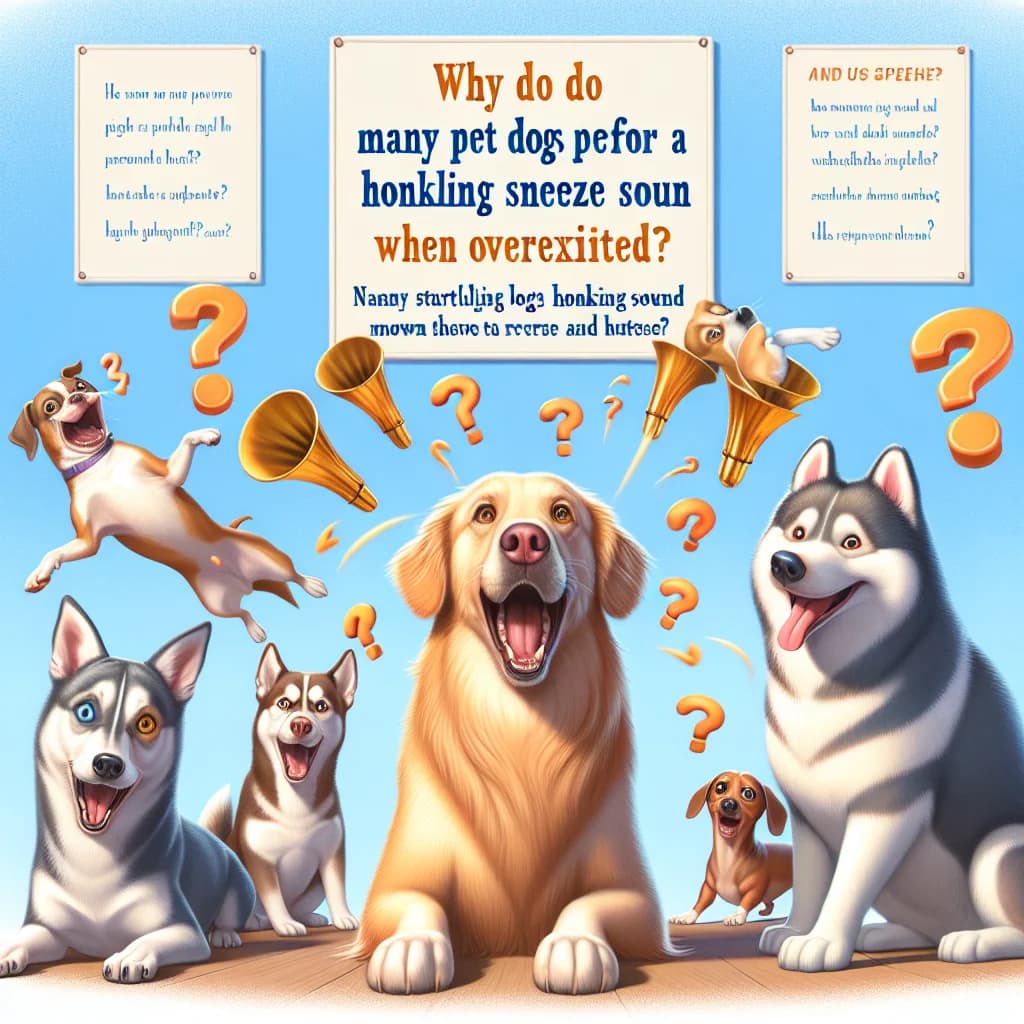
Why do many pet dogs perform a startling honking sound known as a reverse sneeze when overexcited
Ever heard your dog make a sudden, startling honking sound that sounds like they’re gasping for air? Discover the surprising science behind the "reverse sneeze" and why your pup’s over-the-top excitement might be the secret trigger.

Too Long; Didn't Read
Reverse sneezing occurs when a dog’s soft palate is irritated by rapid breathing during excitement. This triggers a spasm that causes the dog to forcefully inhale through the nose, creating a honking sound. It is generally a harmless way for them to clear their airway.
The Science of the Snort: Why Do Many Pet Dogs Perform a Startling Honking Sound Known as a Reverse Sneeze When Overexcited?
It is a scenario familiar to many dog owners: you arrive home after a long day, and your canine companion greets you with frantic tail wags and leaps of joy. Suddenly, the excitement is interrupted by a series of rhythmic, alarming, and loud honking sounds. To the uninitiated, it looks and sounds as if the dog is choking or gasping for air. This phenomenon, clinically known as paroxysmal respiration, is commonly referred to as a "reverse sneeze." While the sound can be distressing to witness, understanding the biological mechanics behind why many pet dogs perform a startling honking sound known as a reverse sneeze when overexcited is essential for any responsible pet owner. This post will delve into the physiological triggers of the reverse sneeze, the breeds most affected, and how to differentiate this benign reflex from more serious respiratory issues.
What is a Reverse Sneeze?
To understand why this happens, we must first define the biological mechanism. A standard sneeze occurs when the nasal passages are irritated, causing the body to forcefully expel air through the nose. A reverse sneeze is essentially the opposite. It is triggered by an irritation of the nasopharynx—the area of the throat located behind the nasal cavity and above the soft palate.
When this area becomes irritated, the dog experiences a spasm. To combat the irritation, the dog rapidly and forcefully pulls air into the body through the nose. This results in the characteristic "honking" or "snorting" sound, as well as a stretched neck and backwards-tilting head. While the episode looks dramatic, the dog is not actually choking; they are simply attempting to clear an irritant from the back of their throat.
The Connection Between Excitement and Respiratory Spasms
Why do many pet dogs perform a startling honking sound known as a reverse sneeze when overexcited? The answer lies in the sudden shift in breathing patterns. When a dog becomes highly stimulated—whether through play, the arrival of a guest, or the anticipation of a walk—their respiratory rate increases. This rapid intake of air can lead to several physiological triggers:
- Hyperventilation and Air Turbulence: Rapid, shallow breathing can cause the soft tissue in the throat to vibrate or become slightly displaced, triggering the reflex.
- Post-Nasal Irritation: Excitement often leads to increased sniffing. This can pull environmental irritants like dust, pollen, or strong perfumes deeper into the nasopharynx.
- Mechanical Irritation: In many cases, an excited dog may pull against their leash or collar. This external pressure on the trachea and surrounding tissues can irritate the throat, leading directly to a reverse sneezing episode.
Biological and Anatomical Factors
While any dog can experience a reverse sneeze, veterinary science has identified specific anatomical predispositions.
Brachycephalic Breeds
Dogs with shortened snouts, such as Pugs, Boxers, and Bulldogs, are significantly more prone to this behavior. These breeds often possess an elongated soft palate. When they breathe deeply or rapidly during periods of excitement, the excess tissue of the soft palate can be sucked into the throat, causing the nasopharyngeal irritation that initiates the reverse sneeze.
Small Breed Anatomy
Small and "toy" breeds, including Yorkies, Chihuahuas, and Beagles, also show a higher frequency of the condition. These dogs have smaller throats and narrower airways, making them more sensitive to minor irritants or sudden changes in air pressure caused by rapid breathing.
Evidence-Based Management and Care
If your dog frequently experiences reverse sneezing during moments of high emotion, there are several veterinary-approved methods to help them recover quickly:
- Stay Calm: Dogs mirror their owner’s energy. If you panic, the dog’s excitement and heart rate will increase, prolonging the episode.
- Massage the Throat: Gently stroking the dog’s throat can help soothe the spasm and encourage the dog to swallow, which often resets the respiratory reflex.
- The Nostril Technique: Briefly covering the dog’s nostrils with your fingers for a second or two forces them to breathe through their mouth, which can help realign the soft palate and stop the irritation.
- Environmental Awareness: If episodes are frequent, consider switching from a traditional collar to a harness to reduce pressure on the neck during walks.
Conclusion
Understanding why many pet dogs perform a startling honking sound known as a reverse sneeze when overexcited is a vital part of domestic canine care. While the sound may be jarring, it is usually a harmless, involuntary reflex designed to protect the upper airway from irritation. By recognizing the triggers—such as rapid breathing, anatomical predispositions, and environmental irritants—owners can respond with a calm, informed approach that strengthens the human-animal bond.
However, if reverse sneezing becomes chronic, or is accompanied by nasal discharge, coughing, or exercise intolerance, it is imperative to consult a veterinary professional. Ensuring your pet's respiratory health is a cornerstone of responsible ownership, allowing you and your companion to enjoy those moments of high-energy excitement with peace of mind.