Why do pet axolotls remain in their larval form forever instead of turning into land-dwelling salamanders
While most amphibians eventually trade their gills for lungs, the axolotl has mastered the biological art of staying young forever. Discover the fascinating secret behind why these "Peter Pans of the water" refuse to grow up and how they skip the transformation that defines their species.

Too Long; Didn't Read
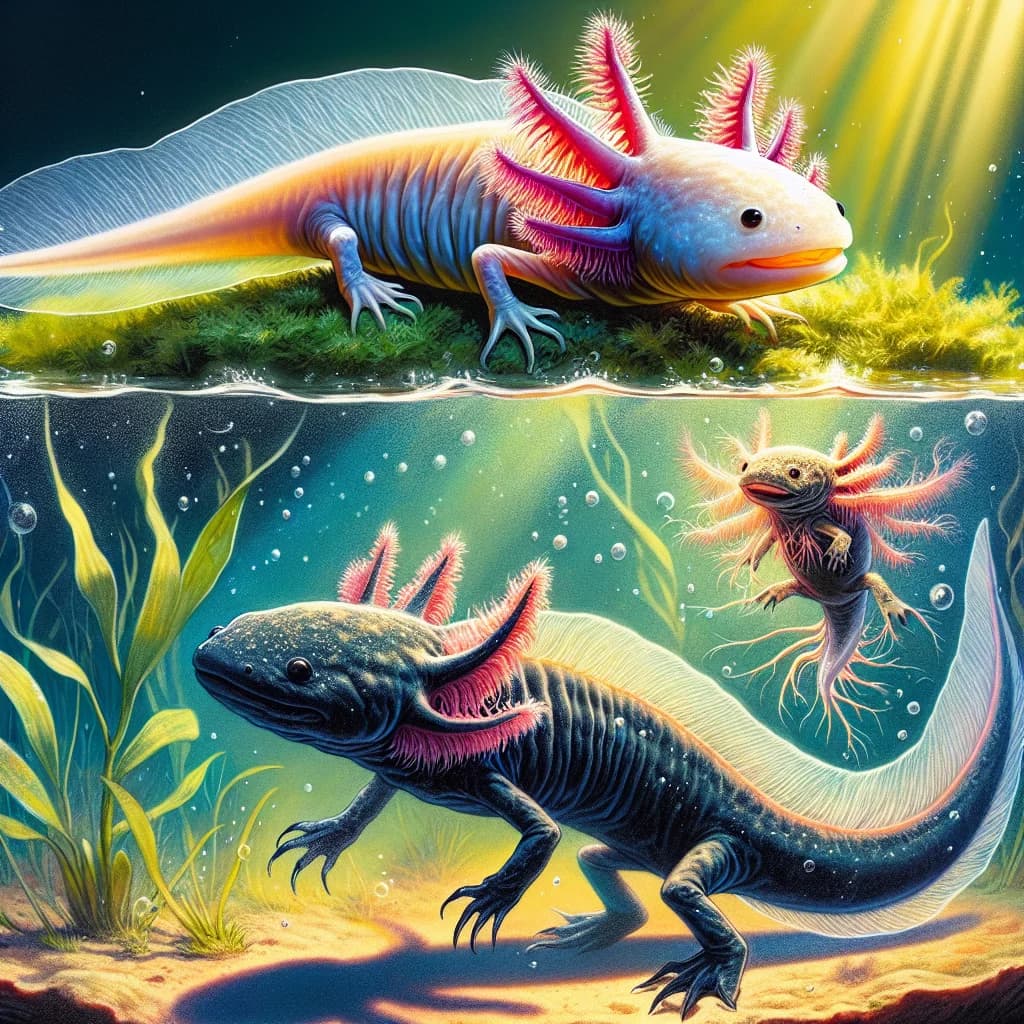
Axolotls undergo a process called neoteny, which allows them to reach sexual maturity while retaining juvenile features like external gills and an aquatic lifestyle. This occurs because they lack the thyroid-stimulating hormone required to trigger metamorphosis, an evolutionary adaptation to their historically stable lake habitats that made moving to land unnecessary for survival.
Forever Young: Why Do Pet Axolotls Remain in Their Larval Form Forever Instead of Turning Into Land-Dwelling Salamanders?
In the diverse world of amphibians, the axolotl stands out as a biological anomaly. While most salamanders undergo a dramatic transformation—sprouting lungs and shedding their gills to transition from water to land—the axolotl remains comfortably submerged. Often referred to as the "Peter Pan of the animal kingdom," these captivating creatures are native to the ancient lake complex of Xochimilco near Mexico City. Their unique appearance, characterized by feathery external gills and a finned tail, has made them a favorite among exotic pet enthusiasts. However, their physical state is not just a cosmetic quirk; it is a profound evolutionary strategy known as neoteny. Understanding why do pet axolotls remain in their larval form forever instead of turning into land-dwelling salamanders is essential for providing them with proper care and appreciating their complex genetic heritage. This post explores the hormonal and evolutionary mechanisms that keep the axolotl in a state of "permanent childhood."
The Biological Phenomenon of Neoteny
To understand the axolotl, one must first define neoteny (also called paedomorphosis). This is a biological condition where an adult organism retains juvenile or larval traits throughout its entire lifespan. In the case of the axolotl, this means they reach sexual maturity and are capable of reproducing while still possessing the physical characteristics of a larva.
Unlike the closely related Tiger Salamander, which eventually loses its gills and moves to land, the axolotl remains entirely aquatic. This evolutionary "choice" is driven by a lack of thyroid-stimulating hormones. In most amphibians, a surge of thyroxine (T4) triggers metamorphosis, causing the gills to shrink, the skin to thicken, and lungs to develop fully. In axolotls, the thyroid gland exists, but it does not receive the necessary chemical signals from the pituitary gland to release the hormones required for transformation.
The Evolutionary Advantage of Staying Underwater
Evolution rarely happens by accident; traits are typically preserved because they offer a survival advantage. Why do pet axolotls remain in their larval form forever instead of turning into land-dwelling salamanders rather than evolving to walk on land?
- Stable Environments: Historically, the lakes of the Valley of Mexico provided a stable, food-rich environment with few aquatic predators. There was little evolutionary pressure for the axolotl to leave the water for the harsh, unpredictable terrestrial environment.
- Energy Conservation: Metamorphosis is an incredibly taxing biological process. By bypassing this stage, axolotls can direct more energy toward growth and reproduction.
- Regenerative Mastery: Interestingly, the axolotl’s neotenic state is linked to its incredible ability to regenerate lost limbs, heart tissue, and even parts of its brain. Scientists believe that the "juvenile" state of their cells facilitates this healing process.
The Role of Iodine and Hormones
The secret to the axolotl’s "eternal youth" lies in the endocrine system. Research in herpetology has shown that the axolotl's tissues are responsive to thyroid hormones, even if the animal doesn't produce them in sufficient quantities naturally.
In laboratory settings, scientists have successfully induced metamorphosis in axolotls by injecting them with iodine or thyroxine. When this happens, the axolotl undergoes a stressful transformation: its gills are absorbed, its finned tail disappears, and it develops eyelids. However, this is highly discouraged for pet owners. Forced metamorphosis significantly shortens the animal's lifespan and causes extreme physiological stress. In the wild and in home aquaria, their bodies are genetically programmed to remain aquatic, and disrupting this leads to metabolic failure.
Care Implications for Pet Owners
Because axolotls remain in their larval form, their care requirements are vastly different from those of land-based salamanders. Owners must respect their aquatic nature to ensure animal welfare:
- Water Quality: Since they breathe through external gills, they are highly sensitive to water parameters. High levels of ammonia or nitrates can damage their delicate gill filaments.
- Temperature Control: Axolotls thrive in cool water (60–64°F). Warmer water can trigger stress and illness, as their larval bodies are not designed for high metabolic rates.
- Substrate Choice: Because they are "permanent larvae," they feed via suction. Using small gravel can lead to impaction; fine sand or a bare-bottom tank is safer.
Conclusion
The mystery of why do pet axolotls remain in their larval form forever instead of turning into land-dwelling salamanders is solved by looking at their unique endocrine system and evolutionary history. By embracing neoteny, the axolotl has carved out a niche as a specialized aquatic survivor, retaining its juvenile charms and regenerative powers for a lifetime. For the responsible pet owner, understanding this biological trait is the first step in providing a healthy environment. Recognizing that your axolotl is biologically destined for a life underwater—not a transition to land—is vital for its longevity and well-being. Always consult with an exotic animal veterinarian or a herpetological specialist to ensure your "forever young" companion receives the best possible care.