Why do pet bearded dragons wave their front legs in a slow motion circle to signal submission
Ever caught your bearded dragon performing a slow, hypnotic "wave" and wondered if they’re actually saying hello? Discover the fascinating secret language behind this rhythmic gesture and what your reptilian companion is truly trying to tell you.

Too Long; Didn't Read
Bearded dragons wave their front legs in a slow, circular motion to communicate submission and signal that they are not a threat. This submissive gesture is used to acknowledge a more dominant dragon or human, helping to avoid conflict and maintain peace within their environment.
Understanding the "Wave": Why Do Pet Bearded Dragons Wave Their Front Legs in a Slow Motion Circle to Signal Submission?
Watching a pet bearded dragon (Pogona vitticeps) lift a single front leg and rotate it in a slow, deliberate circle is one of the most captivating behaviors a reptile owner can witness. While it may look like a friendly human greeting, this rhythmic "arm waving" is a sophisticated biological signal rooted in millions of years of evolution. For the captive bearded dragon, these movements are not merely random gestures; they are a vital form of non-verbal communication used to navigate social hierarchies and ensure survival. Understanding why bearded dragons engage in this behavior is essential for any keeper aiming to provide a stress-free environment and strengthen the human-animal bond through an accurate interpretation of saurian body language.
The Mechanics of the Arm Wave
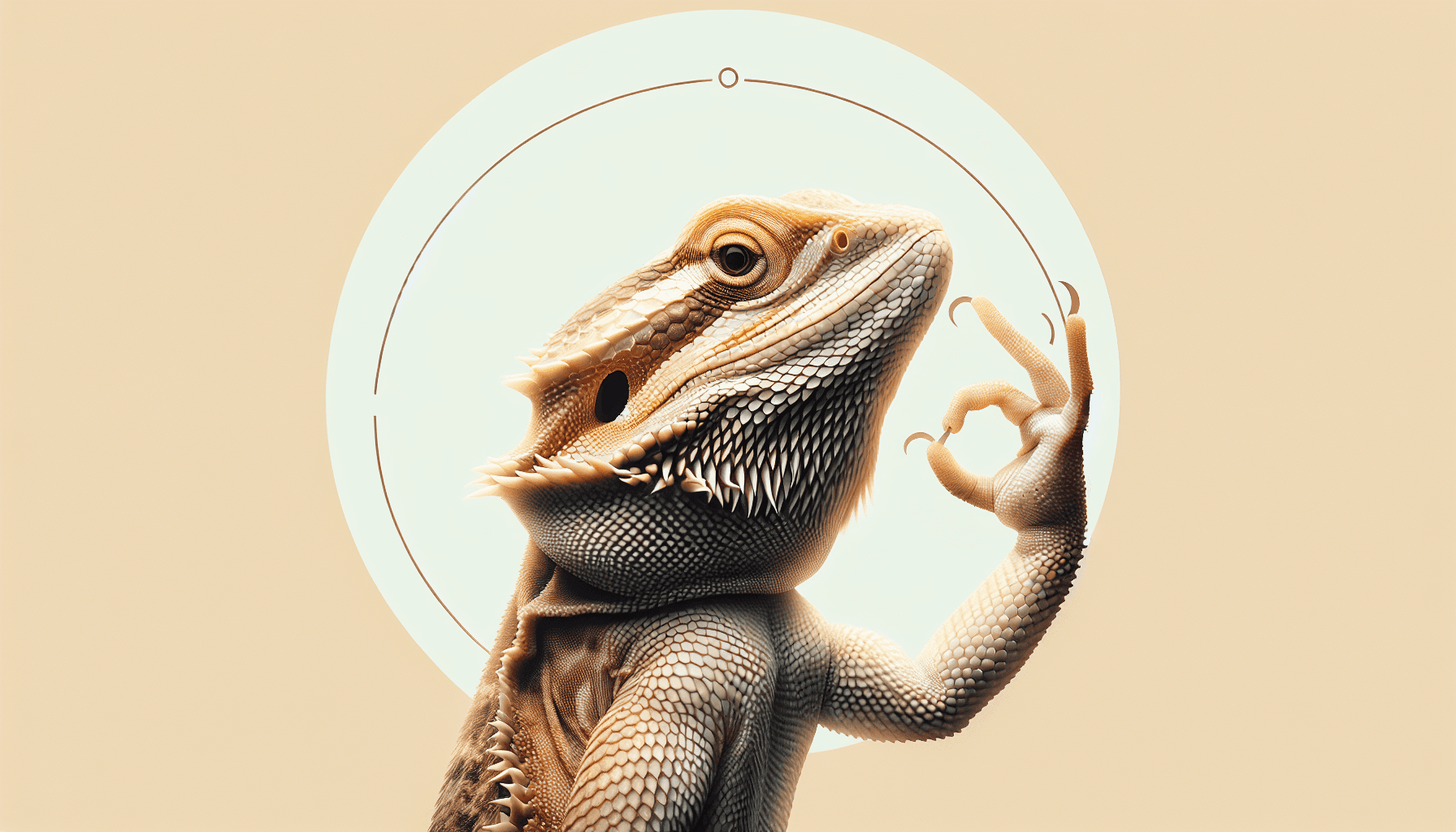
The arm wave, or circumduction, involves the bearded dragon shifting its weight to three limbs while lifting one front leg. The lizard then moves the raised limb in a slow, circular motion, often repeating the cycle several times. Unlike the rapid, jerky movements associated with hunting or fleeing, the wave is fluid and intentional. In the wild, where bearded dragons are semi-arboreal and territorial, this visual signal can be seen from a distance, allowing individuals to communicate without physical contact.
A Signal of Submission and De-escalation
The primary scientific consensus among herpetologists and animal behaviorists is that the slow-motion arm wave is a submissive gesture. In the complex social world of the bearded dragon, physical confrontation can lead to severe injury or death. To avoid "trial by combat," a submissive or smaller dragon uses the wave to communicate several key messages:
- Non-Aggression: The wave translates roughly to "I am not a threat" or "I acknowledge your dominance."
- De-escalation: By signaling submission early, the dragon hopes to pacify a more dominant individual, preventing an aggressive charge or bite.
- Species Recognition: The distinct circular motion helps bearded dragons identify one another as members of the same species, which is crucial during the breeding season or when territories overlap.
Social Contexts: When and Why it Occurs
While submission is the core driver, the context in which the waving occurs provides deeper insight into the dragon’s internal state.
Juvenile to Adult Interaction
In communal settings—which are generally discouraged in captivity—juvenile bearded dragons frequently wave at larger adults. This is a survival mechanism, signaling to the larger predator-sized adult that the smaller dragon is a submissive "neighbor" rather than a competitor or prey.
Mating Rituals
During breeding encounters, females often use the slow-motion wave to respond to the vigorous "head bobbing" of a male. In this context, the wave signals that the female acknowledges the male's presence and may be receptive, or it serves to temper the male’s aggressive courtship displays.
Captive Triggers: Mirrors and Shadows
Pet bearded dragons often wave at their own reflections in the glass of their terrarium. Because they do not recognize themselves, they perceive the reflection as a rival dragon. If the "stranger" in the glass does not move away, the pet may wave repeatedly to signal submission to the perceived intruder. Similarly, a dragon may wave at its owner or other household pets if it perceives them as a dominant presence in its environment.
Comparing the Wave to the Head Bob
To fully understand the wave, one must contrast it with the "head bob." While the arm wave is a submissive "stop" signal, the head bob is a dominant "go" signal. Rapid, violent head bobbing is an assertion of territory and dominance. In a social interaction, a dominant dragon will bob its head, and the submissive dragon will respond with the slow-motion circle. If both dragons head bob, a physical altercation is likely imminent.
Health and Husbandry Implications
While arm waving is a natural behavior, frequent or frantic waving can be an indicator of chronic stress. If a dragon waves constantly at its reflection, it may be experiencing "glass surfing" and elevated cortisol levels. Owners can mitigate this by:
- Adding non-reflective backing to the terrarium walls.
- Providing more visual barriers and hiding spots.
- Ensuring the dragon is not housed with others, as they are naturally solitary creatures.
Conclusion
The slow-motion arm wave of the bearded dragon is a remarkable example of reptilian social intelligence. By utilizing this submissive signal, these lizards can navigate complex social landscapes and avoid unnecessary conflict. For the responsible owner, recognizing the wave is the first step in "speaking" dragon. It allows for a deeper appreciation of their evolutionary history and provides a clear window into their welfare. When you see your dragon wave, you aren't just seeing a quirk of biology; you are witnessing a sophisticated survival strategy that has allowed this species to thrive in the harsh Australian outback and our homes alike. Consistent observation and an evidence-based approach to behavior will ensure your dragon feels secure in its captive environment.