Why do pet budgies have fluorescent cheek feathers that glow under ultraviolet light to attract mates
Your colorful pet is hiding a secret "neon" sign invisible to the human eye. Discover the fascinating science behind how budgies use UV-glowing cheek feathers to signal health and win over the perfect mate.

Too Long; Didn't Read
Budgies possess specialized cheek feathers that glow under ultraviolet light to attract mates. Because these birds can perceive UV rays, the intensity of this fluorescence serves as a visual signal of health and vigor, helping them identify the most desirable partners during courtship.
Hidden Radiance: Why Do Pet Budgies Have Fluorescent Cheek Feathers that Glow Under Ultraviolet Light to Attract Mates?
To the human eye, a budgerigar (Melopsittacus undulatus) is a vibrant, cheerful companion characterized by its bright greens, yellows, and blues. However, if you were to view your pet through the eyes of another budgie, you would see a far more dazzling display. Beneath ordinary room lighting, budgies appear colorful, but under ultraviolet (UV) light, specific patches on their crown and cheeks emit a distinct fluorescent glow. This biological phenomenon is not a mere aesthetic quirk; it is a sophisticated evolutionary tool refined over millennia in the Australian outback. Understanding why pet budgies have fluorescent cheek feathers is essential for owners who wish to appreciate the complex sensory world of their birds and provide an environment that supports their natural behaviors. This post explores the science behind avian fluorescence and its critical role in the intricate dance of mate selection.
The Science of Avian Fluorescence: Psittacofulvins
Unlike many other brightly colored birds that derive their hues from carotenoids in their diet, parrots—including budgies—possess a unique class of pigments known as psittacofulvins. These pigments are synthesized internally during feather growth and are responsible for the vivid reds, oranges, and yellows seen in the species.
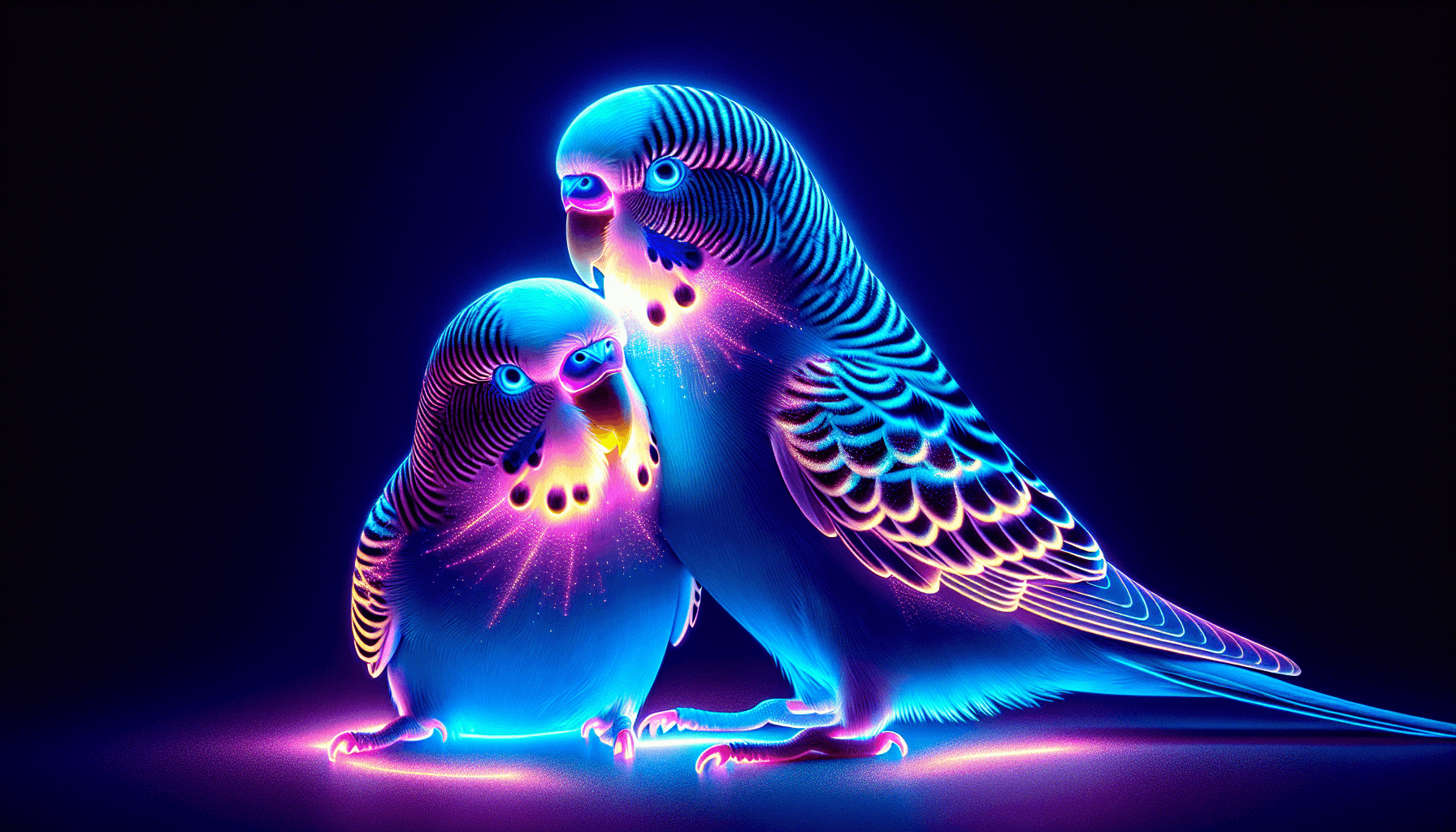
Fluorescence occurs when these pigments absorb light at one wavelength (specifically UV light, which is invisible to humans) and re-emit it at a longer, visible wavelength. In budgies, this results in a "glow" that appears most intensely on the yellow feathers of the crown and the cheek patches. For a human observer using a blacklight, these areas look neon; for a budgie, they represent a high-definition signal of health and vigor.
Tetrachromatic Vision: Seeing a Hidden World
To understand why budgies use fluorescence, we must first understand how they see. Humans are trichromatic, meaning our eyes have three types of color-receptive cones (red, green, and blue). Budgies, however, are tetrachromatic. They possess a fourth cone specifically tuned to ultraviolet light.
Because budgies can see into the UV spectrum, the fluorescence emitted by their feathers is a primary component of their visual reality. This "hidden" signal provides a level of contrast and brilliance that is impossible for humans to perceive without technological assistance. In the wild, this helps birds distinguish between individuals and assess the quality of potential partners against the backdrop of their environment.
The Role of Fluorescence in Sexual Selection
The primary reason pet budgies retain these fluorescent feathers is for mate attraction. Evolutionary biology dictates that physical traits often serve as "honest signals" of an individual's genetic fitness. In the case of the budgerigar, the intensity of the fluorescence communicates vital information:
- Nutritional Status: Synthesizing high-quality pigments requires energy and good health. A bird with bright, highly fluorescent feathers is often one that has successfully managed its nutritional needs.
- Immune Strength: Research in avian behavior suggests that females prefer males with more intense fluorescence. Studies, such as those published by researchers at the University of Glasgow, have demonstrated that when UV light is blocked, females show significantly less interest in courting males.
- Species Recognition: Fluorescence helps birds identify appropriate mates of their own species and even assess the age and sex of others in a flock setting.
By choosing a mate with the most radiant "glow," a female budgie is essentially selecting a partner with superior genes, ensuring the health of her offspring.
Implications for Husbandry and Welfare
Recognizing the importance of UV-driven fluorescence has significant implications for how we care for pet budgies. Most standard glass windows filter out the majority of UV-B radiation, and typical indoor LED or incandescent bulbs do not provide the full spectrum of light that birds require.
- Behavioral Health: Without UV light, a budgie’s environment appears "muted" or dim. This can lead to lethargy, breeding difficulties, or even psychological stress.
- Full-Spectrum Lighting: Providing a specialized avian UV lamp for a few hours a day allows pet budgies to see themselves and their companions as nature intended. This supports natural grooming behaviors (preening) and helps maintain the "biological clock" or circadian rhythm.
Conclusion
The fluorescent cheek feathers of a pet budgie are a testament to the remarkable complexity of avian biology. Far from being simple decorations, these glowing patches are vital communication tools that facilitate mate selection and signal individual vitality through the medium of ultraviolet light. By understanding that our birds inhabit a visual world far more expansive than our own, we can become more empathetic and responsible caretakers. Ensuring that pet budgies have access to appropriate full-spectrum lighting is not just a luxury; it is a way to respect their evolutionary heritage and support their overall well-being. Next time you look at your budgie, remember that there is much more to their beauty than meets the human eye.