Why do pet budgies have fluorescent feathers that glow under ultraviolet light to attract potential mates
Beyond the reach of human eyes, your pet budgie is hiding a brilliant neon secret used to charm its way into a mate's heart. Step into the hidden world of avian fluorescence and discover why these little birds are hardwired to glow under ultraviolet light.

Too Long; Didn't Read
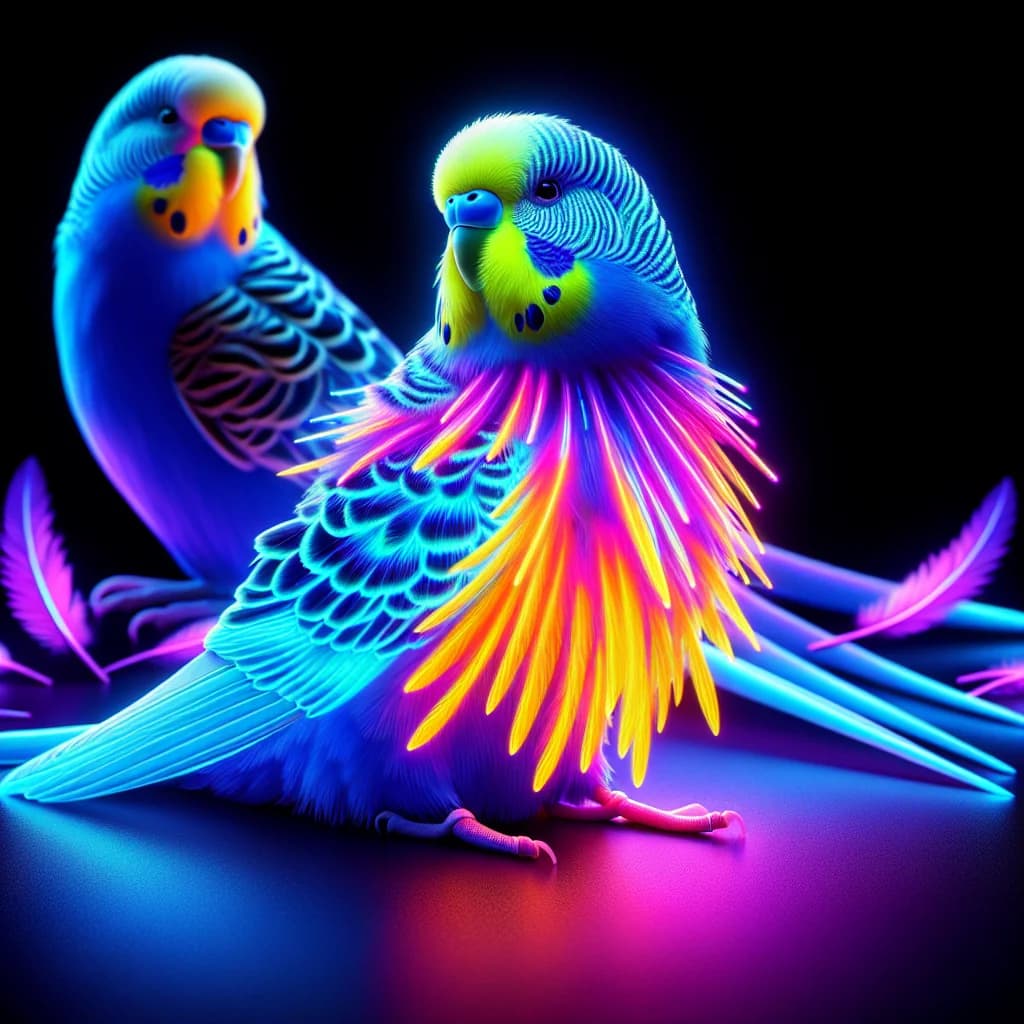
Budgies possess specialized fluorescent pigments in their feathers that absorb UV light and re-emit it as a visible glow. Because budgies can see ultraviolet wavelengths, this glow serves as a crucial visual signal during courtship, where more intense fluorescence indicates a healthier, more desirable mate.
Nature’s Secret Neon: Why Do Pet Budgies Have Fluorescent Feathers That Glow Under Ultraviolet Light to Attract Potential Mates?
To the human eye, the common pet budgie (Melopsittacus undulatus) is a vibrant companion characterized by bright yellows, greens, and blues. However, if you were to look at a budgie through the eyes of another bird, you would see a dazzling, neon display hidden from the naked human eye. These small parrots possess a fascinating biological trait: fluorescence. Specifically, certain feathers on their heads and wings absorb ultraviolet (UV) light and re-emit it as a visible glow. This "secret" signaling system is not just a biological quirk; it is a fundamental component of their social lives and reproductive success. Understanding why do pet budgies have fluorescent feathers that glow under ultraviolet light to attract potential mates is essential for any owner wishing to provide a species-appropriate environment that respects their complex sensory needs. This post explores the science behind this glow and its vital role in avian communication and husbandry.
The Biological Mechanism: How Budgies Glow
Fluorescence in the animal kingdom occurs when a substance absorbs light at one wavelength (such as invisible UV light) and re-emits it at a longer, visible wavelength. In budgies, this phenomenon is made possible by unique pigments called psittacofulvins. Unlike many other birds that derive their colors from their diet (like flamingos and their pink shrimp), parrots like the budgie synthesize these pigments within their growing feathers.
The Role of Psittacofulvins
- Location: In wild-type budgies, fluorescence is most concentrated in the yellow crown feathers and the cheek patches.
- Light Absorption: These pigments are highly efficient at absorbing UV radiation from the sun.
- Visual Output: When exposed to UV light, these specific feathers emit a bright, fluorescent yellow-green glow that is highly conspicuous to those who can see it.
Seeing the Unseen: Tetrachromatic Vision
To understand why this fluorescence matters, we must first understand how budgies see. While humans are trichromatic—meaning our eyes have three types of color-sensing cone cells (red, green, and blue)—budgies are tetrachromatic. They possess a fourth cone cell specifically tuned to detect ultraviolet light.
This means that while a human sees a yellow feather as simply "yellow," a budgie sees a complex combination of reflected yellow pigment and "active" UV fluorescence. For a budgie, UV light is not just a background element; it is a distinct color that adds depth, contrast, and information to their environment. This enhanced vision allows them to find ripe fruit, spot predators, and, most importantly, evaluate the quality of a potential partner.
A Beacon for Romance: Sexual Selection and Fitness
The primary evolutionary driver behind these glowing feathers is sexual selection. Research in avian behavior, most notably a landmark study published in Science in 2002, has demonstrated that budgies use fluorescence as a primary metric when choosing a mate.
Why the Glow Matters to a Mate
- Indicator of Health: Maintaining high-quality plumage requires significant metabolic energy. A bird with bright, highly fluorescent feathers is signaling that they are in peak physical condition and free from heavy parasite loads.
- Symmetry and Maturity: The patterns of fluorescence can signal the bird's age and the symmetry of their development, both of which are markers of genetic "fitness."
- Preferential Breeding: Experiments have shown that when UV light is filtered out, budgies lose interest in courtship. When UV light is present, both males and females consistently choose partners with the most intense fluorescent displays.
Practical Implications: Lighting for the Pet Budgie
Recognizing the importance of UV-induced fluorescence has significant implications for bird husbandry. Most standard indoor glass windows filter out the majority of UV-B rays, and typical household LED or incandescent bulbs do not provide a full UV spectrum.
- Behavioral Enrichment: Without UV light, a budgie’s world is effectively "dimmed." Providing avian-specific full-spectrum lighting can improve mood, reduce feather plucking, and encourage natural social behaviors.
- Hormonal Balance: Proper UV exposure helps regulate the circadian rhythm and the production of Vitamin D3, which is crucial for calcium absorption.
- Social Clarity: Since budgies use UV markings to identify individuals and gender, proper lighting ensures they can communicate effectively with their flock mates or human caretakers.
Conclusion
Understanding why do pet budgies have fluorescent feathers that glow under ultraviolet light to attract potential mates reveals the hidden complexity of these popular pets. This fluorescence is a sophisticated biological tool that bridges the gap between physics and behavior, allowing budgies to signal their health and vitality through a spectrum of light we can barely perceive. For the responsible bird owner, this knowledge underscores the importance of providing high-quality, full-spectrum lighting to ensure our feathered friends can see the world—and each other—as nature intended. By respecting the budgie's unique sensory requirements, we enhance their welfare and deepen our appreciation for the remarkable evolutionary history of the parrot family. If you are concerned about your bird’s environment, consulting with an avian veterinarian about specialized lighting is a great next step.