Why do pet budgies possess feathers that naturally fluoresce under ultraviolet light to signal health and attract mates
Discover the hidden world of avian attraction where your pet budgie transforms into a glowing neon masterpiece invisible to the human eye. Dive into the fascinating science of fluorescent feathers to see how these secret signals serve as the ultimate high-tech test for health and romance.

Too Long; Didn't Read
Budgies possess UV-fluorescent feathers as a critical tool for social and sexual signaling. The intensity of this natural glow serves as a visual indicator of an individual bird's health and vigor, helping them identify high-quality partners and successfully attract the best mates during breeding.
Nature’s Neon: Why Do Pet Budgies Possess Feathers That Naturally Fluoresce Under Ultraviolet Light to Signal Health and Attract Mate?
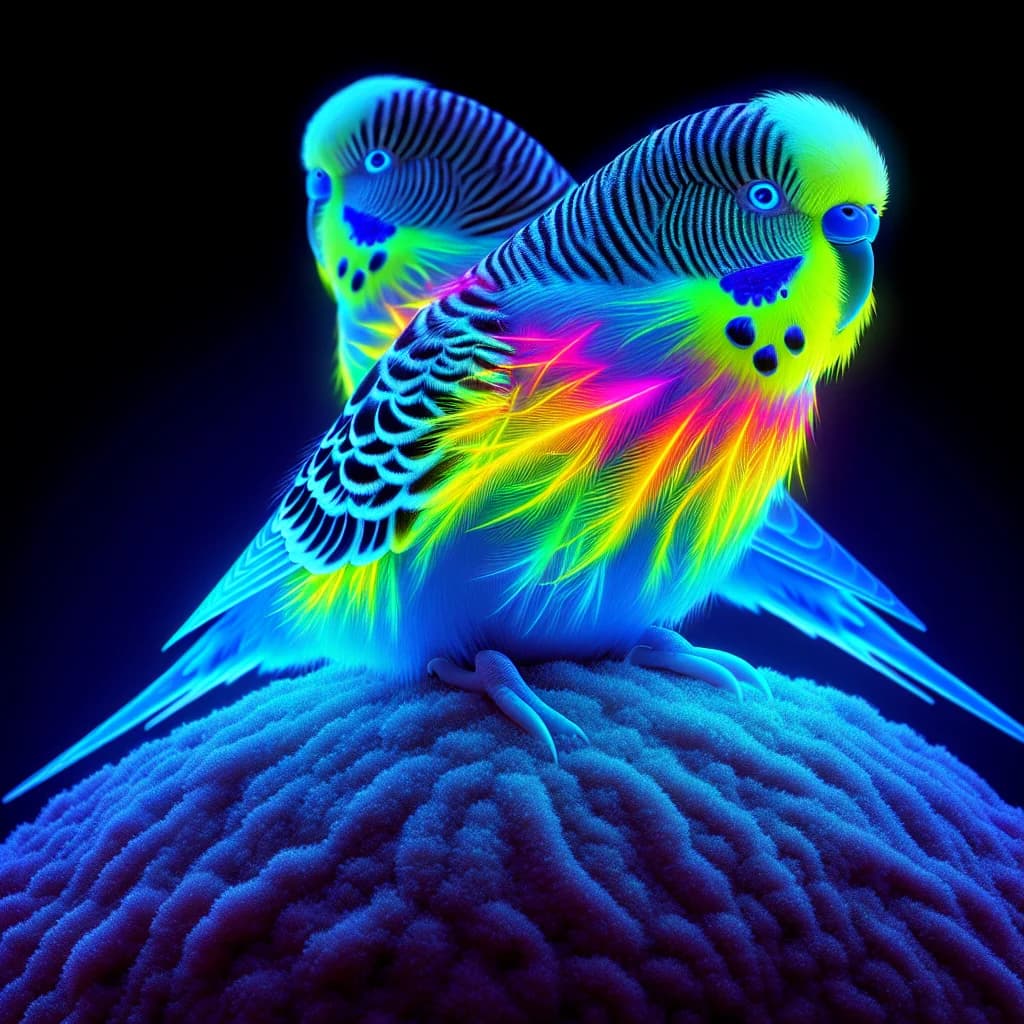
To the human eye, a budgerigar—commonly known as a pet budgie—is a vibrant display of yellows, greens, and blues. However, beneath the surface of what we can perceive lies a hidden world of ultraviolet brilliance. While humans possess trichromatic vision, budgies are tetrachromatic, meaning they can see into the ultraviolet (UV) spectrum. Evolution has equipped these small parrots with specialized plumage that absorbs UV light and re-emits it as a visible glow, a phenomenon known as fluorescence. This biological trait is far more than an aesthetic quirk; it is a sophisticated communication tool. Understanding why do pet budgies possess feathers that naturally fluoresce under ultraviolet light to signal health and attract mates is essential for any owner looking to appreciate the complex sensory world and the biological needs of these popular avian companions.
The Science of Avian Fluorescence
Fluorescence occurs when a substance absorbs light at a shorter, invisible wavelength (UV) and emits it at a longer, visible wavelength. In budgies, this occurs primarily in the yellow feathers of the crown and the cheek patches. Unlike many other birds that simply reflect UV light, budgies use specific pigments called psittacofulvins. These pigments are unique to parrots and are chemically structured to fluoresce under the right lighting conditions.
This biological feature is deeply tied to the budgie’s evolutionary history in the Australian outback. In the wild, sunlight is rich in UV radiation. By evolving feathers that interact with this light, budgies created a "private" channel of communication that is highly visible to their own species but less obvious to predators who may lack the same visual acuity.
Why Do Pet Budgies Possess Feathers That Naturally Fluoresce Under Ultraviolet Light to Signal Health and Attract Mates?
The primary driver for this trait is sexual selection. Research in avian behavioral ecology has demonstrated that fluorescence serves as a critical "honest signal" during courtship. An honest signal is a biological trait that cannot be faked, providing potential mates with a true reflection of an individual’s genetic quality and current health.
Signaling Reproductive Fitness and Mate Choice
Studies involving mate choice have shown that female budgies show a significant preference for males with high levels of yellow fluorescence on their crown feathers. When researchers experimentally masked the fluorescence using UV-blocking chemicals, females lost interest in those males, despite their other colorful markings remaining intact. The intensity of the glow acts as a visual cue for:
- Genetic Robustness: Only birds in peak condition can maintain the highest quality plumage.
- Maturity: Fluorescence patterns can shift as a bird reaches breeding age, signaling readiness.
The Link Between Fluorescence and Health
Fluorescence is an excellent indicator of a bird's overall wellbeing. Because feather production is metabolically expensive, any disruption in a budgie’s health is immediately reflected in its plumage.
- Nutritional Status: A diet lacking in essential amino acids and vitamins leads to duller feathers with weaker fluorescent properties.
- Immune Function: Birds fighting off parasitic infections or illness often lack the energy to produce high-quality psittacofulvin pigments.
- Self-Care: Budgies spend a significant portion of their day preening. Well-aligned, clean feathers fluoresce more effectively than damaged or soiled ones.
The Importance of Full-Spectrum Lighting in Captivity
Recognizing the importance of UV signaling has significant implications for how we care for pet budgies. Most standard indoor glass windows block a majority of UV-B rays, and typical household LED or fluorescent bulbs do not provide the full spectrum of light found in nature.
Without access to UV light, a budgie’s fluorescent signaling system is effectively "turned off." This can lead to:
- Social Stress: Birds may struggle to interpret the social status or health of their cage mates.
- Hormonal Imbalance: UV light is crucial for the regulation of the pineal and pituitary glands, which govern circadian rhythms and breeding cycles.
- Muted Plumage: Over time, lack of proper light can lead to poorer feather quality.
To support this natural biological function, many avian veterinarians recommend providing "full-spectrum" or "avian-specific" lighting. These bulbs are designed to mimic the UV output of the sun, allowing pet budgies to see one another—and themselves—in their full, natural brilliance.
Conclusion
Understanding why do pet budgies possess feathers that naturally fluoresce under ultraviolet light to signal health and attract mates allows us to look past their charming personalities and appreciate their complex evolutionary biology. These fluorescent "badges" serve as vital indicators of vitality and are a cornerstone of their social and reproductive lives. For the responsible pet owner, this knowledge underscores the importance of providing a nutritionally complete diet and proper environmental lighting. By respecting the budgie's unique sensory needs, we ensure they can communicate effectively and live a healthy, vibrant life. If you notice a sudden change in the luster or color of your budgie's feathers, it is always best to consult an avian veterinarian to ensure your feathered friend is in peak condition.