Why do pet cats make a rhythmic chattering sound with their teeth when they see birds through a window
That strange, rhythmic clicking your cat makes at birds isn’t just a quirky habit—it’s a primal window into their secret hunting instincts. Discover the surprising, science-backed reason why your feline friend suddenly starts "talking" to their prey through the glass.

Too Long; Didn't Read
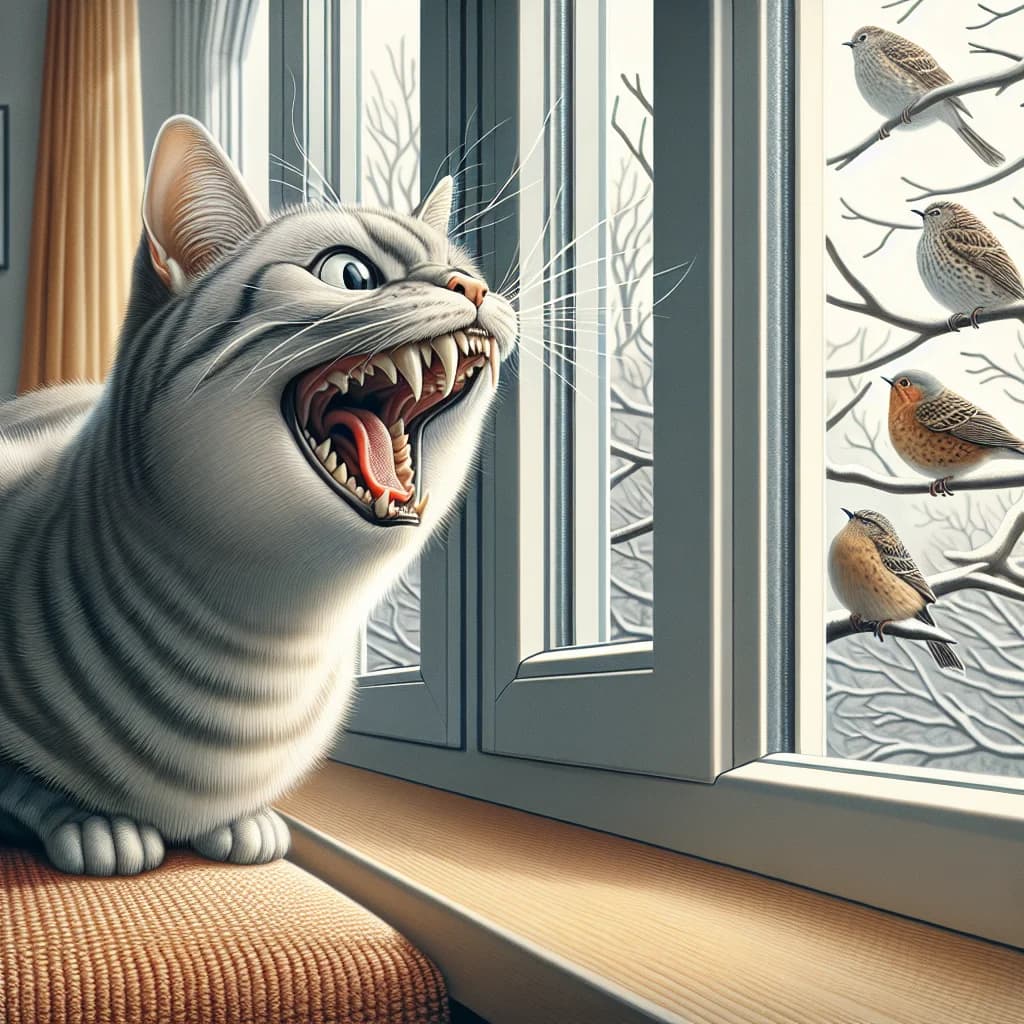
Cats chatter at birds due to a mix of predatory excitement and frustration at being unable to reach their prey. This behavior often mimics the instinctual killing bite cats use in the wild, triggered by the intense adrenaline of spotting a target through a window.
Why Do Pet Cats Make a Rhythmic Chattering Sound With Their Teeth When They See Birds Through a Window?
If you have ever observed your cat perched on a windowsill, body tensed and eyes locked on a sparrow, you have likely witnessed one of the most peculiar feline behaviors: chattering. This rapid-fire rhythmic clicking of the teeth, often accompanied by soft chirps or bleats, is a phenomenon that has fascinated animal behaviorists and pet owners alike. While it may look and sound comical, this behavior is deeply rooted in the evolutionary history of Felis catus. For the domestic cat, the window acts as both a cinema and a barrier, triggering a complex biological response that dates back to their ancestors, the Near Eastern wildcats.
Understanding the mechanics and motivations behind this chattering is more than just a matter of curiosity; it provides vital insight into your cat’s mental stimulation and predatory drive. By decyphering these "ekekek" sounds, owners can better appreciate the wild instincts that remain present in their pampered companions and ensure their domestic environment supports their psychological welfare.
The Predatory Kill-Bite Hypothesis
The most widely accepted scientific explanation for tooth chattering is the "vacuum activity" of the kill-bite. In the wild, when a feline catches its prey—typically a small rodent or bird—it delivers a swift, lethal bite to the back of the neck. This bite involves a rapid shivering or vibrating motion of the jaw designed to wedge the canine teeth between the prey’s vertebrae, severing the spinal cord instantly.
Ethologists, such as the renowned Desmond Morris, suggest that when a cat sees a bird through a window, its motor neurons begin to fire in anticipation. The chattering is essentially a rehearsal or a "reflexive shadow" of the physical act of dispatching prey. Because the cat is visually stimulated but physically restrained by the glass, the nervous system leaks this predatory sequence through the jaw muscles.
The Role of Frustration and Adrenaline
Beyond the mechanical rehearsal of a hunt, chattering is frequently interpreted as a sign of "displacement behavior" or excitement-induced frustration. When a cat is in a high-arousal state—flooded with adrenaline and dopamine—but is unable to complete the "Seek-Capture-Kill" sequence due to the window barrier, the resulting tension must be released.
In animal behavior science, displacement occurs when an animal is conflicted between two urges (e.g., the urge to hunt and the realization that it cannot reach the target). The rhythmic clicking of the teeth serves as a physical outlet for this pent-up energy. Veterinary behaviorists note that this is similar to a human tapping their foot or clicking a pen when they are impatient or anxious.
The Mimicry Theory: An Evolutionary Strategy?
A more recent and intriguing perspective involves the possibility of vocal mimicry. In 2010, researchers from the Wildlife Conservation Society (WCS) documented a Margay (a small wild cat in the Amazon) mimicking the calls of pied tamarin monkeys to lure them closer.
While domestic cats are not necessarily "calling" the birds to the window, some researchers hypothesize that the chattering and chirping sounds might be a primitive attempt to mimic the vocalizations of their prey. By producing sounds that fall within the frequency of bird calls or rodent squeaks, the cat may be attempting to avoid startling the prey or even tricking it into a false sense of security. While more data is needed to confirm this in domestic house cats, it highlights the sophisticated nature of feline hunting strategies.
Practical Implications for Enrichment
Recognizing that chattering is a sign of high predatory drive can help owners improve their cat's quality of life. Constant visual stimulation without a physical outlet can lead to "window frustration." To manage this, owners can:
- Implement Interactive Play: Use a wand toy to simulate the movements of the bird after the cat has finished watching the window.
- The "Capture" Moment: End play sessions by allowing the cat to catch a physical object and providing a treat to complete the biological "Hunt-Eat-Groom-Sleep" cycle.
- Scent Enrichment: Use silvervine or catnip to shift the cat’s focus from visual frustration to olfactory exploration.
Conclusion
The rhythmic chattering of a cat watching a bird is a fascinating bridge between the modern living room and the ancient savannah. Whether it is a neurological rehearsal of the kill-bite, a manifestation of predatory frustration, or a vestige of evolutionary mimicry, it serves as a reminder of the complex biological machinery operating within every house cat.
Understanding this behavior allows us to view our pets not just as cuddly companions, but as highly specialized predators with specific psychological needs. By observing these traits with an informed perspective, we can provide better enrichment, reduce potential stress, and strengthen the unique bond we share with these enigmatic animals. Always remember that a cat chattering at a window is a cat expressing its most fundamental nature; acknowledging that nature is the first step toward responsible and empathetic pet ownership.