Why do pet cats walk by moving both legs on one side simultaneously, a trait shared with giraffes
Beyond their grace and stealth, your cat hides a rare walking secret shared only by giraffes and camels. Discover the fascinating evolutionary logic behind this unique "pacing" gait and why it makes your feline friend a true marvel of nature.

Too Long; Didn't Read
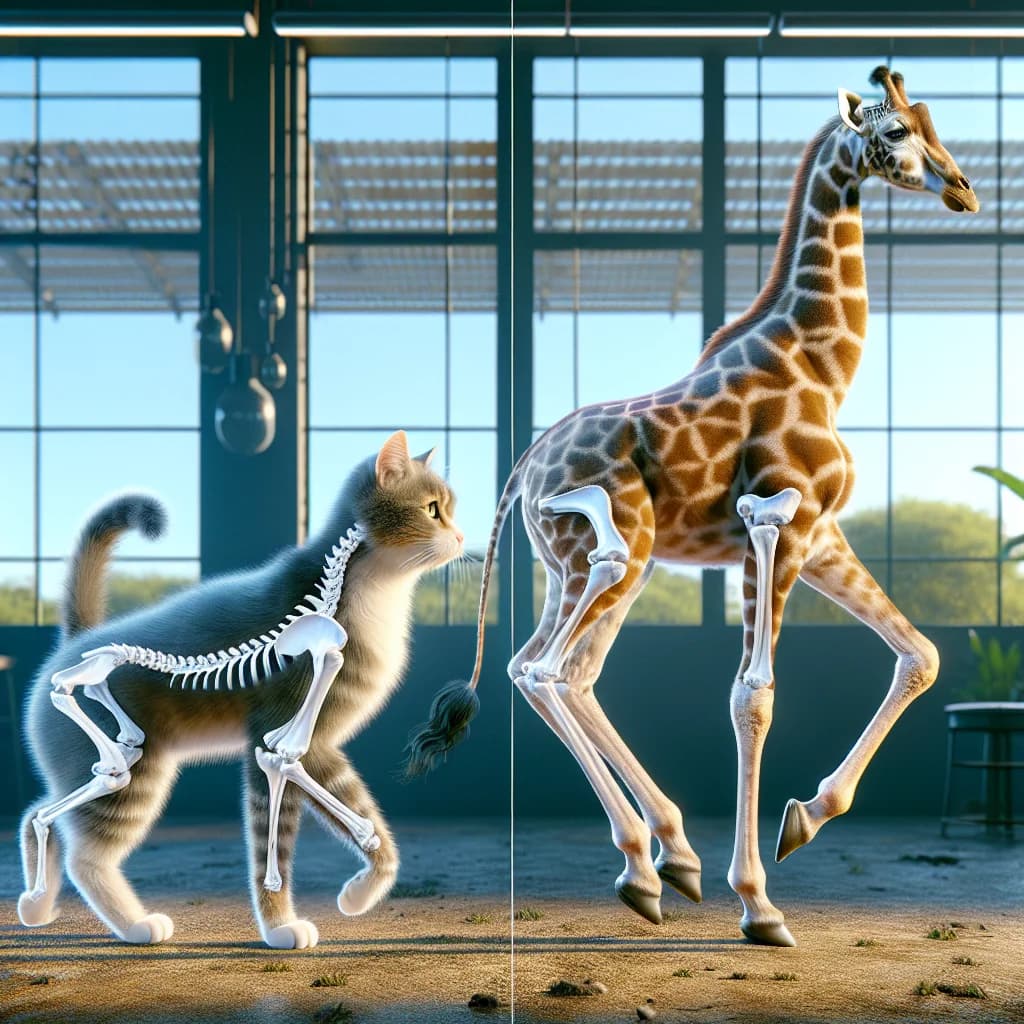
Cats and giraffes share a unique walking style called a pacing gait, where they move both legs on the same side simultaneously. This specialized movement prevents their limbs from colliding, increases energy efficiency, and helps cats maintain balance and stealth while stalking.
The Secret of the Feline Gait: Why Do Pet Cats Walk by Moving Both Legs on One Side Simultaneously, a Trait Shared with Giraffes?
If you have ever watched a cat move across a room, you have likely noticed a certain fluid elegance that seems distinct from the bouncy trot of a dog. This grace is not merely a matter of feline personality; it is rooted in a rare biomechanical blueprint. While most four-legged mammals move their limbs in a diagonal pattern, cats belong to an exclusive group of animals—including giraffes and camels—that utilize a lateral gait. This means that as they walk, they move both the front and back legs on the same side of the body at nearly the same time. Understanding this unique locomotive strategy offers a fascinating glimpse into the evolutionary history of our feline companions and the biological precision required for their survival as apex predators. This post explores the science behind why cats share this peculiar walking trait with the world's tallest land mammals.
Understanding the Lateral Gait: What Is Pacing?
In the world of animal kinesiology, most quadrupeds employ a "diagonal" walk. For example, when a dog moves forward, it typically moves its front-right leg followed by its back-left leg. However, cats, giraffes, and camels utilize what is known as a lateral gait or "pacing."
In this movement pattern, the cat shifts its weight to the left side as it moves both left legs forward, then shifts to the right side to move both right legs. Biologists and veterinarians categorize this as a "four-beat" walk because each foot hits the ground individually, but the sequence remains strictly lateral. This rare method of locomotion is a defining characteristic of the feline family (Felidae), the giraffe family (Giraffidae), and the camel family (Camelidae).
The Evolutionary "Why": Efficiency and Clearance
The primary reason certain species evolved a lateral gait involves the physical proportions of their bodies and the need for energy efficiency.
Avoiding Limb Interference
For the giraffe, the lateral gait is a matter of necessity. Because giraffes have exceptionally long legs and relatively short bodies, a diagonal gait would cause their front and back legs to collide or trip over one another. By moving both legs on the same side simultaneously, they create a clear path for each stride. While cats do not have the extreme proportions of a giraffe, they share a similar "long-legged" ratio relative to their torso length, making the lateral gait an effective way to prevent limb interference during a slow, measured walk.
Energy Conservation
Zoological research suggests that the pacing gait is highly energy-efficient. By shifting the body's center of gravity laterally rather than vertically, these animals minimize the energy lost to "lifting" their weight with every step. For a wild cat that must conserve every calorie for a high-intensity hunt, or a giraffe traveling miles across a savanna for water, this mechanical efficiency is a vital survival mechanism.
The Feline Advantage: Stealth and "Direct Registering"
While cats share the lateral sequence with giraffes, they have adapted it to serve their specific needs as ambush predators. This is most evident in a behavior called direct registering.
- Precision Placement: As a cat walks, its hind paw lands almost exactly in the footprint previously vacated by its front paw.
- Stealth: By placing the rear foot in the same spot as the front, the cat minimizes the noise of crunching leaves or snapping twigs. It only has to "vet" one spot on the ground for safety and silence.
- Stability: This "track-upon-track" movement ensures that the cat always has a stable footing, which is essential when navigating narrow fences, tree branches, or uneven terrain.
Biological Adaptations for Balance
To support this lateral movement without tipping over, cats possess several specialized biological features. Their clavicles (collarbones) are not attached to other bones but are instead buried in the muscles of the shoulder. This "free-floating" shoulder allows for a narrower chest and a greater range of motion, facilitating the side-to-side weight shift required by the lateral gait. Furthermore, the feline spine is incredibly flexible, acting like a spring that absorbs the lateral undulations of their walk, maintaining a level head and steady gaze—a necessity for a predator tracking prey.
Conclusion
The question of why pet cats walk by moving both legs on one side simultaneously, a trait shared with giraffes, reveals the hidden complexity of feline biology. This lateral gait is a masterpiece of evolutionary engineering, providing a perfect balance of energy efficiency, limb clearance, and silent precision. By sharing this trait with giants like the giraffe and the camel, our domestic cats demonstrate that they are built for the same rigorous demands of the natural world.
For cat owners, observing this unique gait is more than just a lesson in anatomy; it is a way to appreciate the wild heritage that still thrives in our living rooms. Monitoring your cat’s walk can also be a vital part of responsible care, as changes in this fluid, lateral rhythm can often be the first sign of joint discomfort or neurological issues that require veterinary consultation. Understanding the "how" and "why" of their movement helps us better respect and care for these remarkable animals.