Why do pet chickens bob their heads while walking to stabilize their vision and track motion in their environment
Ever wonder if your chicken is grooving to an invisible beat? Discover the fascinating science behind that quirky head bob and how it acts as a high-tech "biological stabilizer" for your feathered friend’s vision.

Too Long; Didn't Read
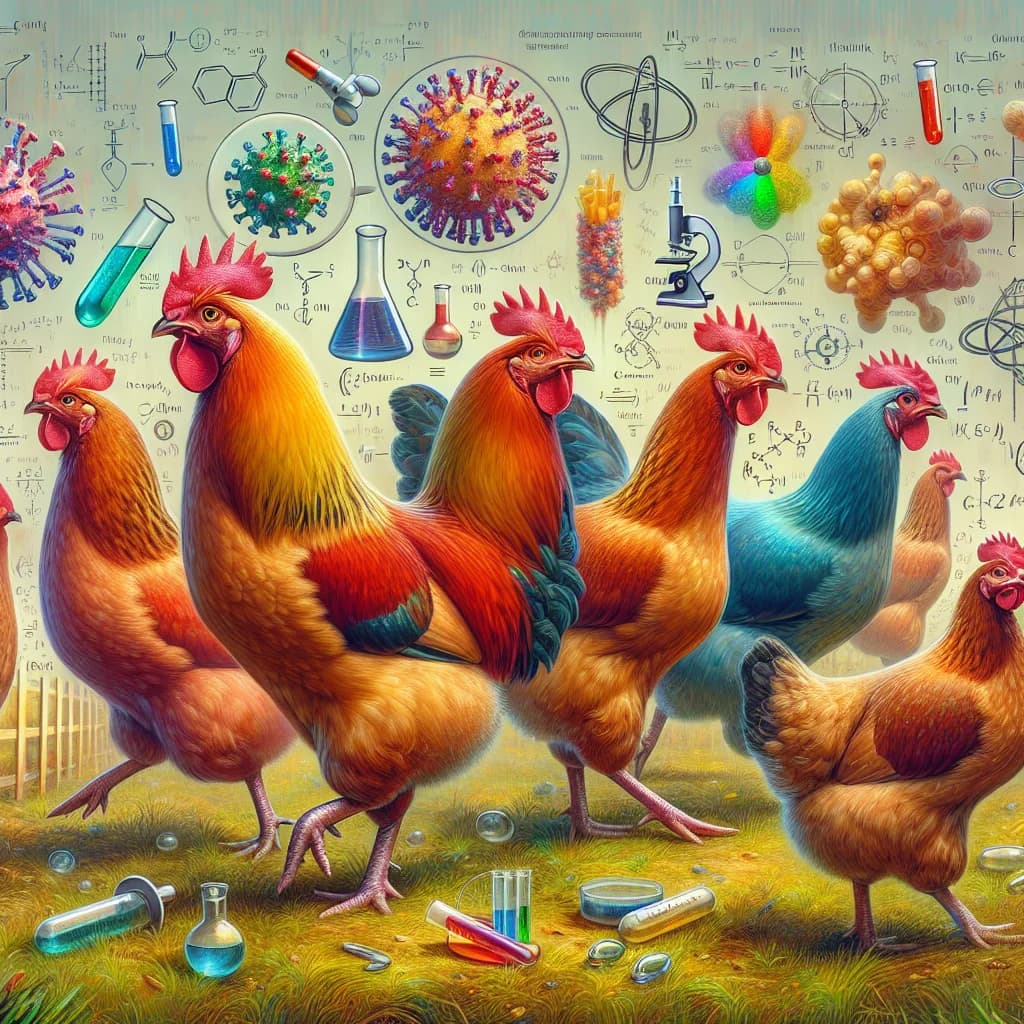
Chickens bob their heads to stabilize their vision and eliminate motion blur. By locking their head in place while their body moves forward, they can process visual information more clearly, allowing them to better track movement, spot predators, and find food.
The Science of the Strut: Why Do Pet Chickens Bob Their Heads While Walking to Stabilize Their Vision and Track Motion in Their Environment?
If you have ever spent a few minutes watching a backyard flock, you have likely noticed their distinctive, rhythmic gait. This iconic "chicken strut" involves a jerky, back-and-forth movement of the head that seems almost comical to the human eye. However, this behavior is far from a random quirk of avian personality. In the world of ornithology and animal behavior, this movement is recognized as a sophisticated biological adaptation. Understanding why do pet chickens bob their heads while walking to stabilize their vision and track motion in their environment is essential for any poultry keeper. It offers a window into how these descendants of the Red Jungle Fowl perceive the world, emphasizing the importance of visual health and environmental safety in responsible husbandry. This post explores the physiological necessity of the head bob and its role in a chicken’s survival.
The Mechanics of the "Hold and Thrust" Phase
To understand why chickens bob their heads, we must first clarify what is actually happening. High-speed video analysis conducted by behavioral scientists reveals that chickens do not actually move their heads back and forth in a continuous motion. Instead, the movement consists of two distinct phases: the "thrust" and the "hold."
- The Thrust: As the chicken steps forward, it rapidly moves its head ahead of its body.
- The Hold: While the body continues to move forward, the head remains perfectly still in space.
During the "hold" phase, the bird’s neck acts as a biological shock absorber, counteracting the forward momentum of the body. This allows the chicken to keep its head momentarily stationary relative to the surrounding environment. This process is governed by the optokinetic reflex, a natural tendency to stabilize the gaze on a fixed point while the body is in motion.
Visual Stabilization and Image Processing
The primary reason for this behavior is the way avian eyes process information. Unlike humans, who have forward-facing eyes with a significant degree of binocular overlap, chickens have eyes located on the sides of their heads. This provides them with a nearly 300-degree field of vision, which is excellent for spotting predators, but it comes with a trade-off: they are highly sensitive to "motion blur."
If a chicken’s head moved continuously with its body, the image on its retina would be a constant, blurry smear. By utilizing the "hold" phase of the head bob, the chicken freezes the frame of its environment. This brief moment of stillness allows the retina to capture a sharp, clear image, which the brain then processes to identify food, obstacles, or threats. Without this stabilization, a chicken would struggle to navigate even the simplest terrain safely.
Tracking Motion and Depth Perception
Beyond simple stabilization, the head bob is a tool for depth perception. Because chickens have limited binocular vision (where both eyes see the same object), they cannot rely on stereopsis—the brain’s ability to compare two different viewpoints—as effectively as humans do.
To compensate, chickens use a technique called "motion parallax." By moving their head rapidly from one position to another (the thrust phase), they can observe how objects in their field of vision shift relative to one another. Closer objects appear to move faster than distant ones. This allows the chicken to calculate distance and track moving objects, such as a scurrying insect or a hawk circling overhead, with remarkable precision.
Evolutionary Context and Species Comparisons
This trait is not unique to chickens; it is prevalent among many ground-dwelling birds, such as pigeons and cranes. Evolutionarily, these species spent most of their time foraging on the ground where the risk of predation is high. The ability to maintain a stable, high-resolution view of the horizon while moving was a selective advantage. In contrast, birds of prey like owls or hawks, which have forward-facing eyes and often hunt from a stationary perch, do not bob their heads while walking. Instead, they utilize intense head rotations and "bobbing" while standing still to judge distances before a strike.
Implications for Pet Chicken Care
Recognizing the visual needs of your flock can improve your management practices. Since chickens rely heavily on clear, stable vision to feel secure, sudden movements in their peripheral vision can trigger a high-stress "flight" response.
- Lighting: Ensure your coop has adequate lighting, as chickens have poor night vision and rely on visual clarity to navigate.
- Approaching: When interacting with your birds, approach from the front or speak softly to alert them, preventing the startle reflex caused by rapid movement in their wide-field peripheral zones.
- Environment: Provide a predictable environment. Frequent changes to the layout of a run can be taxing for a bird that relies on constant visual mapping.
Conclusion
Understanding why do pet chickens bob their heads while walking to stabilize their vision and track motion in their environment reveals the incredible complexity of avian biology. What looks like a simple strut is actually a high-speed data-collection process that allows the bird to survive and thrive. By stabilizing their gaze through the "hold and thrust" method, chickens overcome the limitations of their anatomy to achieve sharp focus and accurate depth perception. As responsible owners, appreciating these biological nuances helps us provide better care and a safer environment for our feathered companions. Observing these natural behaviors not only deepens our bond with our pets but also highlights the remarkable evolutionary adaptations present in even the most common backyard birds.