Why do pet chinchillas maintain their incredibly dense fur by bathing in volcanic dust instead of using water
For a chinchilla, a single dip in water can be a life-threatening mistake that turns their world-record fur into a heavy, mold-prone disaster. Discover the fascinating evolutionary reason why these Andean rodents must trade soap for volcanic ash to stay perfectly pristine.

Too Long; Didn't Read
Chinchillas use volcanic dust because their fur is so dense that water traps moisture, leading to potentially fatal fungal infections or rot. The fine dust effectively absorbs oils and debris while keeping their coat dry and healthy.
The Science of Soft: Why Do Pet Chinchillas Maintain Their Incredibly Dense Fur by Bathing in Volcanic Dust Instead of Water?
Imagine a creature so plush that it possesses upwards of 50 to 80 individual hairs growing from a single follicle. To put that into perspective, humans typically have only one to three hairs per follicle. This biological marvel is the chinchilla, a rodent native to the high-altitude regions of the Andes Mountains. While most mammals rely on water to cleanse their skin and hair, the chinchilla has evolved a radical alternative: the dust bath. For these sensitive animals, water is not a cleaning agent but a potential health hazard. Understanding why do pet chinchillas maintain their incredibly dense fur by bathing in volcanic dust instead of using water is fundamental to their husbandry. This post will explore the physiological and environmental factors that make dust baths a biological necessity for chinchilla survival and well-being.
The Evolutionary Necessity of High-Density Fur
To understand the chinchilla’s bathing habits, one must first look at their natural habitat. Originating in the Andes Mountains of South America, chinchillas evolved to survive in arid, cold, and high-altitude environments. Their fur is their primary defense against the biting mountain chill. It is the densest of all land mammals, providing such efficient insulation that they can maintain a stable body temperature in sub-freezing conditions.
In the wild, this density prevents parasites like fleas and ticks from reaching the skin, as the hair is too tightly packed for them to navigate. However, this same density creates a unique problem regarding moisture. While human hair dries relatively quickly because air can circulate between strands, chinchilla fur is so thick that it traps moisture near the skin, leading to significant physiological risks.
Why Water is Dangerous for Chinchillas
The primary reason chinchillas avoid water is that their fur is virtually impossible to dry. Because the hair is so fine and packed so tightly, capillary action pulls water deep toward the skin and holds it there.
The Risk of Fur Rot and Fungal Infections
When a chinchilla becomes wet, the moisture trapped against the skin creates a warm, damp microenvironment—the perfect breeding ground for fungi and bacteria. This often leads to a condition known as Dermatophytosis (ringworm) or "fur rot." These infections cause the fur to fall out in clumps and can lead to painful skin lesions.
Hypothermia Risks
Furthermore, because wet fur loses its insulating properties and takes hours—or even days—to dry completely, a wet chinchilla is at high risk for hypothermia. Even in a climate-controlled home, the evaporative cooling from a wet coat can drop a chinchilla’s core temperature to dangerous levels. Consequently, veterinary consensus dictates that water baths should only be administered in extreme medical emergencies and under professional supervision.
The Mechanics of the Dust Bath
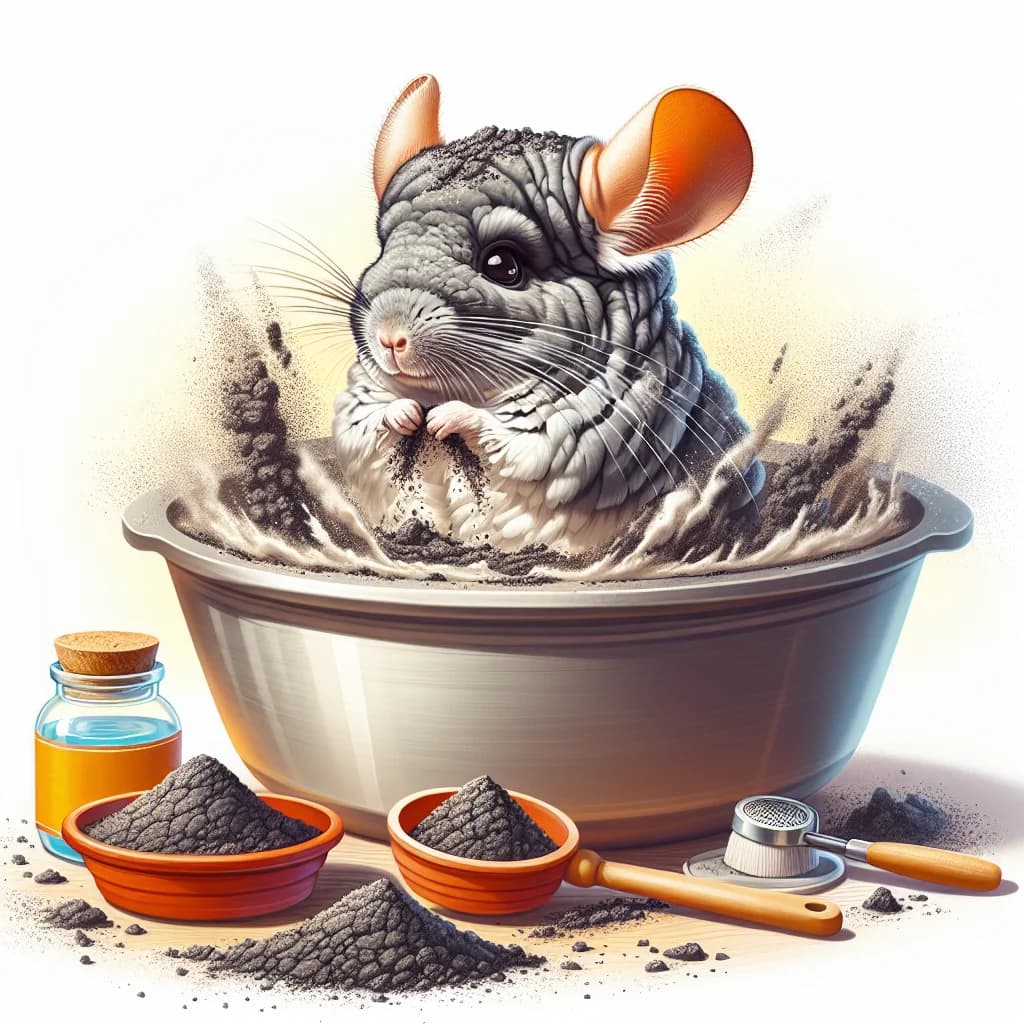
Since they cannot use water, chinchillas have adapted to use volcanic ash and dust found in their native rocky terrain. In a domestic setting, owners provide a specialized "chinchilla dust," which is usually made from sustainably mined volcanic pumice.
How Dust Cleans the Coat
The dust works by absorbing excess oils (sebum) and moisture from the skin and fur. Chinchillas perform a characteristic "roll" in their dust bath, which distributes the fine particles throughout the coat. The dust acts as an abrasive that loosens dead skin cells and debris, which are then shaken off by the animal. This process keeps the fur light, fluffy, and free of the oils that would otherwise cause the hair to mat or clump.
Comparison to Other Species
While other rodents, such as degus and some hamster species, also enjoy dust baths, none are as dependent on them as the chinchilla. Most rodents have a higher ratio of primary guard hairs to downy undercoat, allowing for faster drying. The chinchilla’s lack of these coarse guard hairs makes the fine volcanic dust the only effective medium for maintaining coat integrity.
Best Practices for Dust Bathing in Captivity
To mimic their natural environment and maintain animal welfare, pet owners must follow evidence-based guidelines for dust bathing:
- Frequency: Most chinchillas require a bath 2 to 3 times per week. Over-bathing can lead to dry, itchy skin, while under-bathing allows oils to build up, leading to matting.
- Material: Only use specific volcanic dust. Avoid "chinchilla sand," as the grains are often too coarse and can cause micro-tears in the skin or damage the fine hair shafts.
- Duration: The bath house should be offered for 10–15 minutes. Leaving it in the enclosure permanently is discouraged, as the chinchilla may use it as a litter box, leading to hygiene issues.
Conclusion
Understanding why do pet chinchillas maintain their incredibly dense fur by bathing in volcanic dust instead of using water is more than a matter of curiosity; it is a cornerstone of responsible pet ownership. Their unique evolutionary path has gifted them with the softest fur on earth, but that gift comes with the trade-off of extreme sensitivity to moisture. By providing regular access to high-quality volcanic dust, owners can ensure their pets remain clean, dry, and healthy. Recognizing these specialized biological needs allows us to better appreciate the complex adaptations of these Andean rodents and ensures they thrive in a domestic environment. If you notice any changes in your chinchilla’s coat texture or skin health, always consult a veterinarian specializing in exotic animals.