Why do pet crested geckos lick their eyeballs to keep them clean and moist instead of blinking
Imagine if you had to use your tongue as a windshield wiper just to see clearly. Discover the fascinating evolutionary mystery behind why crested geckos ditched eyelids and opted for the world’s most bizarre eye-cleaning technique instead.

Too Long; Didn't Read
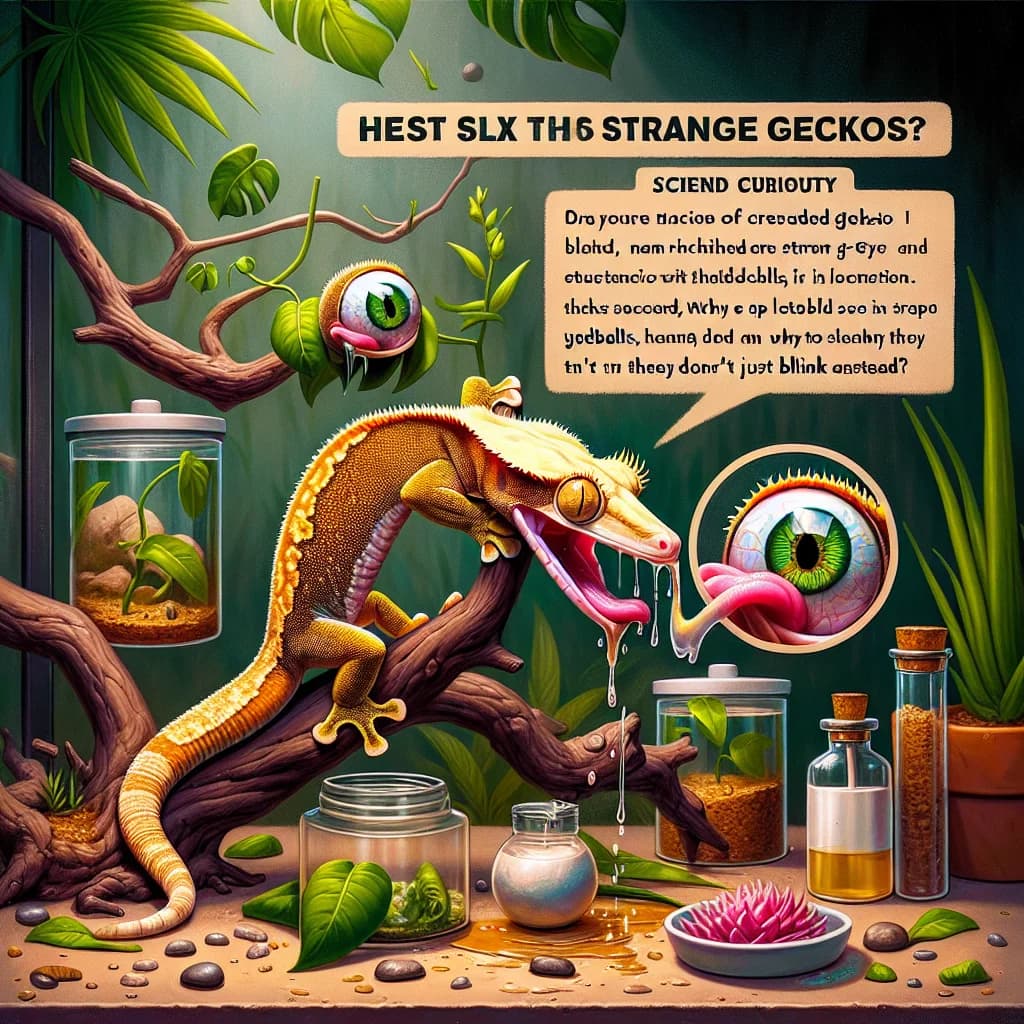
Crested geckos lack eyelids and cannot blink, so they use their long tongues to remove debris and maintain essential moisture on the transparent scales covering their eyes.
Nature’s Natural Windshield Wipers: Why Do Pet Crested Geckos Lick Their Eyeballs to Keep Them Clean and Moist Instead of Blinking?
Imagine waking up in a world where you could never close your eyes. For the crested gecko (Correlophus ciliatus), a species once thought extinct until its rediscovery in 1994, this is a daily biological reality. These charismatic reptiles from New Caledonia possess a striking appearance, often characterized by the "eyelashes" that give them their name. However, despite these fringe-like scales, crested geckos lack the fundamental anatomy required for a standard blink. Instead, they engage in a behavior that is both fascinating and slightly bizarre to the human observer: using their long, fleshy tongues to wash their eyes. Understanding why do pet crested geckos lick their eyeballs to keep them clean and moist instead of blinking is essential for any keeper, as it highlights the unique evolutionary adaptations and specific husbandry requirements of this popular pet species.
The Anatomy of the Spectacle: Why Geckos Can’t Blink
To understand why a crested gecko licks its eyes, one must first look at its ocular anatomy. Unlike humans or even leopard geckos, crested geckos do not have moveable eyelids. Instead, their eyes are protected by a transparent, fixed scale known as a spectacle or brille.
The spectacle is a specialized, see-through layer of skin that covers the cornea. This anatomical feature is common among snakes and several gecko families. Because the spectacle is fused shut, the gecko cannot "blink" to move tear fluid across the eye or dislodge irritants. While the spectacle provides a permanent physical barrier against scratches from branches or foliage in the wild, it also collects dust, substrate, and protein films that can obscure the gecko’s vision if not regularly maintained.
The Tongue as a Multi-Purpose Tool
Since they lack the muscular structure for blinking, crested geckos have evolved to use their tongues as biological windshield wipers. This behavior serves two primary physiological purposes:
1. Removing Environmental Debris
In a terrarium setting, fine particles of coconut husk, moss, or dried food can easily adhere to the surface of the eye. Because geckos rely heavily on their vision for hunting insects and navigating their arboreal environment, keeping the spectacle clear is a survival priority. The gecko extends its broad, notched tongue and sweeps it across the surface of the eye to physically lift and remove these particulates.
2. Moisture Regulation and Lubrication
Even though the spectacle is a scale, it requires a degree of moisture to remain healthy and transparent. Licking the eye deposits a thin layer of saliva and moisture, preventing the scale from becoming overly desiccated. This is particularly important during the shedding cycle, or ecdysis.
Evolutionary Context: Adaptations for a Humid World
The crested gecko’s lack of eyelids is an evolutionary trade-off. In the high-humidity rainforests of New Caledonia, the risk of the eye drying out is lower than in arid environments. The spectacle provides constant protection in dense undergrowth where a moving eyelid might be vulnerable to injury.
Interestingly, not all geckos share this trait. The Eublepharidae family, which includes the popular Leopard Gecko, possesses fully functional eyelids. This suggests that the loss of eyelids in species like the crested gecko was a specific adaptation to their niche environment, where a permanent, rugged "windshield" was more advantageous than a delicate, moving lid.
Clinical Importance: Humidity and Eye Health
For pet owners, observing this licking behavior is a sign of normal self-maintenance. However, it also serves as a vital indicator of environmental health. Veterinary science emphasizes that proper humidity—typically between 60% and 80% for crested geckos—is non-negotiable for ocular health.
- Retained Spectacles: If the environment is too dry, the spectacle may fail to shed properly during the gecko's regular molt. This is known as a "retained eye cap." If left untreated, multiple layers of unshed skin can build up, leading to infection or permanent vision loss.
- Hygiene: While licking is normal, excessive or frantic licking may indicate an irritant or an underlying corneal scratch.
Owners should ensure their geckos have access to a "moist hide" and regular misting to facilitate the natural cleaning process. If a gecko appears to have cloudy eyes or is unable to clear debris through licking, a consultation with an avian and exotic veterinarian is necessary.
Conclusion
The sight of a crested gecko sweeping its tongue across its eye is a remarkable example of evolutionary ingenuity. By understanding why do pet crested geckos lick their eyeballs to keep them clean and moist instead of blinking, keepers can better appreciate the complex biological needs of these reptiles. This behavior is not merely a quirk; it is a vital maintenance routine necessitated by the presence of the spectacle and the absence of traditional eyelids. For the responsible owner, supporting this natural behavior through proper humidity and habitat cleanliness ensures that these "eyelashed" wonders maintain the clear, sharp vision they need to thrive in captivity. Keeping a close watch on their ocular health is a small but critical part of the deep bond between humans and their reptilian companions.