Why do pet dogs curl their tongues backward to pull a column of water into their mouths
Your dog isn't just "lapping" up water—they’re actually using high-speed physics to pull a gravity-defying column of liquid straight into the air. Discover the hidden engineering behind that backward tongue curl and why it’s more sophisticated than you ever imagined.

Too Long; Didn't Read
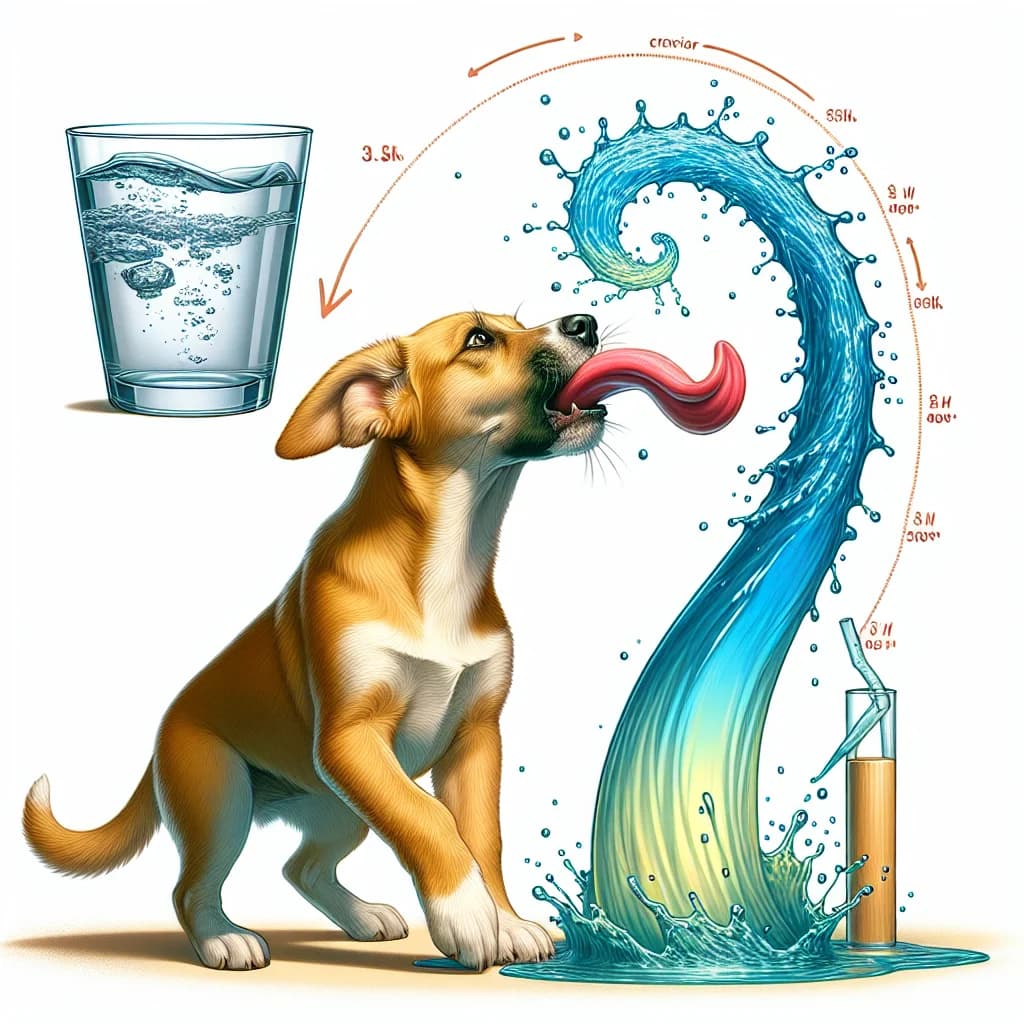
Dogs curl their tongues backward to create a ladle shape that slaps the water surface, pulling up a vertical column of liquid through high-speed retraction. They then snap their jaws shut to catch the water before it falls back down.
The Science of Lapping: Why Do Pet Dogs Curl Their Tongues Backward to Pull a Column of Water Into Their Mouths?
Every dog owner is familiar with the rhythmic "lap-lap" sound and the inevitable splash zone that surrounds a water bowl after a thirsty pet finishes drinking. While it may look like a messy or clumsy process, canine hydration is actually a marvel of high-speed fluid dynamics and biological adaptation. Unlike humans and many other mammals, dogs cannot create a vacuum to suck liquids through closed cheeks. To compensate for this anatomical limitation, they have evolved a highly specialized drinking method. This post explores the fascinating biological and physical reasons behind this behavior, answering the core question: Why do pet dogs curl their tongues backward to pull a column of water into their mouths? By understanding the mechanics of the canine tongue, we gain a deeper appreciation for the evolutionary adaptations that keep our companions healthy and hydrated.
Anatomical Necessity: The Problem with Cheeks
To understand why dogs drink the way they do, we must first look at their facial anatomy. Humans, horses, and many herbivores have "complete" cheeks that allow them to seal their mouths and create suction. This vacuum allows these species to draw water upward effortlessly. However, dogs are members of the order Carnivora, a group characterized by wide-opening jaws designed for predatory behaviors and grasping prey.
Because a dog’s mouth is "open" along the sides (incomplete cheeks), they are physically incapable of creating the airtight seal necessary for suction. To move liquid from a bowl into their throat against the pull of gravity, they must employ an alternative method that utilizes the surface tension of the water and the rapid movement of the tongue.
The Physics of the "Ladle" and the Water Column
For decades, many observers believed that the curled tongue acted simply as a tiny cup or ladle, bringing a small amount of water into the mouth with each stroke. However, high-speed photography and fluid dynamics research—most notably a 2014 study from Virginia Tech and Harvard University—revealed a much more complex process.
The Mechanics of the Curl
When a dog drinks, they don’t just dip their tongue into the water. Instead, they curl the tip of the tongue backward (caudally) toward the throat. This creates a spoon-like shape on the underside of the tongue. When the dog retracts the tongue into the mouth at high velocity, this curved surface provides a larger area for water to adhere to.
Creating the Column
The true magic happens through the principles of inertia and surface tension.
- Adhesion: As the tongue hits the surface, the water sticks to the underside of the curled tip.
- Acceleration: The dog pulls its tongue back into its mouth at speeds of up to 4 feet per second.
- Inertia: This rapid upward movement pulls a tall column of water up with the tongue. The water continues to move upward even after the tongue has begun to retreat.
- The Catch: The dog then snaps its jaws shut at precisely the right millisecond to "catch" the top of the water column before gravity pulls it back into the bowl.
Comparing Canine and Feline Techniques
While both dogs and cats utilize liquid columns to drink, their techniques differ significantly. Cats are famously more delicate; they merely touch the surface of the water with the tip of their tongue, creating a neat, thin column of liquid.
Dogs, conversely, are "messy" drinkers by design. Because dogs are generally larger and have higher metabolic needs for hydration, they must maximize the volume of water they consume. To achieve this, dogs plunge their tongues deep into the water bowl. This increased surface contact allows them to pull up a much larger, heavier column of water than a cat. The splashing we see is actually the result of the dog’s tongue "smashing" into the liquid to ensure the largest possible column is created.
Evolutionary and Behavioral Context
This behavior is not unique to domestic dogs; it is a trait shared with their wild ancestors, such as wolves and coyotes. In the wild, efficient hydration is a survival advantage. The ability to consume large quantities of water quickly allows an animal to spend less time in a vulnerable, head-down position at a watering hole.
For pet owners, observing this behavior can also serve as a diagnostic tool. A change in the "lapping" rhythm or a sudden inability to catch the water column effectively can indicate:
- Dental pain or periodontal disease.
- Neurological issues affecting the hypoglossal nerve (which controls tongue movement).
- Arthritis in the jaw or neck.
Conclusion
Understanding why pet dogs curl their tongues backward to pull a column of water into their mouths transforms a simple household observation into a lesson in evolutionary physics. This unique mechanism is a perfect example of how biology adapts to physical constraints—in this case, the lack of suction-capable cheeks—to ensure survival. By utilizing high-speed tongue retraction and fluid inertia, dogs are able to hydrate efficiently and effectively. Recognizing the complexity of this daily ritual not only deepens the human-animal bond but also helps owners monitor their pets' physical health. If you notice any significant changes in how your dog drinks, always consult a veterinary professional to ensure their anatomical "ladle" is functioning as it should.