Why do pet dogs follow you into the bathroom to act as a lookout while you are potentially vulnerable
Ever wonder why your dog insists on being your personal bathroom bodyguard? Discover the ancient survival instinct behind this quirky behavior and why your pup believes you’re at your most vulnerable behind closed doors.

Too Long; Didn't Read
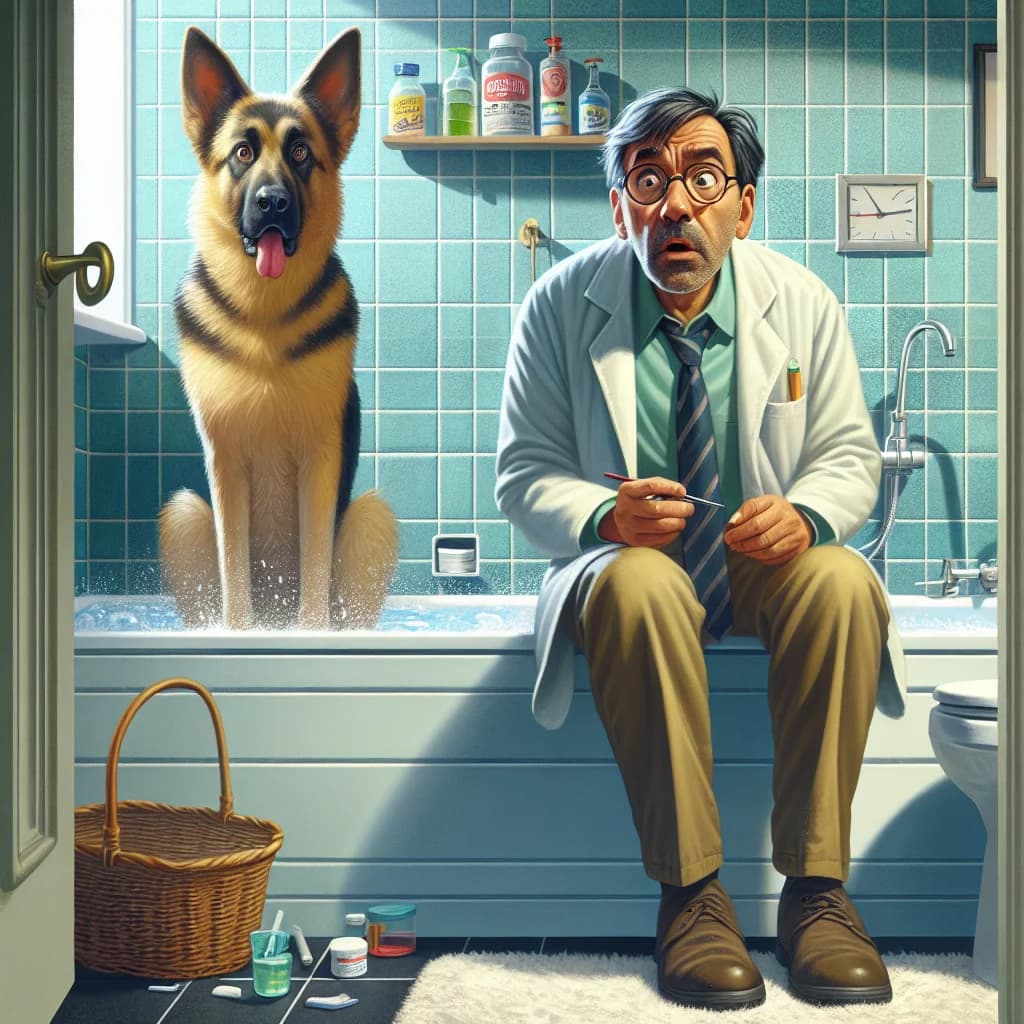
Dogs are pack animals that naturally want to protect their family members. They view you as part of their pack and instinctively follow you into the bathroom to act as a lookout, ensuring your safety while you are in a vulnerable position.
Guardian Instincts: Why Do Pet Dogs Follow You Into the Bathroom to Act as a Lookout While You Are Potentially Vulnerable?
For over 15,000 years, the domestic dog (Canis lupus familiaris) has lived in close proximity to humans, evolving from a wild scavenger into a dedicated companion. This long-standing evolutionary partnership has hardwired certain social behaviors into the canine brain, some of which manifest in ways that modern humans find peculiar. One of the most ubiquitous behaviors reported by pet owners is the "bathroom shadow" phenomenon. Many owners find themselves asking: Why do pet dogs follow you into the bathroom to act as a lookout while you are potentially vulnerable? While humans view the bathroom as a place for privacy, dogs view it through the lens of pack dynamics and survival. This blog post explores the biological, historical, and behavioral drivers behind this sentinel-like behavior and explains its significance to the human-animal bond.
The Evolutionary Root: Pack Mentality and Social Cohesion
To understand why a dog refuses to let you occupy a room alone, one must look at their ancestry. Dogs are pack animals, descendants of social canids that relied on group cohesion for survival. In a wild pack, being alone is synonymous with being vulnerable to predators or environmental hazards.
This "velcro dog" behavior is a remnant of this evolutionary strategy. For a dog, the concept of "privacy" does not exist in their biological vocabulary. Instead, they operate on a system of constant proximity. When you move from one room to another, your dog’s instinctual drive is to maintain the integrity of the pack. From their perspective, the bathroom is simply another part of the "den" where the pack should remain together for mutual protection.
The Sentinel Response: Monitoring for Vulnerability
The most fascinating aspect of this behavior is the "lookout" role. In ethology, "sentinel behavior" occurs when one member of a social group remains alert to detect predators while other members are engaged in activities that limit their awareness, such as eating, sleeping, or eliminating.
Reciprocal Protection
When you take your dog outside to relieve themselves, you likely notice them looking back at you or scanning the horizon. In the canine world, the act of elimination is a moment of extreme physical vulnerability. By standing nearby, you are providing them with a "lookout" service. When you enter the bathroom, your dog is essentially reciprocating this behavior. They perceive that you are in a vulnerable state and instinctively position themselves to guard the entrance, ensuring that no "predators" can surprise you while your attention is diverted.
The Power of Scent and Curiosity
Dogs possess an olfactory system that is up to 100,000 times more sensitive than a human's. The bathroom is a hub of concentrated pheromones and scents. Furthermore, when a door is closed, it creates a "barrier effect." Because dogs are naturally curious and territorial, a closed door represents a mystery that could potentially harbor a threat or a resource. By following you in, they are performing a routine safety check of their territory.
The Role of Positive Reinforcement and Oxytocin
Beyond survival instincts, modern domestic behaviors are heavily influenced by the chemical bonds between humans and dogs. Research published in the journal Science has shown that mutual gazing between dogs and their owners triggers the release of oxytocin, often called the "bonding hormone," in both species.
- Attention Seeking: If an owner speaks to, pets, or even looks at their dog while in the bathroom, they are providing positive reinforcement. The dog learns that following the owner into this specific room results in social interaction.
- Routine and Habit: Dogs thrive on predictable routines. If the "bathroom patrol" becomes a daily habit, the dog will view it as a mandatory part of their schedule.
Distinguishing "Lookout" Behavior from Separation Anxiety
While acting as a lookout is generally a healthy sign of a strong bond, it is important for owners to distinguish between a protective instinct and clinical separation anxiety.
| Feature | Healthy Sentinel Behavior | Separation Anxiety | | :--- | :--- | :--- | | Reaction to Closed Doors | May whine briefly or wait patiently outside. | Destructive scratching, howling, or physiological distress. | | General Demeanor | Relaxed, often lying down near the door. | Panting, pacing, and inability to settle. | | Independence | Can settle in another room when encouraged. | Must maintain physical contact at all times. |
If a dog shows signs of panic—such as self-injury or destructive behavior—when they cannot enter the bathroom, it is advisable to consult a certified veterinary behaviorist to address underlying anxiety through desensitization and counter-conditioning.
Conclusion
Understanding why pet dogs follow you into the bathroom to act as a lookout while you are potentially vulnerable allows owners to appreciate the deep-seated loyalty of their companions. This behavior is a complex intersection of ancient pack instincts, a desire for social cohesion, and the biological drive to protect members of the family unit. By acting as your "bathroom sentinel," your dog is demonstrating that they view you as a vital part of their pack whose safety is worth monitoring. As long as the behavior does not stem from anxiety, it remains a testament to the unique and enduring bond between humans and their canine counterparts. Recognizing these subtle biological cues is a key step in responsible pet ownership and fostering a harmonious home environment.