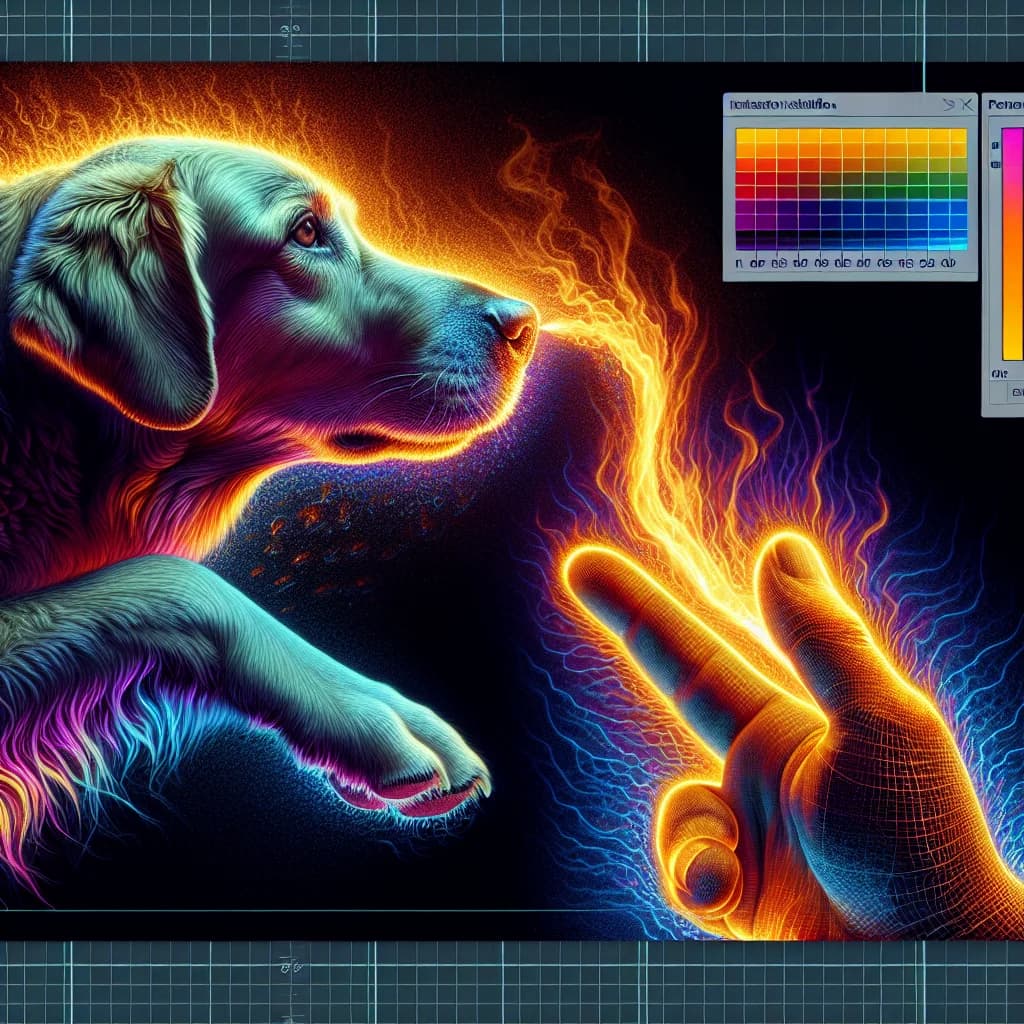
Why do pet dogs instinctively align their bodies with the Earth's north-south magnetic axis while they are pooping
Ever wonder why your dog circles endlessly before finally settling in a specific direction? It turns out they aren’t just being picky—they’re actually tuning into the Earth's magnetic field in a way that science is only beginning to understand.


Too Long; Didn't Read
Research suggests dogs possess magnetoreception, allowing them to sense the Earth’s magnetic field. They instinctively align themselves along the north-south axis while defecating during stable magnetic conditions, likely as a way to stay oriented with their surroundings.
Magnetic Mutts: Why Do Pet Dogs Instinctively Align Their Bodies with the Earth's North-South Magnetic Axis While They Are Pooping?
Every dog owner is familiar with the pre-elimination ritual: the frantic sniffing, the tight circles, and the eventual, carefully chosen "perfect spot." While it may look like a quirky personality trait or a simple search for the right patch of grass, biological research suggests something far more sophisticated is at play. Beneath the surface of this domestic habit lies a complex sensory ability known as magnetoreception. Recent scientific inquiries have revealed that our canine companions are sensitive to the planet's magnetic forces, leading many to ask: Why do pet dogs instinctively align their bodies with the Earth's north-south magnetic axis while they are pooping? Understanding this behavior provides a fascinating window into the evolutionary history and sensory biology of the domestic dog, deepening the human-animal bond through a greater appreciation of their hidden capabilities.
The Science of Magnetoreception in Canines
The primary explanation for this behavior is magnetoreception—the ability of a living organism to detect a magnetic field to perceive direction, altitude, or location. While well-documented in migratory birds, sea turtles, and honeybees, the discovery of this sense in dogs is relatively recent.
In a landmark study published in the journal Frontiers in Zoology (Hart et al., 2013), researchers spent two years observing 70 dogs across 37 different breeds. After analyzing over 1,800 instances of defecation and 5,000 instances of urination, the data revealed a statistically significant preference: when the Earth’s magnetic field was stable, dogs preferred to align their bodies along the North-South axis. Interestingly, they actively avoided the East-West orientation.
The Role of Magnetic Stability
A crucial finding of the research was that dogs do not exhibit this alignment 100% of the time. Their "internal compass" appears highly sensitive to geomagnetic fluctuations. The Earth’s magnetic field is not constant; it changes slightly throughout the day due to solar winds and solar flares. The study found that:
- Dogs showed a clear North-South preference only during periods of calm magnetic field conditions (about 20% of daylight hours).
- When the magnetic field was unstable or shifting, the predictable alignment behavior vanished.
This sensitivity explains why owners might see their dog align perfectly one day but spin aimlessly the next.
Why Do They Align? Theoretical Perspectives
While the how (magnetoreception) is increasingly understood, the why remains a subject of ongoing study in animal behavior. Veterinary behaviorists and zoologists offer several theories:
1. Spatial Orientation and Cognitive Mapping
Aligning with the magnetic field may help a dog "calibrate" its internal map. By orienting themselves consistently while stationary, dogs may be better able to remember the location of scent marks or navigate back to their home territory. This is a vestigial trait from their wild ancestors, such as wolves, who rely on vast territories for survival.
2. Biological Comfort and Pressure
Some researchers suggest that aligning with the magnetic flux may simply feel "right" to the dog's nervous system. It is theorized that aligning with the Earth’s field reduces sensory "noise," allowing the animal to feel more secure and focused during a moment of physical vulnerability.
3. Comparison with Other Species
Dogs are not alone in this behavior. Research has shown that grazing cattle and deer also tend to align their bodies North-South. Similarly, red foxes have been observed using the Earth's magnetic field as a "rangefinder" to calculate the distance of prey when pouncing in tall grass. The canine preference for North-South alignment is likely a specialized branch of this broader mammalian trait.
Implications for Pet Owners and Caretakers
Understanding that your dog is responding to planetary forces can change the way you approach daily walks and training.
- Patience During the Ritual: If your dog takes a long time to choose a spot, they may be waiting for a "calm" magnetic moment or trying to find the correct orientation.
- Environmental Enrichment: Recognizing that dogs have a sensory world far more complex than our own highlights the importance of providing them with diverse outdoor environments where they can engage their natural instincts.
- Health Monitoring: While North-South alignment is a natural instinct, sudden changes in elimination habits (such as straining or excessive circling without eventual alignment) should be discussed with a veterinarian to rule out gastrointestinal or orthopedic issues.
Conclusion
The discovery of why pet dogs instinctively align their bodies with the Earth's north-south magnetic axis while they are pooping serves as a powerful reminder that our pets are still deeply connected to the natural world. This behavior is not a "glitch" or a meaningless habit, but a sophisticated display of magnetoreception that connects the modern lapdog to its wild, navigating ancestors. By acknowledging the science behind the "poop circle," owners can foster a more empathetic and patient relationship with their canine companions. The next time your dog spins before settling down, remember: they aren't just looking for grass; they are quite literally finding their place in the world. For further insights into your pet's sensory health, always consult with a qualified veterinary professional.