Why do pet dogs kick their legs after pooping to mark territory with interdigital scent glands in their paws
That post-potty "victory dance" isn’t just a quirky habit; it’s a sophisticated communication tool powered by hidden glands in your dog's paws. Discover the fascinating reason why your pup is actually "texting" the neighborhood every time they kick up dirt.

Too Long; Didn't Read
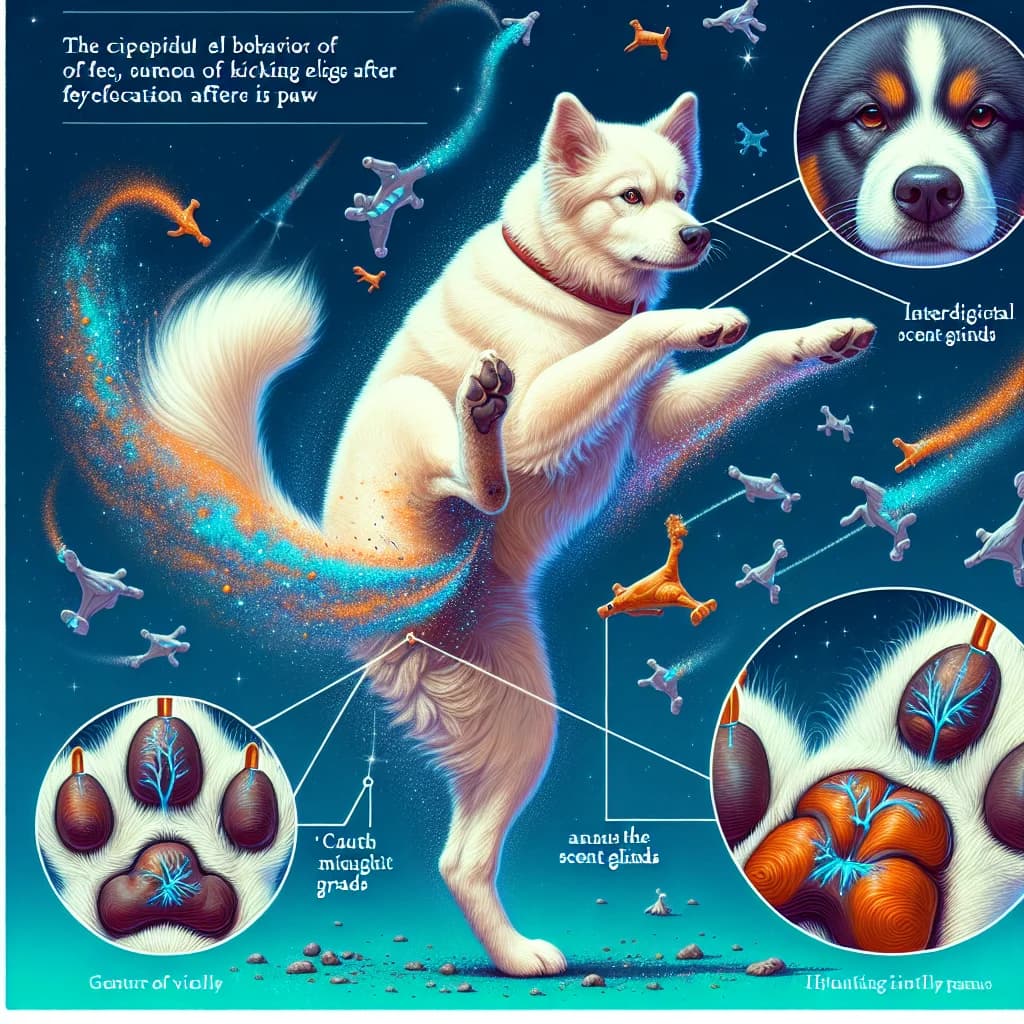
Dogs kick their legs after pooping to release pheromones from interdigital scent glands located in their paws. This instinctual behavior serves as a dual communication method, using both scent and visual ground scratches to mark territory and signal their presence to other animals.
The Science of the Scrape: Why Do Pet Dogs Kick Their Legs After Pooping to Mark Territory with Interdigital Scent Glands in Their Paws?
Every dog owner has witnessed the post-pottery ritual: after finishing their business, a dog vigorously kicks up grass and soil, often looking quite proud of the resulting mess. While it may look like a clumsy attempt to "clean up" or mimic feline burying behaviors, the reality is far more biologically complex. This behavior, known by animal behaviorists as "ground scratching," is an ancient and sophisticated form of canine communication. By understanding why do pet dogs kick their legs after pooping to mark territory with interdigital scent glands in their paws, we gain a fascinating window into the sensory world of our domestic companions and their evolutionary heritage.
The Biological Mechanism: Interdigital Scent Glands
The primary driver behind this vigorous kicking is the presence of interdigital scent glands. Located between the pads of a dog’s paws, these glands secrete pheromones—chemical signals that convey specific information to other animals. When a dog scrapes their paws against the earth, the friction and pressure trigger the release of these secretions.
Unlike the scent of urine or feces, which can dissipate relatively quickly, the pheromones from interdigital glands are designed for longevity. These chemical markers provide a "biological profile" of the dog, offering information about their sex, age, health status, and even their hormonal levels. For a dog, kicking isn't just a physical reaction; it is the act of "signing" their scent mark with a unique chemical thumbprint.
The Power of Visual Signalling
While the olfactory (scent-based) aspect is crucial, the physical act of kicking provides a secondary communication tool: a visual cue. In the wild, wolves and coyotes use ground scratching to create visible disturbances in the terrain. These "scrapes" serve as a "bulletin board" for other canines entering the area.
- Long-Distance Messaging: A patch of torn-up grass or displaced soil is visible from a distance, alerting other dogs to the presence of a scent mark before they are even close enough to smell it.
- Territorial Boundary Marking: The combination of the visual scrape and the deposited pheromones acts as a clear "no trespassing" sign or a social check-in point, helping to reduce direct physical conflict between different packs or individuals.
Evolutionary Roots and Domestic Behavior
Ground scratching is a highly conserved trait, meaning it has remained largely unchanged through the process of domestication. Even the most pampered lap dog carries the genetic blueprint of their lupine ancestors. In the wild, marking territory is essential for survival, resource guarding, and finding mates.
Interestingly, research suggests that not all dogs perform this behavior with the same frequency. Veterinary behaviorists have noted that "alpha" or more confident dogs may kick more vigorously, while more submissive individuals might skip the ritual entirely to avoid drawing attention to themselves. However, it is important to note that ground scratching is a normal, healthy expression of canine instinct across all breeds and sizes.
Caring for the "Marking" Dog: Practical Guidelines
Because this behavior is deeply instinctual, it is rarely something that needs to be "trained out" of a dog. In fact, allowing a dog to engage in natural marking behaviors can be a form of mental enrichment.
- Enrichment: Allow your dog a few extra seconds after they poop to perform their ritual. This satisfies an evolutionary urge and can lower stress levels.
- Paw Health: Regularly inspect your dog's paws, especially the interdigital spaces. If your dog kicks on rough surfaces like gravel or asphalt, they may be prone to abrasions or torn nails.
- Environmental Mindfulness: If your dog’s scratching is damaging a neighbor’s manicured lawn, redirect them to a more appropriate area, such as a mulch bed or a designated dog park, where their "landscaping" won't cause conflict.
Conclusion
Understanding why do pet dogs kick their legs after pooping to mark territory with interdigital scent glands in their paws allows owners to appreciate the complexity of canine social life. This behavior is a brilliant marriage of biology and communication, utilizing both chemical pheromones and visual markers to interact with the world. Recognizing this ritual as a natural instinct rather than a nuisance helps foster a deeper human-animal bond rooted in respect for the dog's true nature. As long as your dog’s paws remain healthy and their behavior is not destructive, the post-poop kick is simply a sign of a dog being a dog. If you ever notice sudden changes in your dog's marking habits or signs of paw irritation, consult a veterinary professional to ensure their instinctual "messaging" remains a healthy part of their routine.