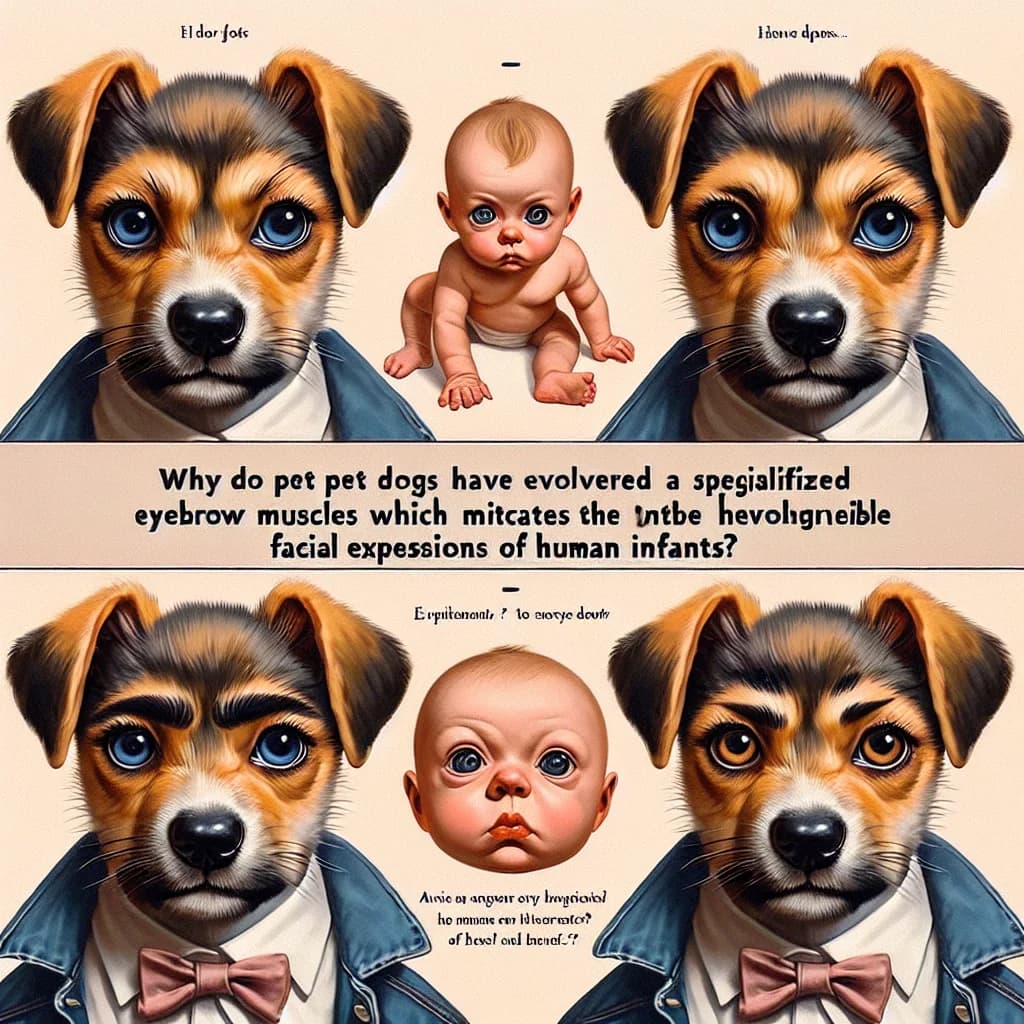
Why do pet dogs possess a specialized eyebrow muscle evolved specifically to mimic the vulnerable expressions of human infants
Your dog’s "puppy eyes" aren’t just cute—they’re a sophisticated evolutionary hack designed to hijack your brain's parental instincts. Discover the biological secret behind the specialized muscle that makes your furry friend's gaze scientifically impossible to resist.

Too Long; Didn't Read
Dogs evolved a specialized eyebrow muscle to mimic the vulnerable facial expressions of human infants. This anatomical adaptation creates puppy dog eyes, triggering a nurturing response in humans and strengthening the evolutionary bond between the two species.
The Science of Puppy Dog Eyes: Why Do Pet Dogs Possess a Specialized Eyebrow Muscle Evolved Specifically to Mimic the Vulnerable Expressions of Human Infants?
When a dog looks up at its owner with wide, pleading eyes, the emotional response is almost instantaneous. For years, pet owners assumed this "puppy dog look" was simply a charming quirk of canine personality. However, recent biological research reveals a fascinating evolutionary secret: this expression is the result of a specific anatomical adaptation. The question of why do pet dogs possess a specialized eyebrow muscle evolved specifically to mimic the vulnerable expressions of human infants? highlights a profound transformation in canine anatomy driven by the unique bond between humans and dogs.
Understanding this biological trait is essential for appreciating the depth of the domestic dog's evolution. It serves as a primary example of how human social preferences can reshape the physical biology of another species. This blog post will explore the anatomical differences between dogs and their wild ancestors, the selective pressures that led to this development, and how this "eye muscle" functions as a bridge for interspecies communication.
The Anatomy of an Expression: The LAOM Muscle
At the center of this evolutionary phenomenon is a small but powerful muscle called the levator anguli oculi medialis (LAOM). This specialized muscle is located above the eye and is responsible for raising the inner eyebrow.
Biologically, the movement of the LAOM muscle achieves several things:
- Paedomorphism: It makes the eyes appear larger and more "infant-like," a trait known as paedomorphism, which humans are evolutionarily programmed to find endearing and non-threatening.
- Expression of Sadness: The movement mimics the facial expressions humans make when they are sad or vulnerable, triggering a nurturing hormonal response in the human brain.
- Visibility of the Sclera: By pulling the eyelid upward, the muscle often exposes the white of the eye (sclera), a feature that is highly visible in humans and helps in tracking gaze and intent.
Evolutionary Divergence: Dogs vs. Wolves
To understand why do pet dogs possess a specialized eyebrow muscle evolved specifically to mimic the vulnerable expressions of human infants?, scientists looked to the dog's closest relative: the gray wolf (Canis lupus). A landmark 2019 study published in the Proceedings of the National Academy of Sciences (PNAS) compared the facial anatomy of domestic dogs to that of wolves.
The findings were striking. While dogs possess the fully developed LAOM muscle, wolves do not. In wolves, this area consists of thin, irregular muscle fibers or is absent entirely. The only dog breed in the study that lacked the well-developed muscle was the Siberian Husky, which is considered an ancient breed more closely related to wolves than many other modern dogs.
This suggests that the muscle developed rapidly after dogs diverged from wolves approximately 33,000 years ago. Because this anatomical change occurred so quickly in evolutionary terms, it indicates a very strong selective pressure. Humans likely favored, fed, and bred dogs that exhibited these expressive, "human-like" faces, even if that selection was subconscious.
The "Oxytocin Loop" and Human-Animal Bonding
The reason this muscle is so effective lies in the "oxytocin feedback loop." When a dog uses its specialized eyebrow muscle to mimic a vulnerable expression, it triggers a spike in oxytocin—often called the "love hormone"—in the human observer.
Research in animal behavior shows:
- Mutual Gaze: Dogs are the only non-primate species that use eye contact to bond with humans in a way that mirrors the bond between a parent and an infant.
- Selection for Caretaking: In shelter environments, studies have shown that dogs who move their LAOM muscle more frequently are adopted more quickly than those who do not.
- Enhanced Communication: This muscle allows dogs to communicate their needs and emotional states more effectively to their human companions, ensuring better care, protection, and food security.
Practical Implications for Dog Owners
Recognizing that "puppy dog eyes" are a specialized evolutionary tool helps owners better understand canine behavior. While it is tempting to view these expressions as a sign of "guilt" (such as when a dog has chewed a shoe), animal behaviorists emphasize that this is a communicative tool rather than a moral one. The dog is using a highly evolved facial feature to appease the human or elicit a caretaking response, regardless of their "understanding" of a specific rule.
For responsible ownership, it is important to:
- Observe Context: Use these facial cues in conjunction with body posture to understand if a dog is anxious, seeking attention, or genuinely relaxed.
- Avoid Overfeeding: Because this expression is so effective at eliciting treats, owners should be mindful not to let those "vulnerable" eyes lead to canine obesity.
Conclusion
The discovery that dogs have evolved a specific muscle to communicate with us is a testament to the power of the human-animal bond. By understanding why do pet dogs possess a specialized eyebrow muscle evolved specifically to mimic the vulnerable expressions of human infants?, we gain a deeper appreciation for the dog as a species that has literally changed its biology to be closer to us. This anatomical feature is not just a coincidence of cuteness; it is a sophisticated evolutionary bridge that has secured the dog's place as "man's best friend." As we continue to live alongside these expressive companions, understanding the science behind their gaze allows for a more empathetic and informed approach to canine care and welfare.